
Research and Education
Cerebrolysin Peptide Benefits: What Research Reveals
What Is Cerebrolysin Peptide and What Are Its Benefits?
Cerebrolysin peptide benefits have become a major focus in neuroscience and cognitive research, particularly among scientists studying neuroprotection, neuroplasticity, and brain-derived neurotrophic factor stimulation. Cerebrolysin is a neuropeptide complex derived from porcine brain tissue, containing low molecular weight peptides and amino acids that closely mimic the action of endogenous neurotrophic factors including BDNF, NGF, and CNTF.
Unlike single-molecule neuropeptides, cerebrolysin peptide delivers a multimodal neuroprotective effect through multiple simultaneous mechanisms — making it one of the most comprehensively studied neuropeptide complexes in preclinical neurological research. Its ability to cross the blood-brain barrier and directly influence neuronal survival and plasticity has made it a uniquely valuable research compound.
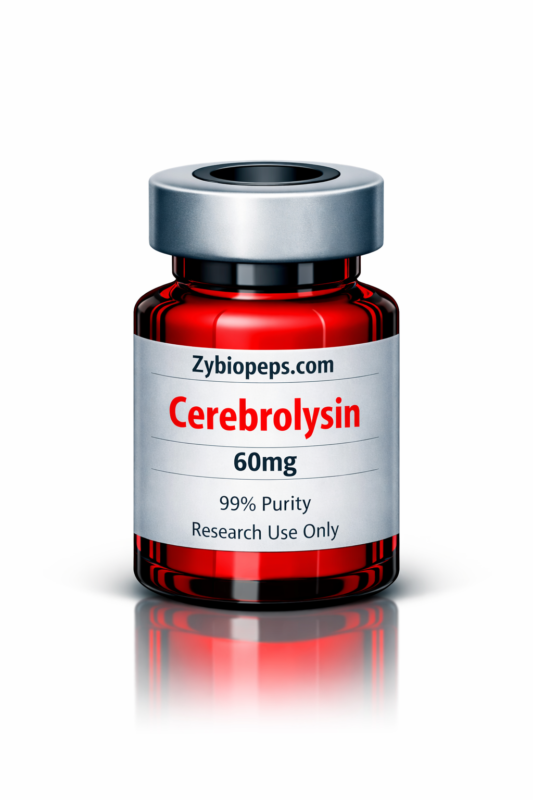
At Zybiopeps.com, we supply Cerebrolysin peptide in 60mg research vials with 99%+ purity verified by HPLC testing, with same-day USA shipping via USPS and FedEx.
How Cerebrolysin Peptide Works in Research Models
Cerebrolysin peptide exerts its neuroprotective effects through several parallel mechanisms. Research has shown that it stimulates the production of endogenous neurotrophic factors including BDNF and NGF, promotes neuronal survival under conditions of oxidative stress and excitotoxicity, reduces inflammatory signaling in neural tissue, and supports synaptic plasticity and neurogenesis in preclinical models.
The low molecular weight peptide fractions in cerebrolysin are small enough to cross the blood-brain barrier — a critical property for any neuroprotective research compound. This ability to directly access neural tissue has made cerebrolysin peptide a reference compound in neuroprotection research, used to establish benchmarks for evaluating new neuroprotective agents.
A key study published on PubMed documents cerebrolysin’s neurotrophic mechanisms and its effects on neuronal survival and cognitive function in preclinical models. You can explore that study here: PubMed — Cerebrolysin Peptide Research.
Cerebrolysin Peptide Benefits in Neuroprotection Research
The primary focus of cerebrolysin peptide benefits research has been its neuroprotective activity. Studies have demonstrated that cerebrolysin protects neurons from oxidative damage, glutamate-induced excitotoxicity, and apoptotic cell death in preclinical models — mechanisms relevant to research into neurodegeneration and acute brain injury.
Research has also examined cerebrolysin in models of ischemic brain injury, where it has shown the ability to reduce neuronal death in the penumbra region surrounding injury sites and promote functional recovery. This has made cerebrolysin peptide a valuable research tool for scientists studying stroke biology and neuroprotective intervention strategies.
Cerebrolysin Peptide and Cognitive Research
One of the most extensively studied cerebrolysin peptide benefits is its influence on cognitive function in preclinical models. Research has demonstrated improvements in learning, memory consolidation, and spatial navigation in aged animal models receiving cerebrolysin, with associated increases in synaptic density and neuroplasticity markers.
Scientists studying age-related cognitive decline and neurodegenerative conditions have used cerebrolysin alongside other nootropic peptides such as Semax and Adamax to investigate the spectrum of peptide-based neuroprotection and cognitive enhancement in research settings.
Cerebrolysin Peptide and Neuroregeneration Research
Beyond neuroprotection and cognitive research, cerebrolysin peptide has been studied for its neuroregenerative properties. Research has shown that cerebrolysin promotes neurogenesis — the formation of new neurons — in the hippocampus and other brain regions, and supports axonal sprouting and synaptic remodeling following neural injury.
This neuroregenerative profile has made cerebrolysin an interesting compound for researchers studying brain plasticity, neural repair, and recovery from neurological injury, contributing to a growing body of research on neurotrophic factor mimetics and their therapeutic potential.
Why Researchers Choose Zybiopeps for Cerebrolysin Peptide
Zybiopeps.com supplies Cerebrolysin peptide in 60mg vials at $90, manufactured to 99%+ purity standards with HPLC testing and Certificate of Analysis available on request. Every order ships same day from our US domestic warehouse via USPS or FedEx, with worldwide shipping also available.
For research institutions and bulk buyers, our wholesale peptides program offers 35% off orders over $1,000, with payment accepted via Zelle, CashApp, Venmo, Apple Pay, and bank transfer. Minimum order is $100.
Frequently Asked Questions About Cerebrolysin Peptide Benefits
What is cerebrolysin peptide used for in research?
Cerebrolysin peptide is used in research to study neuroprotection, BDNF and NGF stimulation, cognitive enhancement, neuroplasticity, neurogenesis, and neural recovery in preclinical models.
How does cerebrolysin cross the blood-brain barrier?
Cerebrolysin contains low molecular weight peptide fractions small enough to cross the blood-brain barrier through passive diffusion and active transport mechanisms, allowing direct access to neural tissue in research models.
What neurotrophic factors does cerebrolysin stimulate?
Research has shown cerebrolysin stimulates the production of BDNF, NGF, and CNTF — key neurotrophic factors involved in neuronal survival, synaptic plasticity, and cognitive function.
Where can I buy cerebrolysin peptide for research?
Zybiopeps.com offers Cerebrolysin peptide 60mg vials with 99%+ purity, HPLC testing, same-day USA shipping, and COA on request.
Does Zybiopeps ship cerebrolysin internationally?
Yes. Zybiopeps.com ships worldwide including the USA, Canada, Australia, UK, Germany, and the Philippines.
Disclaimer: All products sold by Zybiopeps.com are intended for research purposes only. They are not intended for human consumption, medical use, or veterinary use. This content is for informational purposes only and does not constitute medical advice.
