
Research and Education
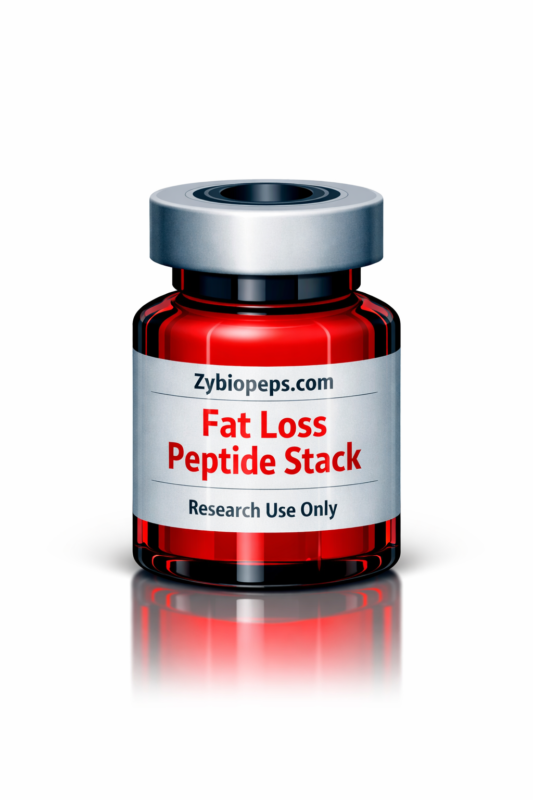
best peptides for fat loss research vial Zybiopeps
What the Research Says About the Best Peptides for Fat Loss
Finding the best peptides for fat loss research is a question that comes up repeatedly among scientists studying metabolic biology, body composition, and energy homeostasis. The peptide research space has expanded dramatically in this area over the last decade — partly driven by the explosion of interest in GLP-1 receptor agonists, and partly by growing scientific curiosity about how peptide signaling influences fat metabolism at the cellular level. At Zybiopeps.com, we supply HPLC-tested research peptides at 99%+ purity to researchers in the USA, UK, Canada, Australia, Germany, and the Philippines. Every product ships same day from our US warehouse with a Certificate of Analysis on every batch.
Semaglutide and the GLP-1 Pathway
No discussion of peptides and fat loss research is complete without addressing the GLP-1 receptor agonist class. Semaglutide is a synthetic analog of glucagon-like peptide-1, a gut-derived hormone that plays a central role in insulin secretion, appetite signaling, and gastric emptying. Research on GLP-1 receptor agonists has documented significant effects on body weight in clinical trials, driven primarily by reductions in caloric intake through appetite suppression and delayed gastric emptying. The mechanism is well characterized — GLP-1 receptors in the hypothalamus respond to circulating GLP-1 analogs by reducing hunger signaling, leading to lower food intake over time.
Semaglutide research has dominated headlines for several years now, but researchers studying the GLP-1 pathway have a growing toolkit of compounds to work with. Zybiopeps.com carries Semaglutide for research purposes alongside several other GLP-1 class compounds.
Retatrutide — Triple Receptor Research
Retatrutide represents one of the more interesting recent developments in metabolic peptide research. Unlike semaglutide, which targets only the GLP-1 receptor, Retatrutide is a triple agonist — it activates GLP-1, GIP, and glucagon receptors simultaneously. Glucagon receptor activation adds a direct lipolytic component to the mechanism, stimulating fat breakdown in adipose tissue in addition to the appetite suppression driven by GLP-1 and GIP signaling. Phase 2 clinical data on Retatrutide has attracted significant attention from the research community, and it’s become one of the most requested compounds in the metabolic peptide space. Zybiopeps.com carries Retatrutide for laboratory research.
AOD-9604 — The Growth Hormone Fragment
AOD-9604 is a modified fragment of human growth hormone, specifically the C-terminal region responsible for growth hormone’s lipolytic effects. The theory behind AOD-9604 research is elegant — isolate the fat-burning portion of growth hormone without the anabolic and insulin-desensitizing effects of the full molecule. Research has examined AOD-9604’s ability to stimulate lipolysis in fat cells and inhibit lipogenesis, with animal studies showing promising effects on body fat reduction. It’s a compound that sits at a genuinely interesting intersection of growth hormone biology and metabolic research.
CJC-1295 and GHRP-2 — Growth Hormone Secretagogue Research
Growth hormone itself plays a significant role in fat metabolism — it stimulates lipolysis directly and has complex interactions with insulin signaling that affect how the body partitions energy between fat storage and utilization. Researchers studying endogenous GH elevation have examined peptides like CJC-1295, a GHRH analog that extends GH pulse duration, and GHRP-2, a ghrelin receptor agonist that amplifies GH pulse amplitude. Together these compounds are frequently studied in protocols examining how elevated GH secretion affects body composition markers in animal models.
Liraglutide — A Shorter-Acting GLP-1 Analog
Before semaglutide became the dominant compound in GLP-1 research, Liraglutide was the primary focus of metabolic peptide studies. It shares the same basic mechanism — GLP-1 receptor activation leading to appetite suppression and improved insulin sensitivity — but with a shorter half-life that makes it useful for research designs requiring more frequent dosing intervals. Researchers studying the dose-response relationship of GLP-1 signaling on fat mass often use Liraglutide as a reference compound. Zybiopeps.com carries Liraglutide for research applications.
Adipotide — PROHIBITIN-Targeted Research
Adipotide takes a completely different approach to fat loss research than the GLP-1 class. Rather than targeting appetite or metabolic signaling, Adipotide is a peptidomimetic compound designed to target the vasculature of white adipose tissue specifically. It works by binding to receptors expressed on blood vessels feeding fat cells, with research in animal models examining whether disrupting the blood supply to adipose tissue triggers apoptosis of fat cells. It’s one of the more mechanistically novel compounds in the metabolic peptide space and has attracted attention from researchers interested in targeted adipose tissue biology. Adipotide is available at Zybiopeps.com for laboratory research.
Sourcing Fat Loss Research Peptides
For researchers building metabolic or body composition study protocols, compound quality is critical. Every peptide at Zybiopeps.com is independently HPLC tested at 99%+ purity with a Certificate of Analysis provided on every batch. We ship same day from our US warehouse with a $100 minimum order. Researchers running larger protocols can find bulk options on our wholesale research peptides page.
A comprehensive review of GLP-1 receptor agonists and their mechanisms in metabolic research provides useful background for researchers entering this space. Read related research on PubMed.
Frequently Asked Questions
What are the best peptides for fat loss research?
The most studied peptides in fat loss and metabolic research include Semaglutide, Retatrutide, Liraglutide, AOD-9604, CJC-1295, GHRP-2, and Adipotide. Each targets different aspects of fat metabolism, appetite signaling, or adipose tissue biology.
How does Semaglutide work in fat loss research?
Semaglutide activates GLP-1 receptors in the hypothalamus and gut, reducing appetite signaling and slowing gastric emptying. Research has documented significant effects on body weight reduction through reduced caloric intake.
What makes Retatrutide different from Semaglutide?
Retatrutide is a triple receptor agonist targeting GLP-1, GIP, and glucagon receptors simultaneously. The glucagon component adds a direct lipolytic effect not present in semaglutide’s mechanism.
Is AOD-9604 related to growth hormone?
Yes — AOD-9604 is a modified fragment of human growth hormone specifically isolated for its lipolytic properties, designed to study fat metabolism without the full anabolic effects of the complete growth hormone molecule.
Where can I buy fat loss research peptides?
Researchers studying fat loss peptides may also want to explore our BPC-157 vs TB-500 comparison and the GLOW Blend Peptide for multi-compound research protocols.
Disclaimer: All products sold by Zybiopeps.com are intended strictly for laboratory research and educational purposes only. They are not intended for human consumption, medical treatment, or veterinary use. This content is not medical advice. Always comply with all applicable laws and regulations regarding research peptides in your jurisdiction.
