
Research and Education
BPC 157 vs TB 500 — Research Peptide Comparison.
BPC 157 vs TB 500 — How Do These Two Research Peptides Compare?
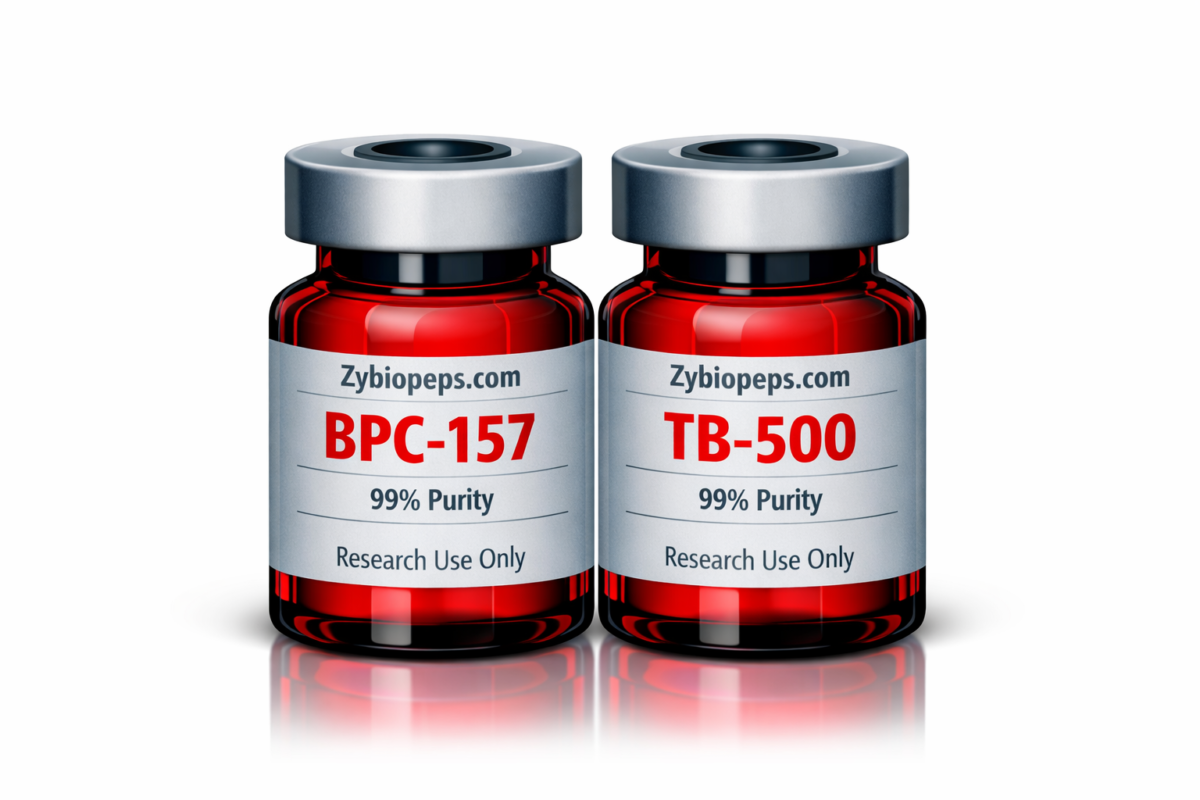
The bpc 157 vs tb 500 debate comes up constantly in peptide research circles, and it’s easy to see why. Both compounds have generated significant scientific interest over the last two decades, both are frequently studied in the context of tissue repair and recovery, and both are available as research-grade peptides from Zybiopeps.com — HPLC tested at 99%+ purity with a Certificate of Analysis on every batch. But they are fundamentally different molecules with different mechanisms, different research histories, and different areas of scientific focus. This comparison breaks down what the literature actually says about each one.
What Is BPC-157?
BPC-157 stands for Body Protection Compound, and it’s a synthetic 15-amino acid peptide sequence derived from a protein found in gastric juice. It was first isolated and studied in the context of gastrointestinal protection — researchers noticed that gastric juice contained proteins with apparent protective effects on the stomach lining, and BPC-157 emerged as one of the active sequences from that research. Since then, the scope of BPC-157 research has expanded considerably. Scientists have studied it in models related to tendon-to-bone healing, ligament repair, nitric oxide signaling, angiogenesis, and neurological function. It’s one of the most searched peptides in the research space right now, and the volume of peer-reviewed literature on it continues to grow.
At Zybiopeps.com, BPC-157 is available as a standalone research peptide, HPLC verified and shipped same day from our US warehouse.
What Is TB-500?
TB-500 is a synthetic analog of Thymosin Beta-4, a small signaling protein that occurs naturally in virtually every cell of the human body. Thymosin Beta-4 was first studied for its role in actin regulation — actin being the structural protein that drives cell movement, tissue organization, and wound closure. TB-500 replicates the active region of Thymosin Beta-4 responsible for actin binding, making it a focused research tool for studying cellular migration and tissue repair signaling. Research has examined TB-500 in models of wound healing, cardiac tissue repair, angiogenesis, and connective tissue recovery. Unlike BPC-157, which has roots in gastric biology, TB-500 comes directly from the field of immune and cellular biology.
Zybiopeps.com carries TB-500 as a standalone compound and also as part of the GLOW Blend formulation alongside BPC-157 and GHK-Cu.
BPC 157 vs TB 500 — Mechanism of Action
This is where the two compounds diverge most clearly. BPC-157 appears to work primarily through nitric oxide pathways and growth factor modulation — studies have shown it influences VEGF expression, which plays a role in new blood vessel formation, and it appears to interact with the dopaminergic and serotonergic systems in neurological research models. Its effects in tendon and ligament research have been linked to its ability to upregulate growth hormone receptors in tendon fibroblasts.
TB-500, by contrast, works through actin sequestration. Thymosin Beta-4 binds to G-actin monomers and regulates the balance between monomeric and filamentous actin in cells. This affects how cells move and reorganize during tissue repair — a fundamentally different approach than BPC-157’s growth factor and nitric oxide signaling. In practical research terms, this means TB-500 is particularly relevant in studies examining cellular migration speed and wound closure mechanics, while BPC-157 tends to dominate in research on specific tissue types like tendons, gut lining, and neural tissue.
Research Applications — Where They Overlap and Where They Don’t
Both peptides have been studied in connective tissue and wound healing models, which is why they’re often discussed together. A 2019 review in the Journal of Applied Physiology examined growth factors and peptides involved in musculoskeletal repair, providing useful context for understanding how compounds like these interact with tissue biology. Read related research on PubMed.
Where they diverge in research application is notable. BPC-157 has a broader profile of studied effects — gastrointestinal, neurological, musculoskeletal, and vascular — while TB-500 research is more tightly focused on cellular migration, cardiac tissue, and systemic repair signaling. Researchers studying a specific tissue type often gravitate toward BPC-157 for targeted tissue work and TB-500 for studying the systemic repair response.
Can They Be Studied Together?
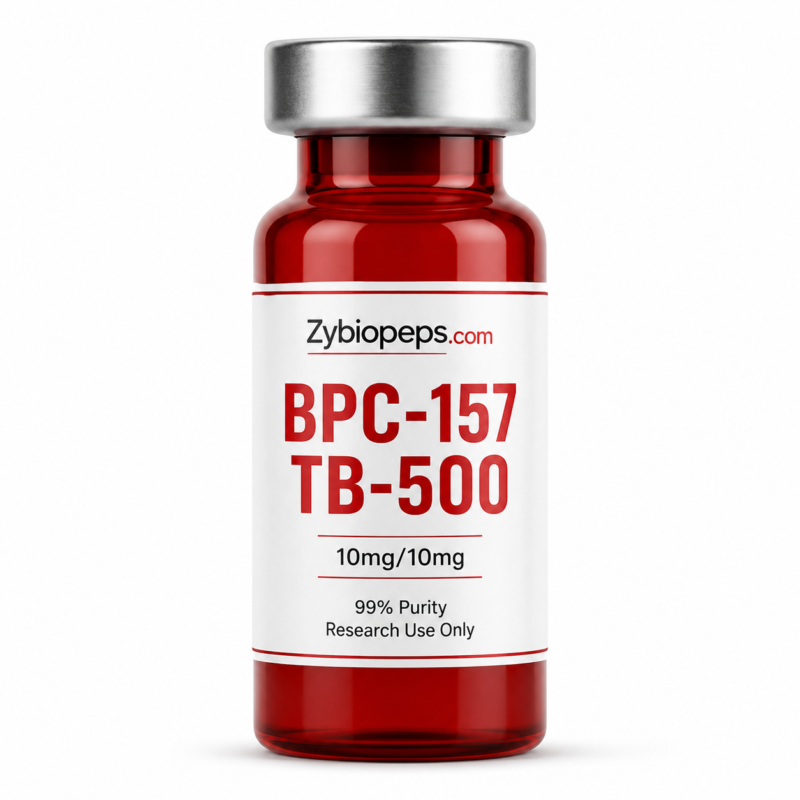
Yes — and this is exactly why the GLOW Blend formulation exists. Many researchers studying multi-compound protocols include both BPC-157 and TB-500 in the same preparation, on the theory that their complementary mechanisms may produce different outcomes than either compound studied alone. The GLOW Blend at Zybiopeps.com combines BPC-157 at 10mg, TB-500 at 10mg, and GHK-Cu at 50mg in a single lyophilized vial — giving researchers a standardized multi-compound preparation with one COA rather than three separate sourcing operations.
Sourcing BPC-157 and TB-500 for Research
Zybiopeps.com carries both compounds as standalone peptides and in combined formulations. Every product is independently HPLC tested at 99%+ purity with a Certificate of Analysis included on every batch. We ship same day from our US warehouse with a $100 minimum order, serving researchers in the USA, UK, Canada, Australia, Germany, and the Philippines. For researchers running larger protocols, visit our wholesale research peptides page.
Frequently Asked Questions
What is the difference between BPC-157 and TB-500?
BPC-157 is a 15-amino acid peptide derived from gastric juice proteins, studied primarily for its effects on tissue repair through nitric oxide and growth factor pathways. TB-500 is a synthetic analog of Thymosin Beta-4, studied for its role in actin regulation and cellular migration. They have different mechanisms and complementary research applications.
Can BPC-157 and TB-500 be used together in research?
Yes — many researchers study both compounds in the same protocol. Zybiopeps.com offers both as standalone peptides and combined in the GLOW Blend formulation alongside GHK-Cu.
Which has more research behind it — BPC-157 or TB-500?
BPC-157 has a broader body of published research across more tissue types and biological systems. TB-500 research is more focused but well-established in cellular migration and cardiac tissue models.
Where can I buy BPC-157 and TB-500 for research?
Both are available at Zybiopeps.com, HPLC tested at 99%+ purity with COA documentation. Same-day shipping from our US warehouse.
What is the GLOW Blend?
The GLOW Blend is a triple-peptide research formulation containing BPC-157 (10mg), TB-500 (10mg), and GHK-Cu (50mg) in a single lyophilized vial. Available at Zybiopeps.com.
Disclaimer: All products sold by Zybiopeps.com are intended strictly for laboratory research and educational purposes only. They are not intended for human consumption, medical treatment, or veterinary use. This content is not medical advice. Always comply with all applicable laws and regulations regarding research peptides in your jurisdiction.
