

Research and Education
Mazdutide vs Tirzepatide Research
Mazdutide Is Not Just Another GLP-1 Drug — Here’s What Makes It Different
The GLP-1 receptor agonist space has exploded over the last few years. Semaglutide dominated headlines, Tirzepatide raised the bar by adding GIP receptor activity, and now Retatrutide is pushing into triple receptor territory. So where does Mazdutide peptide fit into this picture — and why are researchers paying attention to it?
The answer comes down to mechanism. Mazdutide (also known as LY3305677) is a GLP-1/glucagon dual receptor agonist — meaning it simultaneously activates both the GLP-1 receptor and the glucagon receptor. That glucagon component is what separates it from Semaglutide and puts it in an interesting middle ground between single-receptor GLP-1 agonists and the newer multi-receptor compounds like Tirzepatide and Retatrutide.
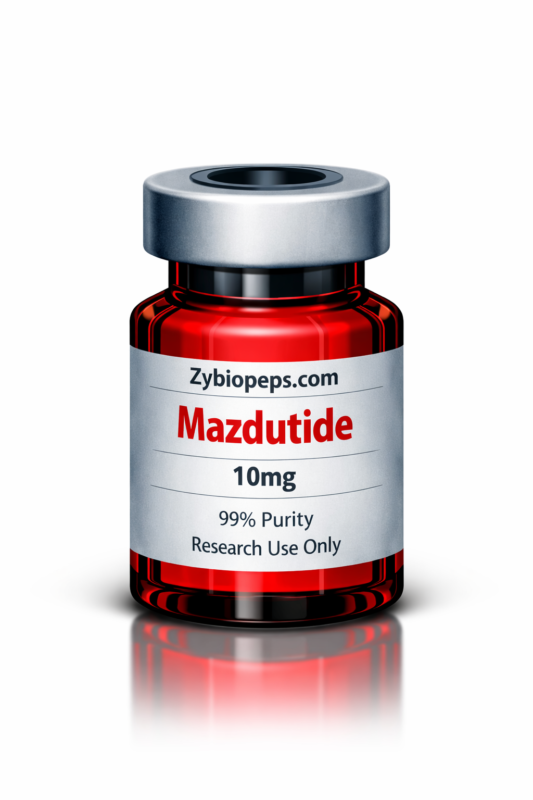
At Zybiopeps.com, we supply Mazdutide peptide in 10mg research vials with 99%+ purity verified by HPLC testing, with same-day USA shipping via USPS and FedEx.
The Dual Mechanism — Why Glucagon Receptor Activation Matters
Glucagon has historically been associated with raising blood glucose — the opposite of what metabolic researchers want in a weight management compound. So why would adding glucagon receptor activation to a GLP-1 agonist be beneficial in research models?
The answer lies in what glucagon does beyond glucose regulation. Glucagon receptor activation in adipose tissue and the liver stimulates energy expenditure, increases fat oxidation, and promotes lipolysis. When combined with the appetite suppression and insulin secretion effects of GLP-1 receptor activation, the result is a compound that works on weight through multiple complementary pathways simultaneously — reduced caloric intake from the GLP-1 side, increased energy expenditure from the glucagon side.
Research published on PubMed has examined this dual mechanism in detail, providing the pharmacological basis for ongoing Mazdutide research. You can find that study here: PubMed — GLP-1/Glucagon Dual Agonist Research.
Mazdutide vs Tirzepatide — What Research Shows
Mazdutide vs Tirzepatide is one of the most common comparisons researchers make in the dual agonist space. Both are dual receptor agonists, but they target different receptor combinations. Tirzepatide activates GLP-1 and GIP receptors — with the GIP component primarily enhancing insulin secretion and reducing GLP-1-associated nausea. Mazdutide activates GLP-1 and glucagon receptors — with the glucagon component primarily targeting energy expenditure and fat metabolism.
In practical research terms, this means Mazdutide and Tirzepatide produce their weight reduction effects through meaningfully different downstream mechanisms, making comparative research between the two compounds particularly valuable for understanding the relative contributions of GIP vs glucagon receptor activation in metabolic outcomes.
Mazdutide vs Retatrutide — The Triple vs Dual Receptor Question
Retatrutide takes the multi-receptor approach further by adding glucagon receptor activity to Tirzepatide’s GLP-1/GIP dual agonism — making it a GLP-1/GIP/glucagon triple receptor agonist. This puts Mazdutide and Retatrutide in an interesting comparative position: both activate glucagon receptors, but Retatrutide also adds GIP activity while Mazdutide doesn’t.
For researchers studying the incremental contribution of each receptor to metabolic outcomes, this creates a useful experimental framework. Mazdutide essentially allows researchers to isolate the GLP-1/glucagon combination without GIP interference — something that can’t be done with Retatrutide or Tirzepatide.
What Clinical Research Has Found
Mazdutide has progressed further in clinical research than many newer metabolic peptides, with phase 2 clinical trial data available in the published literature. Results have shown significant body weight reductions and improvements in glycemic markers in human research subjects, with a safety and tolerability profile consistent with other GLP-1 receptor agonists in this class.
The clinical data has made Mazdutide a compound of active interest for researchers studying metabolic disease biology, particularly those looking to understand how GLP-1/glucagon dual agonism performs in human metabolic systems compared to the GLP-1/GIP combinations that have dominated recent clinical research.
Sourcing Mazdutide for Research
Zybiopeps.com supplies Mazdutide peptide in 10mg vials at $225, with HPLC testing confirming 99%+ purity and a Certificate of Analysis available on every batch. Orders ship same day from our US domestic warehouse via USPS or FedEx.
For larger research programs, our wholesale peptides program offers 35% off orders over $1,000, with payment via Zelle, CashApp, Venmo, Apple Pay, and bank transfer. Minimum order is $100.
Frequently Asked Questions About Mazdutide Peptide
What receptors does Mazdutide activate?
Mazdutide is a GLP-1/glucagon dual receptor agonist, simultaneously activating both the GLP-1 receptor and the glucagon receptor. This dual mechanism produces complementary metabolic effects through appetite suppression and increased energy expenditure.
How does Mazdutide differ from Semaglutide?
Semaglutide is a selective GLP-1 receptor agonist. Mazdutide adds glucagon receptor activation, which introduces an energy expenditure and fat oxidation component that Semaglutide lacks.
Is Mazdutide the same as LY3305677?
Yes. Mazdutide is also known by its research designation LY3305677 in the published literature.
Where can I buy Mazdutide peptide for research?
Zybiopeps.com offers Mazdutide peptide 10mg vials with 99%+ purity, HPLC testing, same-day USA shipping, and COA on request.
Does Zybiopeps ship Mazdutide internationally?
Yes — we ship to the USA, Canada, Australia, UK, Germany, the Philippines, and beyond.
Disclaimer: All products sold by Zybiopeps.com are intended strictly for research purposes. Not for human consumption, medical treatment, or veterinary use. This content is informational only and does not constitute medical advice.
