
Research and Education
Ipamorelin Research Guide — Mechanisms and Key Findings
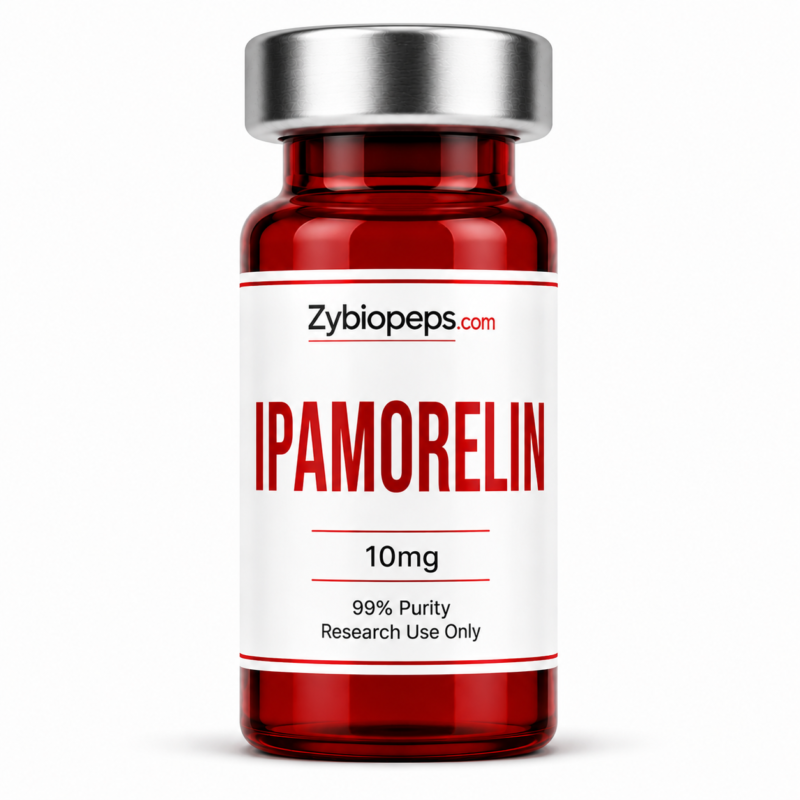
This ipamorelin research guide covers one of the most selective growth hormone secretagogues currently studied in peptide science. Unlike broader GH releasing compounds, ipamorelin has attracted significant research attention precisely because of what it doesn’t do — making it a uniquely clean tool for studying isolated growth hormone effects in laboratory settings.
What Is Ipamorelin?
Ipamorelin is a synthetic pentapeptide — just five amino acids — that acts as a selective growth hormone secretagogue. It works by binding to the ghrelin receptor (also known as the growth hormone secretagogue receptor or GHS-R) in the pituitary gland, stimulating the release of growth hormone in a pulsatile, physiologically similar pattern to natural GH secretion.
What makes ipamorelin stand out in research is its selectivity. Studies have consistently shown that unlike GHRP-6 and GHRP-2 — two older growth hormone releasing peptides — ipamorelin does not significantly stimulate cortisol, prolactin, or ACTH release at research doses. This makes it considerably easier to study GH-specific effects without confounding hormonal variables.
How Ipamorelin Works
Ipamorelin’s mechanism is elegantly simple. By binding to the GHS-R in the anterior pituitary, it triggers a calcium-dependent release of growth hormone into circulation. This release mimics the natural pulsatile pattern of GH secretion — which researchers consider more physiologically relevant than continuous GH elevation.
Importantly, ipamorelin also works by suppressing somatostatin — the hormone that inhibits GH release — further amplifying its GH-stimulating effect. This dual action through receptor activation and somatostatin suppression makes it one of the more potent selective GH secretagogues studied to date.
Ipamorelin Research — Key Findings
The preclinical literature on ipamorelin is substantial. Animal studies have examined its effects on growth hormone levels, IGF-1 production, bone density, lean mass development, and recovery from various experimental conditions. Research published on PubMed covers these areas in considerable depth.
One particularly interesting area of ipamorelin research involves its effects on bone density. Several preclinical studies have demonstrated significant improvements in bone mineral content and density in animal models, suggesting potential applications in osteoporosis research beyond the more commonly studied muscle and body composition effects.
Gastrointestinal research has also emerged as an unexpected area of interest. Studies have examined ipamorelin’s potential to influence gut motility — with some findings suggesting it may have applications in research examining post-operative GI dysfunction and related conditions.
Ipamorelin Dosage in Research Models
The following information reflects dosing protocols used strictly in preclinical research settings. Ipamorelin is not approved for human use and all research must comply with applicable regulatory requirements.
In animal research models, ipamorelin has been studied across a range of doses depending on the research objective. Administration has typically been subcutaneous in preclinical studies, with frequency varying from single dose assessments to multiple daily administrations depending on the study design.
At Zybiopeps, research-grade Ipamorelin is available for qualified researchers. All products are independently tested and verified for purity before shipment.
Ipamorelin vs CJC-1295 — Complementary Mechanisms
One of the most studied combinations in growth hormone research pairs ipamorelin with CJC-1295. While ipamorelin works through the ghrelin receptor pathway, CJC-1295 operates as a GHRH analogue — stimulating GH release through an entirely different receptor system.
The rationale for studying them together is their complementary mechanisms. By activating two separate GH-stimulating pathways simultaneously, researchers can examine whether the combination produces additive or synergistic effects on GH release and downstream anabolic signaling. This combination has become one of the most discussed pairings in the growth hormone research community.
Both Ipamorelin and CJC-1295 are available at Zybiopeps for research purposes.
Why Ipamorelin Is Valuable for Research
The scientific value of ipamorelin as a research tool comes down to its selectivity. When researchers want to study the specific effects of growth hormone elevation without cortisol interference, without prolactin changes, and without ACTH stimulation — ipamorelin is the logical choice.
This cleanliness makes it particularly valuable for studies where hormonal confounding variables would compromise data interpretation. It also makes it a useful reference compound for comparing the selectivity profiles of newer growth hormone secretagogues as they emerge from the research pipeline.
Sourcing Research-Grade Ipamorelin
For any serious ipamorelin research, compound purity is critical. Impure or poorly synthesized peptides produce unreliable data and can invalidate entire study designs. At Zybiopeps, every batch of ipamorelin is independently verified for purity before shipping. All products are intended strictly for laboratory use only.
Disclaimer: All products sold by Zybiopeps are intended for research and laboratory use only. They are not intended for human consumption, diagnosis, treatment, or prevention of any disease or condition. This content is purely informational and educational and does not constitute medical advice. Always consult a licensed medical professional before making any health-related decisions.
