

Research and Education
SS-31 Peptide Benefits — Mitochondrial Research Guide
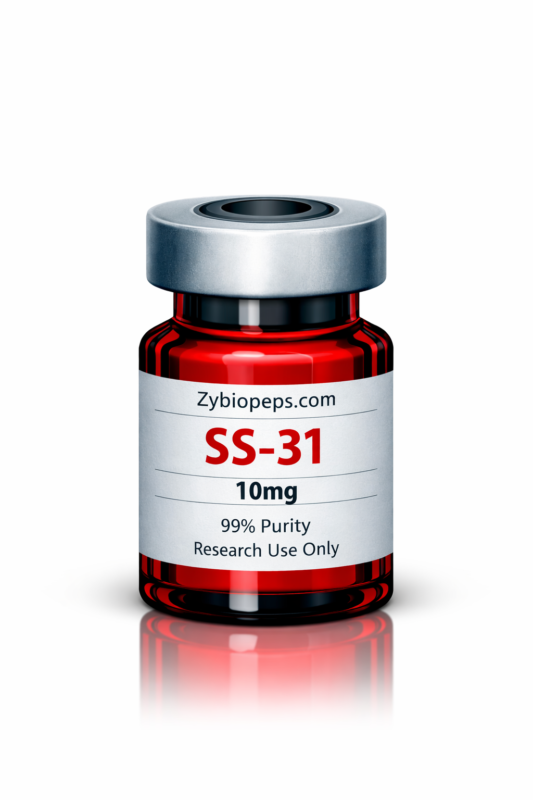
SS-31 peptide research has positioned this small but remarkably targeted compound at the forefront of mitochondrial medicine, and what makes it scientifically distinctive is its precision. Unlike broad-spectrum antioxidants that distribute throughout the body with limited selectivity, SS-31 — formally known as Szeto-Schiller peptide 31 — is engineered to concentrate specifically in the inner mitochondrial membrane, where the most damaging oxidative reactions occur and where conventional antioxidants struggle to penetrate. That targeted delivery to the heart of cellular energy production has made SS-31 one of the most intensively studied mitochondria-protective compounds in current peptide research.
At Zybiopeps, SS-31 is available in 10mg and 50mg concentrations for research purposes. We ship same day from our USA warehouse via USPS and FedEx, and every batch is independently HPLC tested to 99%+ purity by a USA-based third-party laboratory. A certificate of analysis is available for every order. We ship to the USA, UK, Australia, Germany, Canada, the Philippines, and worldwide. Minimum order is $100.
Here’s what the research literature shows about this precision mitochondrial peptide.
What Is SS-31?
SS-31, also known by its research name elamipretide, is a synthetic tetrapeptide — meaning it contains just four amino acids — developed by Hazel Szeto and Peter Schiller, whose initials give the compound its name. The peptide’s alternating aromatic and basic amino acid residues create a structure with a strong affinity for cardiolipin — a phospholipid found almost exclusively in the inner mitochondrial membrane. This cardiolipin binding is the key to SS-31’s mechanism: it concentrates the compound exactly where mitochondrial dysfunction originates and where oxidative damage is most destructive.
What’s interesting is that SS-31 doesn’t simply scavenge reactive oxygen species after they’re produced — it works upstream by stabilizing cardiolipin and improving the structural integrity of the inner mitochondrial membrane. This structural approach to mitochondrial protection is mechanistically different from conventional antioxidants and explains why SS-31 has shown effects in research models that go beyond what simple antioxidant supplementation achieves.
Mitochondrial Protection Research
The primary research focus on SS-31 centers on its ability to protect mitochondria from oxidative damage and restore mitochondrial function in compromised cells. Studies have documented that SS-31 reduces mitochondrial reactive oxygen species production, prevents mitochondrial membrane potential collapse under stress conditions, and preserves ATP synthesis capacity when cells are subjected to ischemic or oxidative insults.
Researchers studying mitochondrial dysfunction — which is now recognized as a central feature of aging, cardiovascular disease, neurodegenerative conditions, and metabolic disorders — have found SS-31 valuable as a tool for investigating how mitochondrial membrane integrity relates to cellular function. The compound’s ability to reach the inner mitochondrial membrane makes it uniquely suited for research into cardiolipin biology and its role in mitochondrial architecture and energy transduction. At Zybiopeps, our research team has reviewed the growing literature on this compound and our minimum order of $100 makes it accessible for research teams at all scales.
Cardiac Research
Some of the most compelling SS-31 research has come from cardiac studies. The heart is one of the most metabolically demanding organs in the body, with cardiomyocytes containing extraordinarily high densities of mitochondria to support continuous contractile function. This makes cardiac tissue both highly dependent on mitochondrial health and highly vulnerable to mitochondrial dysfunction.
Animal studies have shown that SS-31 administration significantly reduces cardiac injury in ischemia-reperfusion models — the experimental analog of heart attack and recovery. The compound appears to protect mitochondria during the ischemic phase and reduce the burst of oxidative damage that occurs upon reperfusion. Research has also examined SS-31’s effects on heart failure models, where mitochondrial dysfunction contributes to progressive contractile decline. The cardiac research literature on SS-31 is among the most extensive of any mitochondria-targeted peptide currently under investigation.
Kidney Protection Research
The kidneys are another organ with exceptionally high mitochondrial density, making them particularly susceptible to mitochondrial dysfunction. SS-31 has been studied extensively in kidney research contexts, with animal studies documenting protective effects in models of acute kidney injury, cisplatin nephrotoxicity, and diabetic nephropathy. The compound’s ability to concentrate in mitochondria-rich renal tubular cells makes it a logical research tool for investigating the role of mitochondrial health in kidney function.
Clinical research has also advanced in the kidney space — SS-31 has been investigated in human trials for conditions involving renal mitochondrial dysfunction, making it one of the few mitochondria-targeted peptides with both extensive preclinical data and early clinical research exposure. This clinical research experience adds depth to the preclinical literature that researchers can draw on when designing protocols.
Neurological and Aging Research
Mitochondrial dysfunction is increasingly recognized as a central mechanism in neurodegenerative diseases and brain aging. SS-31 research has explored its neuroprotective potential in animal models of conditions characterized by mitochondrial impairment, with studies documenting reduced neuronal death and improved cognitive outcomes in aged animal models treated with the compound. The ability of SS-31 to cross the blood-brain barrier in sufficient quantities to protect neural mitochondria has been an important finding for neurological research applications.
Here’s the thing — the aging research angle on SS-31 connects directly to broader longevity science. Mitochondrial decline is one of the recognized hallmarks of cellular aging, and a compound that specifically targets and stabilizes the inner mitochondrial membrane has obvious relevance to research programs focused on extending healthy cellular function. Researchers building comprehensive longevity protocols often examine SS-31 alongside other mitochondria-active compounds. Our MOTS-C and NAD+ pages cover complementary mitochondrial research compounds for researchers designing multi-pathway longevity protocols.
Exercise and Muscle Research
Skeletal muscle mitochondria are the engines of physical performance, and their dysfunction contributes to the exercise intolerance and muscle weakness seen in aging and various disease states. SS-31 research has explored its effects on skeletal muscle mitochondrial function, with studies in aged animal models showing improvements in muscle energetics, exercise capacity, and mitochondrial morphology following treatment. This muscle research angle positions SS-31 alongside compounds like MOTS-C in the exercise physiology and performance research space.
For researchers studying the mitochondrial basis of physical performance and age-related muscle decline, SS-31 provides a tool for directly manipulating inner mitochondrial membrane integrity and examining downstream effects on muscle function. Our wholesale program offers competitive pricing for research teams ordering SS-31 alongside other performance and longevity compounds with same-day USA warehouse shipping.
Frequently Asked Questions About SS-31 Peptide
What makes SS-31 different from regular antioxidants?
SS-31 concentrates specifically in the inner mitochondrial membrane by binding to cardiolipin — a phospholipid found almost exclusively in that location. This targeted delivery means it works where mitochondrial damage originates, unlike systemic antioxidants that distribute broadly with limited mitochondrial penetration.
What is cardiolipin and why does it matter?
Cardiolipin is a phospholipid found almost exclusively in the inner mitochondrial membrane, where it plays essential roles in organizing the electron transport chain complexes and maintaining membrane architecture for efficient ATP production. SS-31 binds cardiolipin and stabilizes its structure, which is central to the compound’s mitochondria-protective mechanism.
What concentrations does Zybiopeps stock?
We stock SS-31 in 10mg and 50mg concentrations. Every batch is independently HPLC tested to 99%+ purity by a USA-based third-party laboratory. A certificate of analysis is available for every batch upon request.
Where does Zybiopeps ship SS-31?
Same-day shipping from our USA warehouse via USPS and FedEx to the USA, UK, Australia, Germany, Canada, the Philippines, and worldwide. Minimum order is $100.
What research areas is SS-31 most studied in?
The most extensive research literature covers cardiac ischemia-reperfusion injury, kidney protection, neurodegenerative conditions, and age-related mitochondrial decline. Clinical research has also advanced particularly in the cardiac and renal spaces.
What peptides are commonly studied alongside SS-31?
MOTS-C and NAD+ are frequently studied alongside SS-31 in longevity and mitochondrial health research protocols. The three compounds address mitochondrial function through complementary mechanisms — SS-31 through membrane stabilization, MOTS-C through metabolic signaling, and NAD+ through sirtuin activation and energy metabolism support.
A key peer-reviewed study on SS-31 and mitochondrial protection is available on PubMed for researchers reviewing the foundational literature on this mitochondria-targeted tetrapeptide.
Disclaimer: SS-31 is sold by Zybiopeps strictly for research purposes. It is not intended for human consumption, is not FDA approved, and should not be used as a medical treatment. All information on this page is provided for educational and research purposes only. Researchers should comply with all applicable laws and institutional guidelines when handling research peptides.
