

Research and Education
Kisspeptin-10 Benefits — Reproductive Hormone Research Guide.
Kisspeptin-10 research has emerged as one of the most compelling areas in reproductive endocrinology and hormonal regulation science, and the reason is rooted in a discovery that fundamentally changed how scientists understand the control of the reproductive axis. This 10-amino acid peptide fragment — derived from the larger kisspeptin protein encoded by the KISS1 gene — acts as a master regulator of gonadotropin-releasing hormone (GnRH) secretion, which in turn controls the entire downstream cascade of reproductive hormones including luteinizing hormone (LH), follicle-stimulating hormone (FSH), and ultimately testosterone and estrogen production. Understanding kisspeptin-10 means understanding one of the most upstream control points in human reproductive biology.
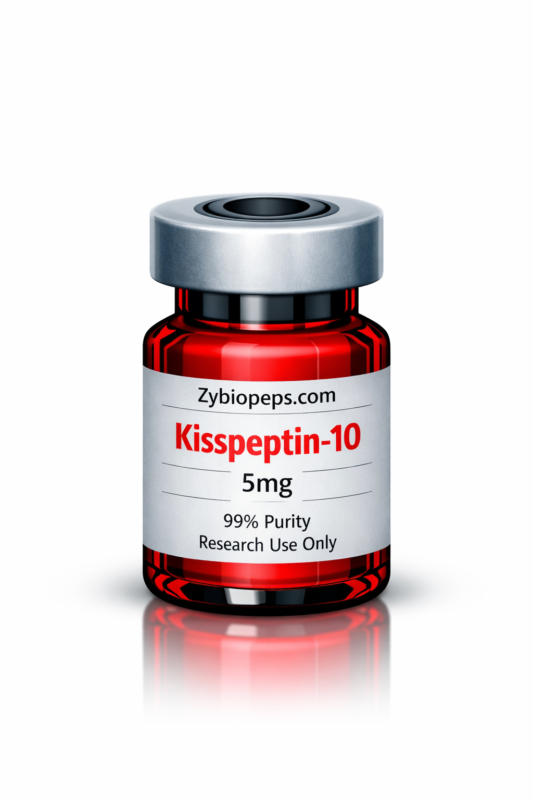
At Zybiopeps, kisspeptin-10 is available in 5mg and 10mg concentrations for research purposes. We ship same day from our USA warehouse via USPS and FedEx, and every batch is independently HPLC tested to 99%+ purity by a USA-based third-party laboratory. A certificate of analysis is available for every order. We ship to the USA, UK, Australia, Germany, Canada, the Philippines, and worldwide. Minimum order is $100.
Here’s what the research literature shows about this remarkable neuropeptide and why it continues to attract growing scientific attention.
What Is Kisspeptin-10?
Kisspeptin-10 is the shortest bioactive fragment of the kisspeptin family, comprising the 10 C-terminal amino acids of the full-length kisspeptin-54 protein. Despite its small size relative to the full kisspeptin molecule, this fragment retains full biological activity at the kisspeptin receptor (KISS1R, also known as GPR54) — making it the most commonly used form in research settings due to its manageable size and well-characterized receptor binding profile.
The KISS1 gene was originally identified as a metastasis suppressor in melanoma research — hence the name “kisspeptin,” a nod to the Hershey’s Kisses chocolate made in Hershey, Pennsylvania where the gene was discovered. What researchers subsequently found was that the peptides encoded by this gene play a far more important role in reproductive biology than in cancer biology, fundamentally reshaping our understanding of the hypothalamic-pituitary-gonadal (HPG) axis.
GnRH and Reproductive Hormone Research
The primary research focus on kisspeptin-10 centers on its role as the dominant stimulator of GnRH neurons in the hypothalamus. Before the discovery of kisspeptin’s role in this system, researchers knew that GnRH controlled LH and FSH release from the pituitary, but the upstream signals controlling GnRH secretion itself were poorly understood. Kisspeptin filled this gap — research has shown it is essentially the master switch that activates GnRH neurons and drives the pulsatile GnRH secretion that the reproductive axis requires to function normally.
What’s interesting is that kisspeptin-10 administration in research subjects produces rapid, dose-dependent increases in LH secretion — a response so consistent and reliable that it has become a standard research tool for probing HPG axis function. Studies have used kisspeptin-10 to investigate hypothalamic amenorrhea, hypogonadotropic hypogonadism, pubertal timing, and the neuroendocrine mechanisms of reproductive suppression in conditions ranging from eating disorders to excessive exercise.
Testosterone Research
Because kisspeptin-10 sits at the top of the reproductive hormone cascade, its effects on testosterone production have attracted significant research interest. Studies in male subjects have documented that kisspeptin-10 administration produces robust LH pulses followed by meaningful increases in testosterone levels. The magnitude and duration of these testosterone responses have been characterized across different dosing schedules and administration routes in published clinical research.
Researchers studying male hypogonadism, age-related testosterone decline, and the neuroendocrine mechanisms of testosterone regulation have found kisspeptin-10 valuable as a tool for stimulating the HPG axis at its most upstream point. Unlike direct testosterone replacement, kisspeptin-10 works through the body’s own hormonal machinery — stimulating endogenous testosterone production rather than replacing it — which makes it particularly interesting for research into the preservation of natural hormonal feedback mechanisms. Our Gonadorelin page covers another GnRH-related research compound for researchers studying the reproductive hormone axis.
Female Reproductive Research
Kisspeptin-10 research in female reproductive biology has been equally productive. Studies have shown that kisspeptin signaling is essential for the LH surge that triggers ovulation, and that disruption of kisspeptin signaling produces anovulation in animal models. Research has explored kisspeptin’s role in the menstrual cycle, its relationship to estrogen feedback on GnRH neurons, and its potential applications in understanding conditions characterized by disrupted reproductive hormone patterns.
Clinical research has investigated kisspeptin-10 administration in women with hypothalamic amenorrhea — a condition where stress, weight loss, or excessive exercise disrupts GnRH pulsatility and suppresses reproductive function. Studies have shown that kisspeptin-10 can restore LH pulsatility in these subjects, providing both mechanistic insight into the condition and a potential research model for restoring HPG axis function. This research has significant implications for understanding the neuroendocrine basis of reproductive dysfunction.
Metabolic and Cardiovascular Research
Beyond reproductive biology, kisspeptin research has expanded into metabolic and cardiovascular contexts. Studies have found kisspeptin receptors expressed in peripheral tissues including the pancreas, liver, fat tissue, and heart — suggesting the peptide’s biological role extends beyond the hypothalamus. Research has documented effects of kisspeptin signaling on insulin secretion, glucose metabolism, and cardiac function in animal models.
Here’s the thing — the metabolic research angle on kisspeptin-10 is still in relatively early stages compared to the reproductive biology literature, but the presence of KISS1R in metabolic tissues suggests a broader physiological role that researchers are actively investigating. For researchers building comprehensive hormonal and metabolic research protocols, our wholesale program offers competitive pricing for multi-compound orders with same-day USA warehouse shipping on every batch.
Kisspeptin-10 and the HPG Axis
Understanding kisspeptin-10’s position in the HPG axis helps researchers design more effective protocols. The axis works as follows: kisspeptin neurons in the hypothalamus activate GnRH neurons, which release GnRH in pulses into the portal circulation. GnRH reaches the pituitary and stimulates the release of LH and FSH. LH acts on the gonads to stimulate testosterone production in males and estrogen and progesterone production in females, while FSH supports sperm production and follicular development respectively.
Kisspeptin-10’s position at the very top of this cascade — upstream of GnRH itself — makes it the most fundamental control point researchers can target when studying reproductive hormone regulation. Changes in kisspeptin signaling propagate through the entire axis, making it a powerful research tool for understanding how environmental, metabolic, and neurological factors influence reproductive function at the most basic level. A key peer-reviewed study on kisspeptin-10 and LH secretion is available on PubMed for researchers reviewing the foundational literature.
Frequently Asked Questions About Kisspeptin-10
What does kisspeptin-10 do in research?
Kisspeptin-10 activates kisspeptin receptors (KISS1R) on GnRH neurons in the hypothalamus, stimulating GnRH release and driving the downstream reproductive hormone cascade including LH, FSH, and ultimately testosterone and estrogen production. It is used as a research tool to study HPG axis function and reproductive hormone regulation.
How does kisspeptin-10 differ from full-length kisspeptin?
Kisspeptin-10 is the 10-amino acid C-terminal fragment of kisspeptin-54 — the full-length form. Despite being much smaller, kisspeptin-10 retains full biological activity at the KISS1R receptor, making it the preferred form for research due to its manageable size and well-characterized pharmacology.
What concentrations does Zybiopeps stock?
We stock kisspeptin-10 in 5mg and 10mg concentrations. Every batch is independently HPLC tested to 99%+ purity by a USA-based third-party laboratory. A certificate of analysis is available for every batch upon request.
Where does Zybiopeps ship kisspeptin-10?
Same-day shipping from our USA warehouse via USPS and FedEx to the USA, UK, Australia, Germany, Canada, the Philippines, and worldwide. Minimum order is $100.
What makes kisspeptin-10 important for testosterone research?
Kisspeptin-10 stimulates endogenous testosterone production by activating the HPG axis at its most upstream point — driving GnRH and LH release that then signals the testes to produce testosterone. This makes it valuable for studying natural testosterone regulation mechanisms rather than direct replacement approaches.
Is kisspeptin-10 studied in both male and female research models?
Yes. In males, research focuses primarily on LH pulses and testosterone production. In females, research has examined kisspeptin’s role in the LH surge triggering ovulation, menstrual cycle regulation, and hypothalamic amenorrhea. The compound is one of the few reproductive peptides with extensive published research in both sexes.
Disclaimer: Kisspeptin-10 is sold by Zybiopeps strictly for research purposes. It is not intended for human consumption, is not FDA approved, and should not be used as a medical treatment. All information on this page is provided for educational and research purposes only. Researchers should comply with all applicable laws and institutional guidelines when handling research peptides.
