
Research and Education
CJC-1295 Benefits: What Research Reveals About This Growth Hormone Peptide
CJC-1295 Benefits: What Research Reveals About This Growth Hormone Peptide
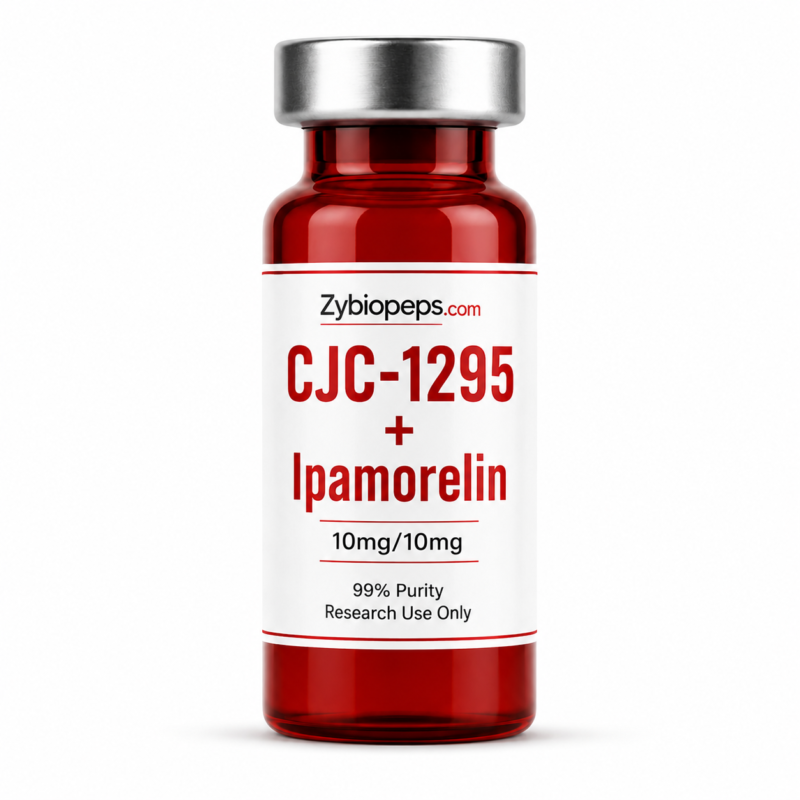
Among the most studied growth hormone secretagogues in peptide research, CJC-1295 has earned a prominent place in laboratories worldwide. Whether studied alone or in combination with Ipamorelin, this synthetic peptide has generated significant scientific interest for its ability to stimulate growth hormone release through a sustained, physiological mechanism.
In this post, the Zybiopeps Research Team breaks down the key CJC-1295 benefits documented in preclinical literature, how it works, and why researchers frequently combine it with Ipamorelin for enhanced results.
Note: All content on this page is intended strictly for educational and research purposes. CJC-1295 is not approved for human use by the FDA.
What Is CJC-1295?
CJC-1295 is a synthetic analogue of Growth Hormone Releasing Hormone (GHRH) — a naturally occurring peptide that signals the pituitary gland to produce and release growth hormone. Unlike native GHRH, which has a very short half-life of just a few minutes, CJC-1295 has been modified with Drug Affinity Complex (DAC) technology to extend its activity significantly.
This extended half-life is one of the most important characteristics that makes CJC-1295 a subject of ongoing research interest. Rather than producing a sharp, short spike in growth hormone, CJC-1295 creates a more sustained elevation — more closely mimicking the body’s natural pulsatile release patterns.
Key CJC-1295 Benefits Documented in Research
1. Stimulation of Growth Hormone Release
The primary and most well-documented CJC-1295 benefit is its ability to stimulate growth hormone secretion from the anterior pituitary gland. Preclinical studies have shown consistent, dose-dependent increases in GH levels following administration, with effects lasting significantly longer than native GHRH.
This sustained GH stimulation has made CJC-1295 one of the most studied GHRH analogues in both animal models and early human research. A key study published on PubMed demonstrated that CJC-1295 produced dose-dependent increases in GH and IGF-1 levels with an extended duration of action. Read the original research on PubMed →
2. Elevated IGF-1 Levels
Alongside growth hormone stimulation, CJC-1295 research has consistently shown corresponding increases in Insulin-like Growth Factor 1 (IGF-1) — a downstream mediator of many of GH’s biological effects. IGF-1 plays a critical role in cellular growth, repair, and metabolic regulation, making it a key marker in studies involving tissue regeneration and body composition research.
3. Muscle and Body Composition Research
Given its ability to elevate GH and IGF-1, CJC-1295 has been studied extensively in the context of muscle tissue and body composition. Preclinical models have shown associations between sustained GH elevation and increased lean tissue development, alongside reductions in adipose tissue accumulation.
This dual effect on muscle and fat has made CJC-1295 one of the most popular compounds in sports science and body composition research communities globally.
4. Bone Density and Connective Tissue Support
Growth hormone plays a well-established role in bone metabolism and connective tissue maintenance. Research involving CJC-1295 has explored its potential to support bone mineral density and collagen synthesis — areas of particular interest in aging and orthopedic research models.
5. Anti-Aging and Longevity Research
GH levels naturally decline with age — a process sometimes referred to as somatopause. This decline has been associated with reductions in muscle mass, bone density, and metabolic efficiency. CJC-1295’s ability to restore more youthful GH secretion patterns has made it a subject of significant interest in longevity and anti-aging research circles.
CJC-1295 and Ipamorelin Stack — The Research Rationale
One of the most widely studied peptide combinations in GH research is the CJC-1295 and Ipamorelin stack. While CJC-1295 stimulates GH release through the GHRH pathway, Ipamorelin works through a complementary mechanism — activating the ghrelin receptor (GHS-R) to trigger GH secretion through a separate signalling pathway.
When combined, researchers hypothesize that these two compounds produce a synergistic effect — CJC-1295 providing a sustained baseline elevation of GH, while Ipamorelin amplifies the pulse amplitude. The result is a more complete stimulation of the body’s natural GH release mechanisms.
This stack has become one of the most researched GH-related peptide protocols in existence. If you’re sourcing compounds for this type of research, explore our Ipamorelin 10mg and full range of research peptides at Zybiopeps.
What Are the Benefits of CJC-1295 and Ipamorelin Combined?
Research into the combined CJC-1295 Ipamorelin benefits suggests the stack may offer a more physiologically complete approach to GH stimulation than either compound alone. By targeting two distinct receptor pathways simultaneously, the combination avoids the receptor desensitisation that can occur with single-pathway approaches, while producing a broader and more sustained GH response in preclinical models.
How Is CJC-1295 Used in Research Settings?
In laboratory research, CJC-1295 is typically administered via subcutaneous injection in animal models. Research protocols vary depending on the specific application being studied. All Zybiopeps peptides come with Certificates of Analysis (COA) to support research integrity and compound verification.
Final Thoughts
The CJC-1295 benefits documented in preclinical and early clinical research span growth hormone stimulation, IGF-1 elevation, muscle and body composition research, bone density support, and anti-aging applications. When combined with Ipamorelin, the research profile becomes even more compelling — making this one of the most studied peptide stacks in modern research.
For further reading, explore our related posts on Ipamorelin, BPC-157 Benefits, and Best Peptides for Muscle Growth.
⚠️ Disclaimer: All products sold by Zybiopeps are intended for research purposes only. They are not intended for human consumption, veterinary use, or therapeutic application. CJC-1295 has not been approved by the FDA for use in humans. This content is for educational purposes only and does not constitute medical advice. Always comply with all applicable laws and regulations regarding research peptides in your jurisdiction.
