
Research and Education
TB-500 Benefits: What Researchers Need to Know
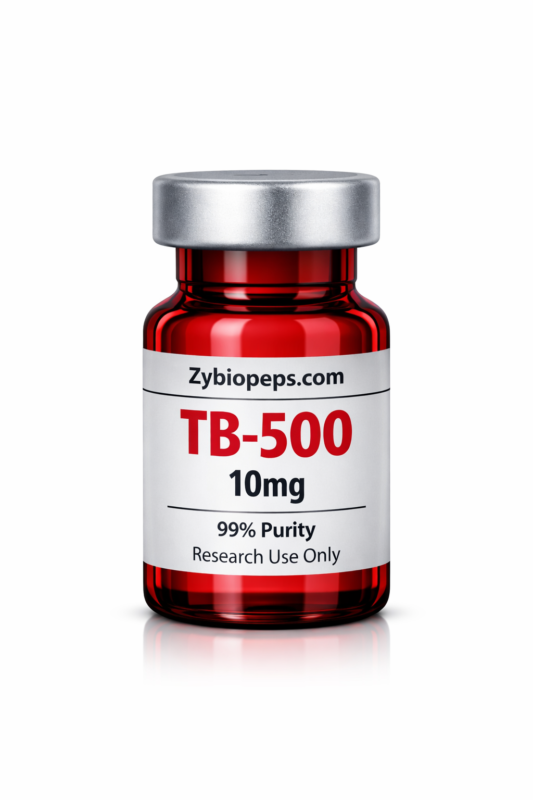
TB-500 has become one of the most studied peptides in modern research circles, and for good reason. This synthetic version of Thymosin Beta-4 — a naturally occurring protein found in nearly every human and animal cell — has demonstrated a remarkable range of biological activities in preclinical studies. From tissue repair to inflammation modulation, the TB-500 benefits observed in laboratory settings have made it a compound of significant interest across multiple research disciplines.
At Zybiopeps, TB-500 is one of our most requested compounds. Researchers around the world are actively exploring its mechanisms, and we’re proud to supply high-purity TB-500 to support that work.
What Is TB-500?
TB-500 is a synthetic peptide derived from the active region of Thymosin Beta-4, a 43-amino acid protein involved in a wide range of cellular processes. The specific fragment used in TB-500 research — the actin-binding domain — is believed to be responsible for much of Thymosin Beta-4’s biological activity, including its role in cell migration, angiogenesis, and wound healing.
Unlike many peptides that target a single receptor or pathway, TB-500 appears to work through multiple mechanisms simultaneously, making it a uniquely versatile subject for preclinical investigation. Researchers studying recovery, regeneration, and inflammation have all found reason to examine what TB-500 can do at the cellular level.
TB-500 Benefits Observed in Research
The body of preclinical literature on TB-500 covers a broad range of potential benefits. Here is what the research has documented so far across key areas of study.
Tissue Repair and Wound Healing
One of the most well-documented TB-500 benefits in preclinical studies is its role in accelerating tissue repair. Research has shown that Thymosin Beta-4 — and by extension TB-500 — promotes the migration of keratinocytes and endothelial cells to wound sites, a critical step in the healing process. Studies in animal models have demonstrated faster closure of skin wounds and improved regeneration of damaged tissue following TB-500 administration.
This activity is linked to TB-500’s ability to upregulate actin polymerization, which is essential for cell movement and the structural rebuilding of damaged tissue. Our research team at Zybiopeps has reviewed the literature extensively on this mechanism, and the consistency of results across multiple animal models is notable.
Muscle Recovery and Repair
TB-500 has attracted significant attention in the area of muscle research. Preclinical studies have found that Thymosin Beta-4 promotes satellite cell activation — the stem cells responsible for muscle fiber repair and regeneration. In animal models of muscle injury, TB-500 administration was associated with improved recovery times and reduced fibrosis at injury sites.
This makes TB-500 a particularly interesting compound for researchers studying exercise physiology, sports medicine, and the biology of skeletal muscle repair. The peptide’s anti-fibrotic properties are especially relevant, as scar tissue formation is one of the primary obstacles to full muscle recovery following significant injury.
Anti-Inflammatory Properties
Inflammation regulation is another area where TB-500 benefits have been consistently observed in research settings. Studies have shown that Thymosin Beta-4 can downregulate pro-inflammatory cytokines while simultaneously promoting the conditions necessary for healthy tissue regeneration. This dual action — reducing harmful inflammation while supporting repair — makes TB-500 a compound of interest in research on chronic inflammatory conditions.
Published research in the journal Annals of the New York Academy of Sciences has highlighted Thymosin Beta-4’s role as an endogenous anti-inflammatory agent, with implications for a wide range of conditions studied in preclinical models. You can review relevant findings through PubMed’s indexed research on Thymosin Beta-4.
Cardiovascular Research
TB-500 has also emerged as a subject of interest in cardiovascular research. Preclinical studies have found that Thymosin Beta-4 promotes angiogenesis — the formation of new blood vessels — and may support cardiac repair following ischemic injury. Animal studies have demonstrated that administration of Thymosin Beta-4 after induced heart injury was associated with improved cardiac function and reduced cell death in affected tissue.
While this research is still in early stages, the cardiovascular applications of TB-500 represent one of the more exciting frontiers in peptide research today.
Neurological Research
Emerging research has begun to explore TB-500’s potential in neurological contexts. Early studies suggest that Thymosin Beta-4 may play a role in neuroprotection and the promotion of neural repair following injury. Research in animal models of stroke and traumatic brain injury has shown some promising signals, though this area of TB-500 research remains in its infancy and requires significantly more investigation before any conclusions can be drawn.
TB-500 and BPC-157: A Popular Research Combination
Many researchers studying tissue repair and recovery choose to investigate TB-500 alongside BPC-157, another well-researched peptide with complementary mechanisms. The combination — sometimes referred to as the “healing stack” in research literature — has generated interest because the two peptides appear to target overlapping but distinct pathways involved in repair and regeneration.
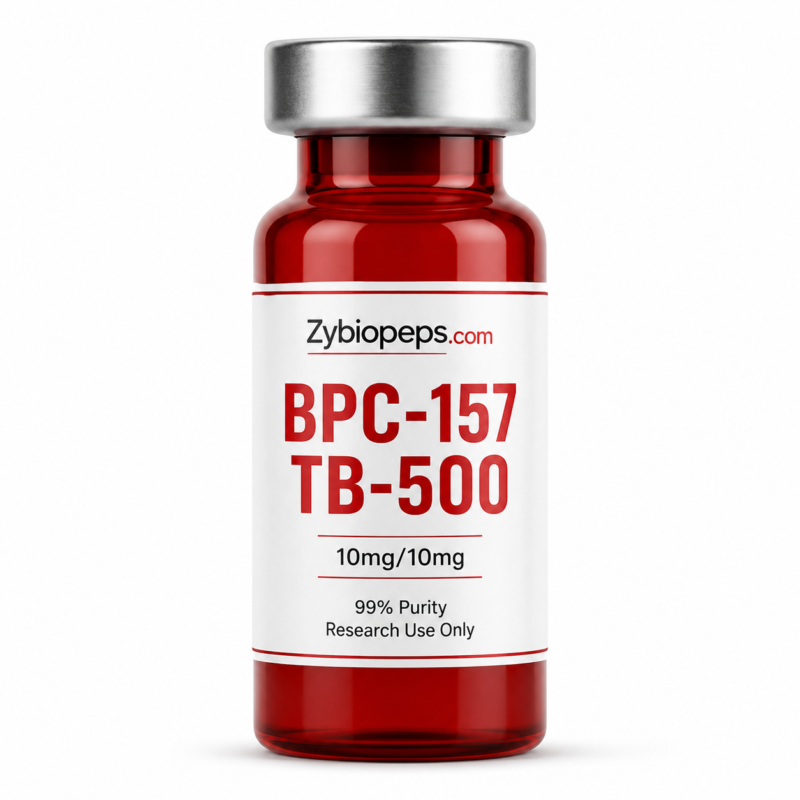
TB-500 is believed to work primarily through actin regulation and cell migration, while BPC-157 exerts much of its activity through growth factor modulation and angiogenesis promotion. Researchers ordering from Zybiopeps can source both compounds in verified high-purity form, with full certificates of analysis available for each product.
If you are researching this combination, you can find our TB-500 and BPC-157 product pages for full specifications and COA details.
TB-500 Peptide Purity and Research Quality
The quality of research outcomes is directly tied to the purity of the compounds used. Researchers ordering from Zybiopeps can be confident that our TB-500 is manufactured to 99%+ purity standards, with third-party certificates of analysis available for every batch. Consistent purity ensures that experimental results reflect the peptide’s true biological activity rather than contamination variables.
This is an area where sourcing matters enormously. Low-purity peptides introduce confounding variables that can invalidate research findings entirely. At Zybiopeps, we hold our supply chain to the highest standards precisely because the integrity of your research depends on it.
Frequently Asked Questions About TB-500 Benefits
What is TB-500 used for in research?
TB-500 is primarily studied for its role in tissue repair, wound healing, muscle recovery, inflammation modulation, and cardiovascular regeneration. It is used in preclinical research settings to better understand the biological mechanisms of Thymosin Beta-4.
What are the main benefits of using TB-500 in preclinical studies?
Research has documented TB-500 benefits including accelerated wound closure, reduced inflammation, promotion of angiogenesis, satellite cell activation in muscle tissue, and potential neuroprotective effects in animal models.
What are the benefits of TB 500 compared to other peptides?
TB-500 is notable for its multi-pathway activity. Unlike peptides that target a single mechanism, TB-500 influences cell migration, actin dynamics, inflammation, and vascular growth simultaneously, making it a broadly applicable research compound.
Can TB-500 and BPC-157 be studied together?
Many researchers choose to study TB-500 and BPC-157 in combination due to their complementary mechanisms in tissue repair research. Both compounds are available at Zybiopeps with full COA documentation.
Where can researchers source high-purity TB-500?
Zybiopeps supplies TB-500 at 99%+ purity with third-party certificates of analysis. Our TB-500 is manufactured specifically for research purposes and ships to the USA, Canada, and Australia.
What does TB-500 do at the cellular level?
At the cellular level, TB-500 promotes actin polymerization, which facilitates cell migration to injury sites. It also modulates pro-inflammatory cytokine expression and supports the conditions necessary for new blood vessel formation and tissue regeneration.
Disclaimer
All information presented on this page is intended strictly for educational and research purposes. TB-500 is a research peptide and is not approved by the FDA for human use. It is not intended to diagnose, treat, cure, or prevent any disease or medical condition. All research involving peptides must be conducted in accordance with applicable laws and regulations. Zybiopeps supplies research-grade peptides exclusively for laboratory and preclinical research use.
