
Research and Education
NAD Peptide Benefits: What Longevity Researchers Need to Know.
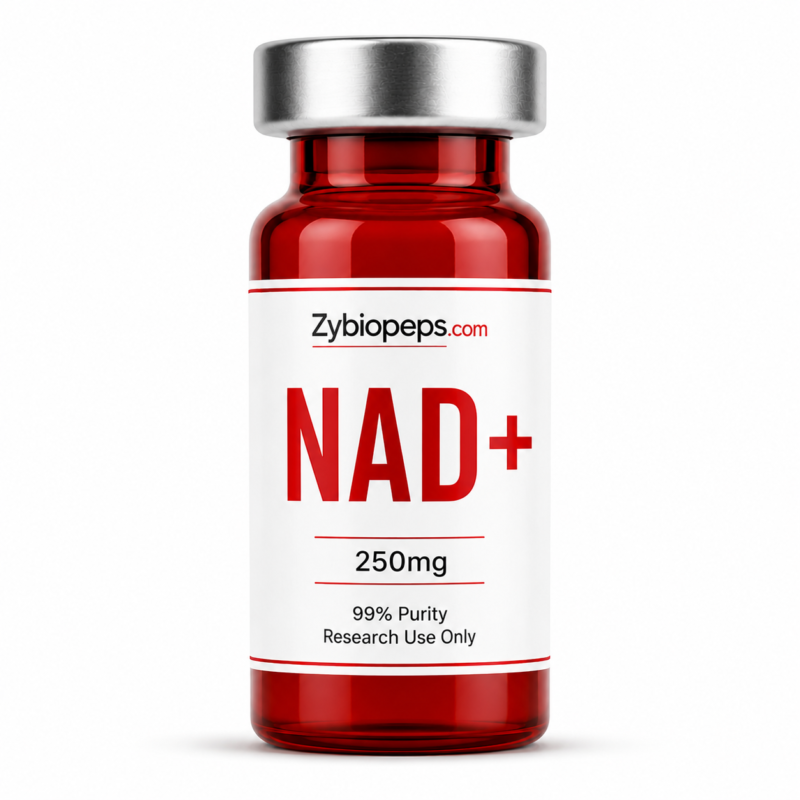
NAD peptide benefits have become one of the most discussed topics in longevity and cellular health research — and the science behind why NAD+ matters so much to biological aging is genuinely fascinating. NAD+, or nicotinamide adenine dinucleotide, is a coenzyme found in every living cell, and its role in energy metabolism, DNA repair, and cellular signaling makes it one of the most fundamental molecules in biology. Understanding what NAD peptides are and how they interact with aging-related pathways is essential groundwork for researchers working in the longevity space.
At Zybiopeps, we support NAD+ and longevity peptide research with same day shipping from our USA warehouse via USPS and FedEx. Every compound is third-party HPLC tested to 99%+ purity, packaged in sealed laboratory-grade vials, and comes with a full certificate of analysis. Research teams can start with a minimum order of just $100, with bulk pricing available through our wholesale program.
Is NAD a Peptide? Understanding the Biology
This is one of the most common questions researchers encounter when entering this field — is NAD a peptide? The technical answer is no. NAD+ is a dinucleotide — a molecule consisting of two nucleotides joined together — rather than a peptide, which is a chain of amino acids. However, NAD+ is deeply connected to peptide research in several important ways.
First, many of the peptides most studied for longevity and cellular health — including Epithalon and growth hormone secretagogues — interact with pathways that are closely linked to NAD+ metabolism. Second, NAD+ precursors like NMN (nicotinamide mononucleotide) and NR (nicotinamide riboside) are sometimes grouped with peptide research compounds in longevity research programs because they address similar biological targets. And third, sirtuins — the NAD+-dependent enzymes central to aging research — interact directly with peptide-regulated pathways including growth hormone signaling and inflammatory cascades.
What Is NAD Peptide Research Actually Studying?
When researchers refer to NAD peptide research, they’re typically studying either NAD+ precursors themselves or the intersection between NAD+ biology and peptide mechanisms. Here’s what makes this intersection interesting.
NAD+ levels decline significantly with age — by some estimates, NAD+ concentrations in human tissue fall by 50% or more between young adulthood and middle age. This decline has been linked to reduced mitochondrial function, impaired DNA repair capacity, disrupted circadian rhythms, and declining sirtuin activity. Sirtuins — particularly SIRT1 and SIRT3 — are NAD+-dependent enzymes that regulate a remarkable range of aging-related processes including inflammation, stress response, and metabolic efficiency.
Research has shown that restoring NAD+ levels in aging animal models can reverse some of these age-related changes — improving mitochondrial function, reducing inflammation markers, and extending healthspan in several model organisms. Our research team at Zybiopeps has followed this literature carefully, and the mechanistic connections between NAD+ biology and peptide-regulated aging pathways make this one of the most compelling areas of longevity research today.
NAD Peptide Benefits in Longevity Research
The NAD peptide benefits that researchers most consistently document fall into several key categories. Energy metabolism is the most fundamental — NAD+ is essential for cellular respiration and ATP production, and declining NAD+ levels directly impair the energy-generating capacity of cells. This has downstream effects on virtually every tissue in the body, which is why NAD+ restoration has such broad effects in preclinical longevity research.
DNA repair is the second major area. NAD+ is consumed by PARP enzymes — the primary responders to DNA damage in cells. As organisms age, DNA damage accumulates faster than repair systems can address it, and declining NAD+ levels further impair the repair capacity available. Research has shown that restoring NAD+ can improve DNA repair efficiency in aged animal models, with implications for age-related disease research.
Sirtuin activation is the third key mechanism. Sirtuins regulate gene expression, inflammation, and metabolic function in ways that are profoundly relevant to aging biology. Their requirement for NAD+ as a cofactor means that declining NAD+ levels directly suppress sirtuin activity — and research has documented that NAD+ restoration can reactivate this pathway in aging subjects.
How NAD+ Research Connects to Peptide Biology
What is nad+ peptide research revealing about the connections between these two fields? Several important intersections have emerged from the literature. Growth hormone — whose secretion is studied extensively through peptide tools like Sermorelin, CJC-1295, and Ipamorelin — is known to influence NAD+ metabolism and sirtuin activity. Research has suggested that growth hormone signaling supports mitochondrial function partly through NAD+-dependent pathways, creating a mechanistic link between GH restoration research and NAD+ biology.
Similarly, BPC-157’s well-documented anti-inflammatory effects interact with sirtuin-regulated inflammatory pathways that require NAD+ for their activity. And Epithalon’s telomere-related mechanisms connect to the broader question of how NAD+ and telomere biology interact in the context of cellular senescence — an area of active investigation in longevity research.
NAD Peptides and Mitochondrial Research
One of the most active areas of NAD peptide research involves mitochondrial function. Mitochondria — the energy-producing organelles in cells — are particularly sensitive to NAD+ availability, and mitochondrial dysfunction is now considered a central feature of the aging process. Research has shown that NAD+ restoration can improve mitochondrial biogenesis, efficiency, and stress resistance in aging animal models.
For researchers studying the mitochondrial aspects of aging, NAD+ precursors like NMN and NR provide useful investigative tools that complement peptide-based research approaches. The combination of NAD+ restoration with growth hormone secretagogues and regenerative peptides represents one of the more sophisticated multi-mechanism approaches emerging in longevity research today.
How Zybiopeps Supports NAD+ and Longevity Research
Zybiopeps combines direct manufacturing access, rigorous quality documentation, and reliable logistics to support researchers studying NAD+ adjacent biology and longevity peptides. Our compounds are manufactured under strict quality control standards, third-party HPLC tested in the USA, and packaged in sealed laboratory-grade vials designed to maintain integrity during storage and international transit.
Orders ship same day from our USA warehouse via USPS and FedEx to researchers in the USA, UK, Australia, Germany, the Philippines, Canada, and worldwide. Every order includes certificate of analysis documentation. Research teams studying longevity biology can explore our full catalog of relevant compounds including Epithalon, Sermorelin, BPC-157, and Ipamorelin. Bulk pricing is available through our Wholesale Research Peptides program with a $100 minimum order.
The Primary Research on NAD Peptide Benefits
The NAD+ aging research literature has expanded dramatically over the past decade. For researchers engaging with the primary science, a foundational study on NAD+ decline in aging and its reversal through precursor supplementation provides an excellent entry point into the mechanisms driving interest in this field.
Frequently Asked Questions About NAD Peptide Benefits
Is NAD a peptide?
No — NAD+ is a dinucleotide coenzyme rather than a peptide. However, NAD+ biology is deeply connected to peptide research through shared pathways including growth hormone signaling, sirtuin activation, and inflammatory regulation. NAD+ precursors are often studied alongside longevity peptides in research programs targeting multiple aging mechanisms.
What is NAD peptide research studying?
NAD peptide research studies the intersection between NAD+ biology — including sirtuin activation, mitochondrial function, and DNA repair — and peptide-regulated aging pathways. Researchers investigate how NAD+ restoration and longevity peptides interact to address multiple mechanisms of biological aging simultaneously.
What are the main NAD peptide benefits in longevity research?
Research has documented NAD+-related benefits including improved mitochondrial function and ATP production, enhanced DNA repair capacity, restored sirtuin activity with downstream effects on inflammation and gene expression, and improved healthspan markers in aging animal models.
Is NAD+ a peptide that can be studied with other compounds?
NAD+ precursors are frequently studied alongside peptides in multi-mechanism longevity research programs. Combining NAD+ restoration with growth hormone secretagogues like Sermorelin and regenerative peptides like BPC-157 addresses complementary aging pathways that single-compound approaches cannot cover.
Where can researchers source longevity compounds for NAD+ adjacent research?
Zybiopeps supplies Epithalon, Sermorelin, CJC-1295, Ipamorelin, BPC-157, TB-500, and other longevity-relevant research compounds from our USA warehouse with same day worldwide shipping. All compounds are third-party HPLC tested to 99%+ purity with COAs available. Minimum order $100.
Disclaimer
All content on this page is intended strictly for educational and research purposes. The compounds discussed are research substances and are not approved by the FDA for human use. The information presented does not constitute medical advice and is not intended to diagnose, treat, cure, or prevent any disease or medical condition. All research must be conducted in accordance with applicable laws and regulations. Zybiopeps supplies research-grade compounds exclusively for laboratory and preclinical research use.
