
Research and Education
eptides for Muscle Recovery — Research Guide
Peptides for muscle recovery have emerged as one of the most actively studied areas in sports science and regenerative research — and for good reason. Muscle tissue repair is a complex biological process involving inflammation regulation, satellite cell activation, collagen synthesis, and growth factor signalling. Peptide compounds offer researchers precise tools to study and potentially modulate each of these pathways individually.
What’s interesting is that recovery research has shifted significantly in recent years. Where once the focus was almost entirely on nutrition and rest protocols, the research community has increasingly turned to peptide compounds as a way to understand the molecular mechanisms behind muscle repair at a deeper level. The compounds driving this research aren’t new — but the quality and depth of the literature is growing fast.
At Zybiopeps, peptides for recovery and muscle growth are among our most consistently requested compounds. Researchers from the USA, UK, Australia, Canada, and Germany order from us regularly because we deliver documented purity, fast shipping, and reliable supply on the compounds that matter most in this research space.
How Peptides Support Muscle Recovery Research
Different peptide compounds influence muscle recovery through distinct mechanisms. Some act on growth hormone pathways to stimulate IGF-1 production — a key driver of muscle protein synthesis and satellite cell activation. Others work directly on tissue repair at the cellular level, promoting angiogenesis and reducing inflammatory signalling in damaged muscle tissue. Understanding which mechanism you’re studying is the starting point for choosing the right compound for your protocol.
Collagen peptides for muscle recovery represent another research angle — collagen is a structural protein critical to connective tissue integrity, and collagen-derived peptide compounds have been studied for their role in tendon and ligament repair alongside muscle tissue. This makes collagen peptide research particularly relevant for protocols examining the full recovery picture beyond just muscle fibres.
Best Peptides for Muscle Recovery — Research Overview
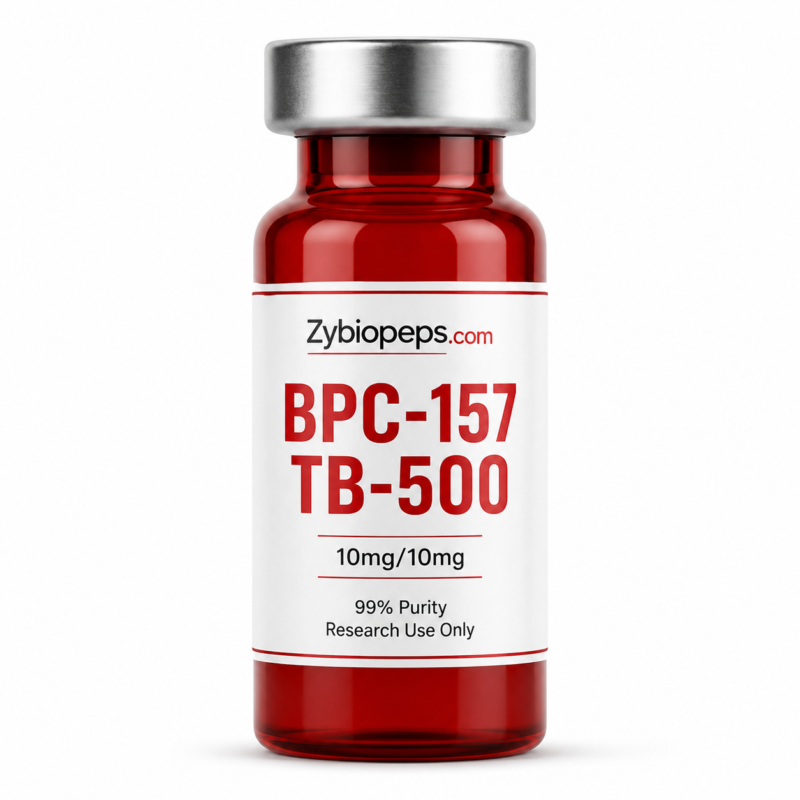
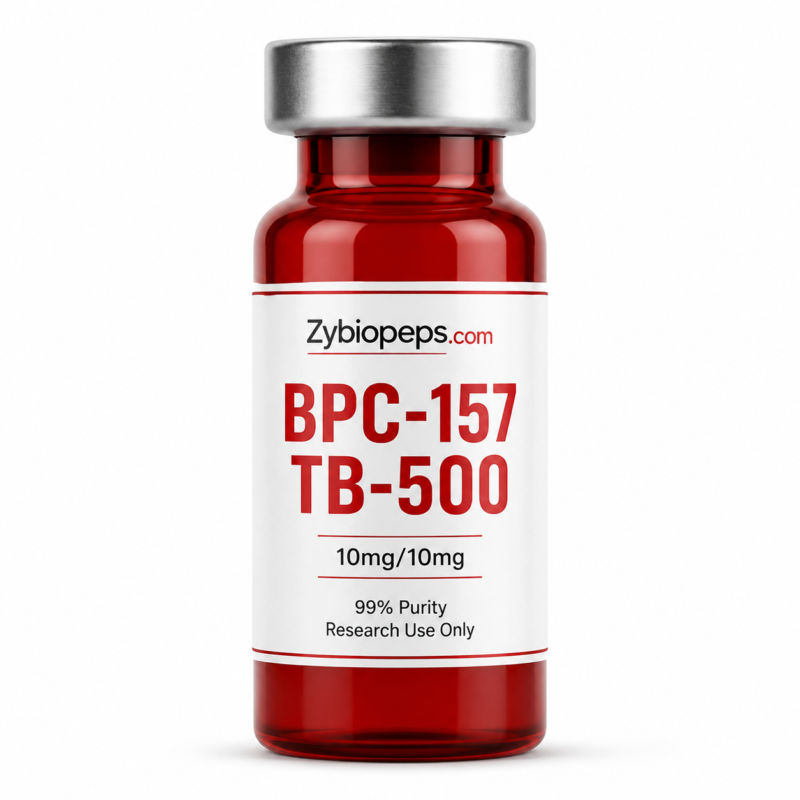
BPC-157 is arguably the most studied peptide in muscle and tissue recovery research. This 15-amino-acid compound derived from human gastric juice has demonstrated remarkable healing properties in preclinical models — accelerating muscle tear repair, tendon-to-bone healing, and reducing recovery time in injury models. What makes BPC-157 particularly valuable for recovery research is its multi-system activity: it influences growth hormone receptors, promotes angiogenesis, and modulates nitric oxide signalling simultaneously. Our research-grade BPC-157 is HPLC tested to 99%+ purity with COA on every batch.
TB-500 is a synthetic version of Thymosin Beta-4, a naturally occurring peptide found in high concentrations in platelets and wound fluid. In preclinical studies, TB-500 has demonstrated significant effects on muscle fibre repair, satellite cell migration, and anti-inflammatory activity. It’s particularly well studied in models involving acute muscle injury, and it’s frequently researched alongside BPC-157 for its complementary mechanisms. Our TB-500 is available with the same purity guarantees.
Ipamorelin and CJC-1295 are growth hormone secretagogues that stimulate GH release — and GH is a primary driver of IGF-1 production, which in turn drives muscle protein synthesis and recovery. Research using these compounds in muscle recovery models has shown improvements in lean mass preservation and recovery markers in animal studies. The combination is frequently studied together for synergistic GH stimulation. See our Ipamorelin and CJC-1295 product pages for details.
Sermorelin is another GHRH analogue studied for its role in GH-mediated recovery processes. With a shorter half-life than CJC-1295, it offers researchers a different timing profile for studying GH pulse dynamics in recovery protocols. Our research-grade Sermorelin is available with full documentation.
Best Peptides for Muscle Growth and Recovery Combined
Researchers studying both muscle growth and recovery often find that the most useful compounds address both simultaneously. GH secretagogues like Ipamorelin and CJC-1295 stimulate anabolic signalling pathways that support both new muscle development and repair of damaged tissue. BPC-157 and TB-500, while primarily studied for repair, also appear to influence growth factor pathways in ways that support overall tissue health and resilience.
The emerging research picture suggests that muscle growth and muscle recovery aren’t entirely separate processes — they share overlapping molecular mechanisms, and compounds that support one often support the other. This is why multi-compound research protocols examining both endpoints simultaneously have become more common in the literature.
A 2018 study published on PubMed examined the role of growth hormone secretagogues in muscle repair models, demonstrating meaningful improvements in recovery markers in animal subjects — adding to the growing body of evidence supporting GH peptides in muscle recovery research.
Ordering Muscle Recovery Peptides for Research
Our research team at Zybiopeps has reviewed the literature on every compound we carry in the recovery space. We only stock peptides with meaningful published research behind them — and every batch is independently third-party HPLC tested to 99%+ purity with a Certificate of Analysis available for every order.
Researchers ordering from Zybiopeps can be confident their compounds arrive in sealed laboratory-grade vials inspected before dispatch, shipped same day from our USA warehouse via USPS and FedEx. Minimum order is just $100, and we ship to the USA, UK, Australia, Germany, Philippines, Canada, and worldwide.
For labs running ongoing recovery research protocols requiring consistent supply, our wholesale program is available at zybiopeps.com/wholesale-peptides/.
Frequently Asked Questions — Peptides for Muscle Recovery
What are the best peptides for muscle recovery research?
BPC-157 and TB-500 are the most extensively studied peptides for muscle and tissue recovery in preclinical models. Ipamorelin and CJC-1295 are widely studied for GH-mediated recovery and muscle growth support. All are available at Zybiopeps with 99%+ HPLC purity and COA.
How do peptides help with muscle recovery in research models?
Different compounds work through different mechanisms — BPC-157 promotes angiogenesis and reduces inflammation, TB-500 supports satellite cell migration and fibre repair, and GH secretagogues stimulate IGF-1 production which drives muscle protein synthesis. Each offers a distinct research angle on the recovery process.
What is the difference between BPC-157 and TB-500 for recovery research?
BPC-157 acts on multiple repair pathways simultaneously including nitric oxide signalling and growth hormone receptors. TB-500 primarily works through actin regulation and satellite cell activation. They have complementary mechanisms and are frequently studied together in recovery protocols.
Are collagen peptides studied for muscle recovery?
Yes. Collagen-derived peptides are studied for their role in connective tissue repair — particularly tendons and ligaments — which is integral to full muscle recovery protocols. This makes collagen peptide research a complementary area to direct muscle repair compound research.
Can I order muscle recovery peptides in bulk for ongoing research?
Yes. Zybiopeps offers a wholesale program for research teams placing regular orders. Minimum order $100, same-day shipping from our USA warehouse. Visit zybiopeps.com/wholesale-peptides/ for details.
Disclaimer: All products sold by Zybiopeps are intended for research purposes only. They are not approved for human consumption, medical use, or veterinary use. Information provided in this article is for educational purposes and does not constitute medical advice. Researchers are responsible for complying with all applicable local laws and regulations regarding the purchase and use of research compounds.
