
Research and Education
5-Amino-1MQ Benefits — NNMT Inhibitor Research Guide
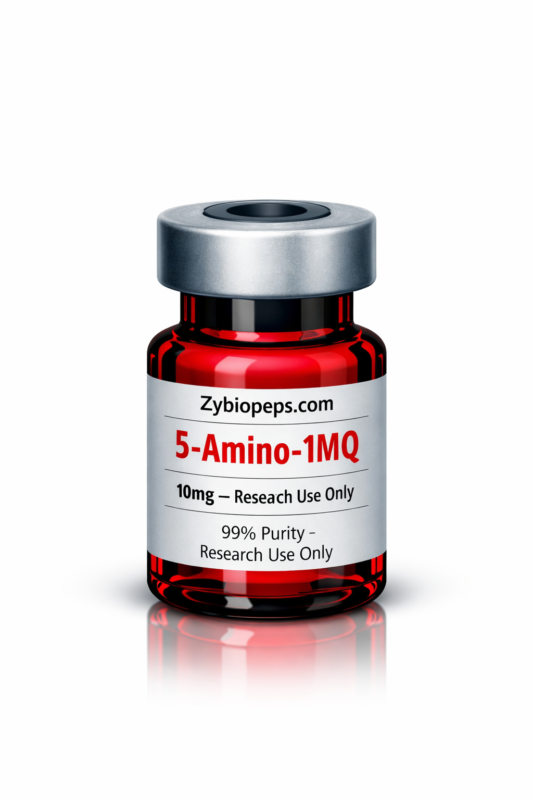
5-Amino-1MQ benefits are generating serious interest in metabolic and longevity research circles — and if you haven’t come across this compound yet, you’re about to understand why. This small molecule inhibitor targets an enzyme called NNMT — nicotinamide N-methyltransferase — and what happens when you block that enzyme is genuinely fascinating from a metabolic research perspective.
Here’s the context that makes this compound worth paying attention to. NNMT is an enzyme found primarily in fat tissue. Its job is to methylate nicotinamide — a form of Vitamin B3 — which sounds unremarkable until you understand what that process costs the cell. Methylation consumes SAM — S-adenosylmethionine — the body’s universal methyl donor. When NNMT runs hot, it drains the SAM pool, suppresses NAD+ synthesis, slows metabolism, and creates conditions that actively favour fat storage. In obese subjects and aging tissue, NNMT activity is consistently elevated. That’s the problem 5-Amino-1MQ was designed to address.
At Zybiopeps, this is one of the more exciting newer compounds we carry. We stock it in 10mg and 50mg injectable vials, plus 50mg capsules — giving researchers flexibility depending on their protocol design. Every batch is independently third-party HPLC tested to 99%+ purity, COA on every order, shipped same day from our USA warehouse via USPS and FedEx.
The Mechanism — How NNMT Inhibition Actually Works
Block NNMT and several things happen simultaneously. SAM levels rise — restoring the methyl donor pool that NNMT was depleting. NAD+ precursor availability increases — supporting mitochondrial function and cellular energy metabolism. And the metabolic suppression that chronically elevated NNMT activity creates starts to reverse at the cellular level.
What makes this mechanism particularly valuable for researchers is its specificity. 5-Amino-1MQ targets NNMT without broadly disrupting other methylation pathways — a selectivity profile that keeps experimental results cleaner and more interpretable. You’re not introducing a sledgehammer into cellular metabolism. You’re removing a specific bottleneck and watching what happens downstream.
The effect on adipocytes is where it gets compelling. Studies in preclinical models have shown NNMT inhibition reduces fat cell size, decreases lipid accumulation, and shifts cellular metabolism toward a more oxidative phenotype. Fat cells start behaving more like metabolically active tissue rather than passive storage depots. That’s a meaningful shift — and it’s driven by a mechanism most other metabolic compounds don’t touch.
What the Preclinical Data Shows
The research on 5-Amino-1MQ is still emerging — this isn’t a compound with decades of clinical trials behind it like semaglutide or tirzepatide. But what exists in the preclinical literature is grounded in solid metabolic biology, and the early findings are genuinely promising.
A study in Cell Chemical Biology examined NNMT inhibition in diet-induced obese mice and found significant reductions in fat mass, improved metabolic markers, and increased energy expenditure — without changes to food intake. That last point matters a lot. Unlike GLP-1 based compounds that work primarily through appetite suppression, 5-Amino-1MQ appears to change how cells handle energy at the metabolic level. Different mechanism, different research angle, potentially complementary findings.
Researchers studying metabolic dysfunction, obesity biology, and cellular aging have found this compound interesting precisely because the NNMT-SAM-NAD+ axis is relatively underexplored. There’s significant scientific territory still unmapped here — which is exactly the kind of space where early research produces the most interesting findings.
5-Amino-1MQ and NAD+ — Why Longevity Researchers Are Watching
NAD+ is essential for mitochondrial function, DNA repair, and the activity of sirtuins — proteins deeply involved in cellular aging and stress response. NAD+ levels decline with age, and that decline is associated with reduced metabolic efficiency, impaired cellular repair, and accelerated aging phenotypes across multiple tissue types.
By inhibiting NNMT and freeing up the SAM pool for NAD+ precursor synthesis, 5-Amino-1MQ potentially addresses NAD+ depletion through a different route than direct supplementation. Rather than adding more raw material, it reduces the drain on the system. Whether combining NNMT inhibition with direct NAD+ support produces additive effects is an open and active research question — and one our team at Zybiopeps has been watching closely. We carry both compounds for researchers who want to explore that combination.
A foundational study published on PubMed examining NNMT’s role in adipose tissue metabolism established the biological rationale that underpins 5-Amino-1MQ research — demonstrating that NNMT is a viable metabolic target and that small molecule inhibitors produce meaningful changes in fat tissue biology in animal models.
How It Fits With Other Metabolic Research Compounds
Researchers often ask where 5-Amino-1MQ sits relative to other compounds in the metabolic space. The honest answer is that it occupies genuinely different mechanistic territory. Semaglutide and Tirzepatide work through appetite regulation and GLP-1 receptor activation. AOD-9604 and HGH Fragment 176-191 work through lipolytic GH pathways. 5-Amino-1MQ works through intracellular metabolic reprogramming via NNMT inhibition.
These aren’t competing mechanisms — they’re different entry points into the same underlying problem. Researchers studying obesity biology or metabolic resistance can study them in isolation or design combination protocols depending on the research question. What’s particularly interesting about 5-Amino-1MQ is its potential relevance to metabolic resistance situations — where standard interventions produce limited results and a different pathway needs to be explored.
Ordering 5-Amino-1MQ From Zybiopeps
We’ve been in business since last year and the standard has never changed — every batch independently HPLC tested to 99%+ purity, COA on every single order, no exceptions. Sealed laboratory-grade vials inspected before dispatch. Same-day shipping from our USA warehouse via USPS and FedEx to the USA, UK, Australia, Germany, Philippines, Canada, and worldwide.
Minimum order is just $100. For research teams placing regular multi-compound orders, our wholesale program is worth a look at zybiopeps.com/wholesale-peptides/. And if you’re building a metabolic research protocol, our full catalogue — including Semaglutide, Tirzepatide, and NAD+ — is available with the same purity standards across every compound we carry.
Frequently Asked Questions — 5-Amino-1MQ Benefits
What is 5-Amino-1MQ and how does it work?
5-Amino-1MQ is a selective small molecule inhibitor of NNMT — nicotinamide N-methyltransferase. By blocking this enzyme, it preserves SAM and supports NAD+ precursor availability, shifting cellular metabolism toward greater energy expenditure and reduced fat accumulation in preclinical models.
What are the main research benefits of 5-Amino-1MQ?
Preclinical research has shown reductions in fat mass, improved metabolic markers, and increased energy expenditure — without appetite suppression. The NNMT inhibition mechanism is distinct from GLP-1 and lipolytic peptide pathways, making it a complementary research tool.
How does 5-Amino-1MQ relate to NAD+ research?
NNMT inhibition preserves the SAM pool which supports NAD+ precursor availability. This makes 5-Amino-1MQ relevant for researchers studying NAD+ metabolism and aging — potentially offering a complementary approach to direct NAD+ supplementation rather than a replacement for it.
What formats is 5-Amino-1MQ available in at Zybiopeps?
We carry 10mg and 50mg injectable vials, and 50mg capsules (60 per bottle). All formats are independently HPLC tested to 99%+ purity with COA on every batch. Minimum order $100, same-day shipping from our USA warehouse.
Can I order 5-Amino-1MQ in bulk for ongoing research?
Yes — our wholesale program is designed for research teams running extended protocols. Full details at zybiopeps.com/wholesale-peptides/.
Disclaimer: All products sold by Zybiopeps are intended for research purposes only. They are not approved for human consumption, medical use, or veterinary use. Information provided in this article is for educational purposes and does not constitute medical advice. Researchers are responsible for complying with all applicable local laws and regulations regarding the purchase and use of research compounds.
