
Uncategorized
GHRP-2 Benefits — Growth Hormone Research Guide
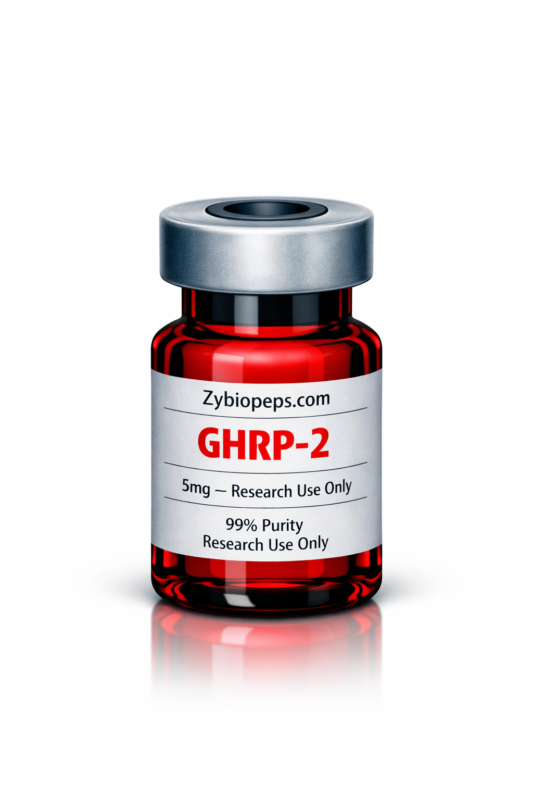
GHRP-2 benefits have become one of the more studied topics in growth hormone peptide research, and for good reason — this synthetic hexapeptide works through a mechanism that sets it apart from most other GH secretagogues on the market. Unlike peptides that operate through a single pathway, GHRP-2 stimulates growth hormone release by activating ghrelin receptors while simultaneously suppressing somatostatin, the hormone that puts the brakes on GH production. That dual action is what makes researchers so interested in it.
At Zybiopeps, GHRP-2 is one of the compounds our research community asks about most frequently. We stock it in 5mg, 10mg, and 15mg concentrations, ship same day from our USA warehouse via USPS and FedEx, and every batch is independently HPLC tested to 99%+ purity. A certificate of analysis is available for every order. For researchers outside the USA, we ship to the UK, Australia, Germany, Canada, the Philippines, and worldwide.
So what does the research actually say about this peptide? Here’s a thorough look at what scientists have observed.
What Is GHRP-2?
GHRP-2 — short for Growth Hormone Releasing Peptide-2 — is a six-amino acid synthetic peptide developed as part of early research into ghrelin receptor agonists. It belongs to the GHRP family alongside GHRP-6 and hexarelin, but carries its own distinct profile. What’s interesting is that GHRP-2 produces a notably strong GH pulse with relatively modest appetite stimulation compared to GHRP-6, which makes it a preferred choice for researchers focusing on body composition rather than caloric intake effects.
The peptide works by binding to the growth hormone secretagogue receptor (GHS-R1a), the same receptor that endogenous ghrelin targets. When this receptor is activated, the pituitary gland releases a pulse of growth hormone. GHRP-2 also works by reducing the inhibitory effect of somatostatin, effectively removing one of the body’s natural brakes on GH secretion. The result is a more pronounced and sustained GH release than what a single-pathway peptide typically produces.
GHRP-2 and Growth Hormone Release
The primary area of research interest with GHRP-2 is its effect on endogenous growth hormone secretion. Studies have consistently shown that GHRP-2 administration produces significant, dose-dependent GH pulses in research subjects. What researchers have noticed is that the GH release triggered by GHRP-2 closely mimics the natural pulsatile pattern the body uses, rather than creating a flat, sustained elevation that can blunt receptor sensitivity over time.
This pulsatile release pattern is considered important in growth hormone research because it more closely mirrors physiological norms. Flat, constant GH elevation — as seen with exogenous HGH administration — can lead to receptor downregulation. GHRP-2’s ability to stimulate natural pulses while suppressing somatostatin gives it a distinctive profile that researchers studying GH optimization continue to investigate.
When stacked with a GHRH analogue like CJC-1295, the synergistic effect on GH release is well documented in the research literature. The two peptides work on complementary pathways — CJC-1295 stimulates the GHRH receptor while GHRP-2 acts on the ghrelin receptor and suppresses somatostatin — producing a combined GH pulse significantly greater than either compound alone. This combination is one of the most frequently studied in the growth hormone peptide space.
Body Composition Research
Growth hormone plays a well-established role in body composition, influencing both fat metabolism and lean tissue maintenance. Because GHRP-2 stimulates GH release, researchers have studied its potential applications in body composition contexts. Animal studies have shown associations between GHRP-2 administration and changes in lean mass and fat oxidation markers, though human research in this area remains in earlier stages.
Here’s the thing — GHRP-2 is not unique in this regard among GH secretagogues, but its relatively cleaner appetite profile compared to GHRP-6 makes it an interesting candidate for body composition research specifically. Researchers studying fat loss pathways alongside GH release often prefer GHRP-2 for this reason. At Zybiopeps, our minimum order is $100, making it straightforward for research teams to access multiple compounds for comparative studies.
Recovery and Cellular Repair Pathways
Growth hormone is deeply involved in tissue repair and cellular regeneration. IGF-1, which is produced downstream of GH signaling in the liver, mediates many of these effects. Research into GHRP-2 has explored whether its GH-stimulating effects translate into measurable changes in recovery-related markers. Some animal model studies have suggested positive effects on tissue healing and collagen synthesis, though this area of research is still developing in human models.
Researchers interested in recovery peptides often pair GHRP-2 with BPC-157 or TB-500 to investigate complementary pathways. GHRP-2 contributes through the GH/IGF-1 axis while BPC-157 and TB-500 operate through more localized tissue repair mechanisms. If you’re building a research protocol around recovery, our BPC-157 and TB-500 product pages have full specifications and COA details.
How GHRP-2 Compares to Other GHRPs
Researchers evaluating the GHRP family often compare GHRP-2 directly with GHRP-6 and hexarelin. GHRP-6 is known for producing strong appetite stimulation alongside its GH release, which can be a confounding variable in body composition research. Hexarelin is potent but has shown faster receptor desensitization in longer study protocols. GHRP-2 sits in a middle ground — strong GH release, moderate appetite effects, and reasonable receptor sensitivity over extended research timelines.
For researchers comparing GH secretagogue classes more broadly, ipamorelin is often discussed alongside GHRP-2. Ipamorelin is highly selective and produces minimal cortisol or prolactin elevation, while GHRP-2 produces a stronger GH pulse but with slightly more impact on cortisol in some studies. The choice between the two depends heavily on the specific research question. Our Ipamorelin page has full product details for researchers designing comparative protocols.
GHRP-2 and the CJC-1295 Stack
One of the most discussed research combinations in the growth hormone peptide space is GHRP-2 paired with CJC-1295. The mechanistic rationale is clear — CJC-1295 acts on the GHRH receptor to prime the pituitary, while GHRP-2 simultaneously triggers ghrelin receptor activation and reduces somatostatin inhibition. The combined effect on GH pulse amplitude has been documented as substantially greater than either peptide administered in isolation.
Researchers ordering both compounds from Zybiopeps can access our CJC-1295 product page for specifications. Both compounds ship same day from our USA warehouse in sealed, laboratory-grade vials that are inspected before dispatch. For researchers ordering in larger quantities, our wholesale program offers competitive pricing for institutional and bulk research orders.
Research Considerations
GHRP-2 research protocols vary considerably depending on the research question. Studies have used a range of administration schedules, from single acute dosing to investigate GH pulse dynamics, to multi-week protocols examining longer-term effects on body composition markers. The peptide is water-soluble and typically reconstituted with bacteriostatic water for research applications.
Researchers should note that GHRP-2, like all GH secretagogues, can influence cortisol and prolactin in addition to growth hormone. These secondary hormonal effects are relevant data points in research protocols examining the full endocrine profile of GH secretagogue administration. A key peer-reviewed study on GHRP-2 and growth hormone release is available on PubMed for researchers reviewing the foundational literature.
Frequently Asked Questions About GHRP-2
What makes GHRP-2 different from other growth hormone peptides?
GHRP-2 operates through a dual mechanism — activating ghrelin receptors while suppressing somatostatin. This produces a stronger GH pulse than single-pathway peptides and makes it a distinct research tool compared to GHRH analogues like Sermorelin or CJC-1295.
Is GHRP-2 often studied alongside other peptides?
Yes. The GHRP-2 and CJC-1295 combination is one of the most studied pairings in GH peptide research due to their complementary mechanisms. Researchers also investigate GHRP-2 alongside BPC-157 in recovery-focused protocols.
What purity standard does Zybiopeps use for GHRP-2?
Every batch of GHRP-2 at Zybiopeps is independently HPLC tested by a USA-based third-party laboratory to 99%+ purity. A certificate of analysis is available for every batch upon request.
Where does Zybiopeps ship GHRP-2?
We ship same day from our USA warehouse via USPS and FedEx to the USA, UK, Australia, Germany, Canada, the Philippines, and worldwide. The minimum order is $100.
How does GHRP-2 compare to ipamorelin?
Both are GH secretagogues but with different selectivity profiles. Ipamorelin is highly selective with minimal cortisol impact. GHRP-2 produces a stronger GH pulse but with slightly broader hormonal effects. The right choice depends on the specific research objective.
Can GHRP-2 be used in longer research protocols?
Research literature includes both acute dosing studies and multi-week protocols. Receptor desensitization is less pronounced with GHRP-2 than with hexarelin, making it a viable option for extended research timelines.
Disclaimer: GHRP-2 is sold by Zybiopeps strictly for research purposes. It is not intended for human consumption, is not FDA approved, and should not be used as a medical treatment. All information on this page is provided for educational and research purposes only. Researchers should comply with all applicable laws and institutional guidelines when handling research peptides.
