

Research and Education
Liraglutide vs Semaglutide — GLP-1 Research Comparison.
Liraglutide vs semaglutide is one of the most searched comparisons in GLP-1 peptide research, and for good reason — both compounds target the same receptor through similar mechanisms, yet their pharmacological profiles, clinical data, and research applications differ in ways that matter significantly for study design. Understanding exactly where these two GLP-1 receptor agonists diverge helps researchers select the right compound for their specific protocol and interpret the existing literature more accurately.
At Zybiopeps, we stock both compounds for research purposes and ship same day from our USA warehouse via USPS and FedEx. Every batch is independently HPLC tested to 99%+ purity by a USA-based third-party laboratory, with a certificate of analysis available for every order. We ship to the USA, UK, Australia, Germany, Canada, the Philippines, and worldwide. Minimum order is $100.
Here’s a thorough head-to-head breakdown of what the research literature shows about these two compounds.
What Is Liraglutide?
Liraglutide is a first-generation long-acting GLP-1 analog developed through fatty acid acylation — a modification that allows the compound to bind albumin in the bloodstream, extending its half-life to approximately 13 hours. This made once-daily dosing feasible in clinical research settings and represented a significant advance over earlier GLP-1 analogs that required multiple daily injections. It was the first GLP-1 receptor agonist to demonstrate meaningful body weight reduction in large-scale clinical trials, establishing proof of concept for the entire GLP-1 drug class in metabolic research.
The compound acts primarily by activating GLP-1 receptors in the pancreas, brain, and gut — stimulating insulin secretion in a glucose-dependent manner, reducing glucagon release, slowing gastric emptying, and signaling satiety centers in the hypothalamus. This multi-organ mechanism is shared with semaglutide, but the degree of effect at each site differs between the two compounds.
What Is Semaglutide?
Semaglutide is a second-generation GLP-1 analog with structural modifications that extend its half-life to approximately 7 days — more than ten times longer than liraglutide. This extended duration comes from a more complex fatty acid chain and additional stabilizing modifications that reduce enzymatic degradation and enhance albumin binding. The practical result in research settings is that semaglutide achieves sustained GLP-1 receptor activation from a once-weekly administration schedule rather than once-daily.
What researchers have noticed consistently is that semaglutide’s longer half-life correlates with greater receptor engagement over time, which appears to translate into more pronounced effects on appetite and body weight in comparative studies. The compound has become the reference standard against which newer metabolic peptides — including tirzepatide, retatrutide, and cagrilintide — are now benchmarked.
Half-Life and Duration — The Core Difference
The most fundamental pharmacological difference between liraglutide and semaglutide is half-life. Liraglutide’s 13-hour half-life requires daily administration to maintain steady-state receptor activation. Semaglutide’s 7-day half-life allows once-weekly dosing while achieving more consistent plasma levels throughout the dosing interval. In research protocol design, this difference has significant implications for study complexity, compliance modeling, and the interpretation of time-course data.
Researchers designing comparative GLP-1 protocols should account for the different washout periods these compounds require. Liraglutide clears from the system in roughly 2-3 days after the final dose, while semaglutide requires several weeks for full clearance. This matters considerably when designing crossover studies or protocols that involve switching between GLP-1 compounds.
Weight Loss Research — How Do They Compare?
The most clinically significant comparison between liraglutide and semaglutide lies in their weight loss research data. The SCALE trial program for liraglutide documented mean weight reduction of approximately 8% over 56 weeks at the doses studied. The STEP trial program for semaglutide documented mean weight reduction of approximately 15% over 68 weeks — nearly double the effect size seen with liraglutide.
Researchers analyzing this difference have pointed to several contributing factors: semaglutide’s greater GLP-1 receptor potency, its longer half-life enabling more sustained receptor activation, and potentially its enhanced CNS penetration affecting appetite centers more effectively. The magnitude of this difference has made semaglutide the dominant compound in current GLP-1 research and established it as the baseline against which next-generation compounds are compared. Our Semaglutide product page has full specifications for researchers designing weight management protocols.
Glucose Regulation Research
Both liraglutide and semaglutide produce meaningful improvements in glycemic markers in research subjects with metabolic dysfunction, but with differences in magnitude that parallel their weight loss profiles. Both stimulate glucose-dependent insulin secretion and suppress glucagon, but semaglutide consistently shows greater HbA1c reductions in comparative data. Researchers studying pancreatic beta cell function, insulin sensitivity, and postprandial glucose dynamics have access to an extensive body of published literature on both compounds.
The glucose-dependent nature of GLP-1 receptor agonism is an important research consideration — unlike direct insulin administration, these compounds only stimulate insulin release when glucose levels are elevated, which makes hypoglycemia uncommon in research models with normal baseline glucose regulation.
Cardiovascular Research
One of the most significant areas where liraglutide generated landmark research data was cardiovascular outcomes. The LEADER trial documented that liraglutide reduced major adverse cardiovascular events in high-risk research populations, establishing GLP-1 receptor agonism as a mechanism with potential cardioprotective effects beyond glycemic control. This cardiovascular research data for liraglutide is among the most robust in the GLP-1 literature.
Semaglutide subsequently generated its own cardiovascular outcomes data through the SUSTAIN-6 and SELECT trials, with the SELECT trial showing significant cardiovascular event reduction in subjects with established cardiovascular disease. The cardiovascular research profiles of both compounds are well documented and continue to inform metabolic peptide research design broadly.
Gastrointestinal Effects in Research
Both compounds produce dose-dependent gastrointestinal effects in research models — primarily nausea, which is the most commonly reported finding in clinical research. Here’s the thing — the intensity and duration of these effects differs between the compounds. Liraglutide’s daily dosing creates more consistent GI receptor stimulation, while semaglutide’s weekly administration produces a different exposure pattern. Research data suggests that GI effects with both compounds are most pronounced during dose escalation and tend to diminish as the research protocol progresses.
For researchers designing protocols where GI tolerability is a relevant endpoint, liraglutide’s more extensively characterized tolerability profile from years of clinical research provides a rich reference dataset. Semaglutide’s GI profile is also well characterized through its large-scale trial programs.
Liraglutide vs Semaglutide — Which for Your Research?
The choice between liraglutide and semaglutide in research design depends on the specific research question. Liraglutide offers a once-daily dosing schedule, an extensively characterized safety and efficacy profile spanning over a decade of research, and landmark cardiovascular outcome data. Semaglutide offers greater potency, once-weekly administration, superior weight loss effect sizes, and is the current reference standard for GLP-1 research against which newer compounds are benchmarked.
Researchers studying the evolution of GLP-1 therapy, comparing first and second-generation analogs, or investigating dose-response relationships across the GLP-1 class will find value in both compounds. For next-generation GLP-1 research, our Tirzepatide and Retatrutide pages cover the dual and triple agonist approaches building on the GLP-1 foundation. Researchers ordering multiple compounds can access our wholesale program for bulk research pricing.
Frequently Asked Questions — Liraglutide vs Semaglutide
What is the main difference between liraglutide and semaglutide?
The primary differences are half-life and potency. Liraglutide has a 13-hour half-life requiring daily administration. Semaglutide has a 7-day half-life allowing once-weekly dosing. Semaglutide also shows approximately double the weight loss effect size in comparative clinical research data.
Which produces greater weight loss in research — liraglutide or semaglutide?
Semaglutide consistently shows greater weight reduction in clinical research. The STEP trials documented approximately 15% mean weight loss vs approximately 8% in the SCALE trials for liraglutide, though direct head-to-head trial data at matched doses is limited.
Are liraglutide and semaglutide the same type of compound?
Both are GLP-1 receptor agonists — fatty acid acylated analogs of native GLP-1. Semaglutide is a newer generation compound with structural modifications that extend its half-life and enhance receptor potency compared to liraglutide.
What concentrations does Zybiopeps stock?
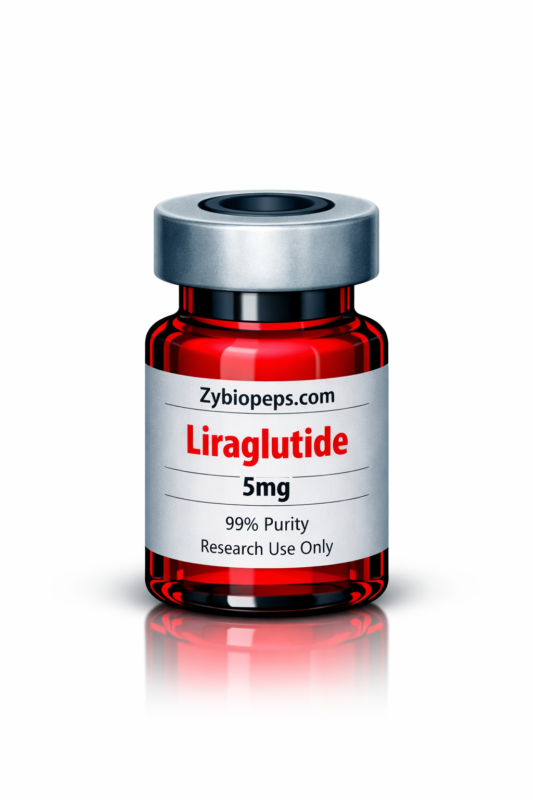
We stock Liraglutide in 5mg and Semaglutide in 2mg, 5mg, 10mg, 15mg, 20mg, and 50mg concentrations. Every batch is independently HPLC tested to 99%+ purity. COA available for every batch.
Where does Zybiopeps ship?
Same-day shipping from our USA warehouse via USPS and FedEx to the USA, UK, Australia, Germany, Canada, the Philippines, and worldwide. Minimum order is $100.
What comes after liraglutide and semaglutide in GLP-1 research?
Tirzepatide adds GIP receptor agonism to GLP-1, retatrutide adds GIP and glucagon receptor agonism, and cagrilintide combines amylin receptor targeting with GLP-1 for additive effects. The GLP-1 research landscape has evolved rapidly beyond first and second-generation single agonists.
Disclaimer: Liraglutide and semaglutide are sold by Zybiopeps strictly for research purposes. They are not intended for human consumption, are not FDA approved for sale as research chemicals, and should not be used as medical treatments. All information on this page is provided for educational and research purposes only. Researchers should comply with all applicable laws and institutional guidelines when handling research peptides.
