


Research and Education
MOTS-C Peptide Benefits — Mitochondrial Research Guide.
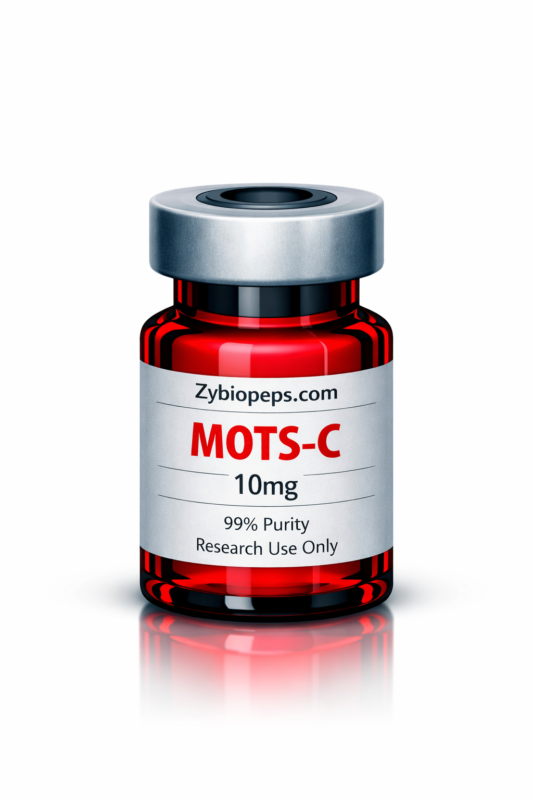
MOTS-C peptide research has emerged as one of the most exciting frontiers in mitochondrial biology, and what makes this compound genuinely remarkable is where it comes from. Unlike most research peptides that are synthesized analogs of hormones or growth factors, MOTS-C is encoded directly within mitochondrial DNA — specifically within the 12S ribosomal RNA gene. It was only identified in 2015, which means researchers are working with a compound that the scientific community has known about for less than a decade, yet the data accumulating around it is striking. Studies have linked MOTS-C to metabolic regulation, insulin sensitivity, exercise adaptation, and longevity pathways in ways that have repositioned mitochondria from passive energy factories to active endocrine signaling organs.
At Zybiopeps, MOTS-C is available in 10mg and 40mg concentrations for research purposes. We ship same day from our USA warehouse via USPS and FedEx, and every batch is independently HPLC tested to 99%+ purity by a USA-based third-party laboratory. A certificate of analysis is available for every order. We ship to the USA, UK, Australia, Germany, Canada, the Philippines, and worldwide. Minimum order is $100.
Here’s what the research literature shows about this fascinating mitochondria-derived peptide.
What Is MOTS-C?
MOTS-C — short for Mitochondrial Open Reading Frame of the Twelve S rRNA-c — is a 16-amino acid peptide encoded within mitochondrial DNA. Its discovery challenged a long-standing assumption in biology: that mitochondrial DNA primarily encoded components of the electron transport chain and little else of functional significance. MOTS-C demonstrated that mitochondria produce bioactive peptides capable of traveling to the nucleus and other cellular compartments to regulate gene expression and metabolic function.
What’s interesting is that MOTS-C levels in the body are not static — they fluctuate in response to metabolic stress, exercise, and aging. Research has shown that MOTS-C levels decline with age in both humans and animal models, and that this decline correlates with reduced metabolic flexibility and increased insulin resistance. This age-related decline has positioned the compound as a significant target in longevity and metabolic health research.
Metabolic Regulation Research
The most extensively studied function of MOTS-C is its role in metabolic regulation, particularly glucose metabolism and insulin sensitivity. In landmark animal studies, MOTS-C administration improved insulin sensitivity and reduced fat accumulation in diet-induced obese mice. The compound appears to work by activating AMPK — adenosine monophosphate-activated protein kinase — a master metabolic regulator that coordinates cellular energy balance. AMPK activation by MOTS-C promotes glucose uptake in muscle tissue and fat oxidation, mimicking some of the metabolic effects of exercise at the cellular level.
Researchers have described MOTS-C as an “exercise mimetic” because its effects on AMPK and downstream metabolic pathways overlap significantly with those produced by physical activity. This research angle has drawn considerable interest from scientists studying metabolic dysfunction, type 2 diabetes pathology, and the molecular mechanisms through which exercise produces its health benefits. At Zybiopeps, our minimum order of $100 makes it accessible for research teams to include MOTS-C in multi-compound metabolic protocols.
Insulin Sensitivity Research
One of the most reproducible findings in MOTS-C research is its effect on insulin sensitivity. Animal studies have consistently shown that MOTS-C administration reduces insulin resistance in models of diet-induced obesity and aging-related metabolic decline. The mechanism involves both AMPK activation in peripheral tissues and effects on mitochondrial function that improve the cellular machinery for glucose oxidation.
Researchers studying the relationship between mitochondrial dysfunction and insulin resistance have found MOTS-C particularly valuable as a research tool because it operates at the intersection of these two phenomena — directly addressing both mitochondrial health and peripheral insulin signaling simultaneously. This positions it differently from GLP-1 peptides like semaglutide, which improve insulin sensitivity primarily through incretin-mediated mechanisms. Our Semaglutide page has full specifications for researchers designing comparative metabolic protocols.
Exercise and Performance Research
A fascinating line of MOTS-C research has examined its relationship with exercise physiology. Studies have shown that circulating MOTS-C levels increase significantly during and after exercise in human subjects, suggesting the peptide functions as a muscle-to-systemic signal that helps coordinate the body’s metabolic response to physical stress. This discovery led researchers to investigate whether exogenous MOTS-C could replicate or augment exercise-induced metabolic adaptations.
Animal research has shown that MOTS-C administration improves exercise capacity and endurance performance, with effects appearing to work through both enhanced mitochondrial efficiency and improved substrate utilization. For researchers studying exercise physiology, mitochondrial adaptation, and performance at the molecular level, MOTS-C represents a unique tool that connects mitochondrial biology directly to whole-body exercise responses.
Longevity and Aging Research
The longevity research angle on MOTS-C is driven by several converging observations. First, MOTS-C levels decline with age. Second, the peptide activates pathways — particularly AMPK and downstream effects on FOXO transcription factors — that are consistently associated with extended lifespan in multiple organisms. Third, mitochondrial dysfunction is one of the recognized hallmarks of cellular aging, and a mitochondria-derived peptide that improves mitochondrial signaling has obvious relevance to aging biology.
Research in aged animal models has shown that MOTS-C administration can partially restore metabolic function toward younger baselines, improving insulin sensitivity and reducing markers of metabolic inflammation. Researchers building comprehensive longevity protocols often examine MOTS-C alongside other compounds active in aging pathways. Our Epithalon and NAD+ pages cover complementary longevity research compounds, and our wholesale program offers bulk pricing for multi-compound research orders.
MOTS-C and the Mitochondrial Peptide Family
MOTS-C belongs to a broader family of mitochondria-derived peptides that includes Humanin and the SHLP peptides. These compounds collectively represent a newly recognized mitochondrial endocrine system — a signaling network through which mitochondria communicate with distant tissues and organs to coordinate systemic metabolic responses. Humanin, the first mitochondria-derived peptide identified, has been studied for neuroprotective and cardioprotective effects. MOTS-C operates more prominently in metabolic and musculoskeletal contexts.
The discovery of this mitochondrial peptide family has fundamentally changed how researchers think about mitochondrial biology. Rather than viewing mitochondria purely as ATP-producing organelles, the field now recognizes them as active participants in systemic metabolic signaling — a conceptual shift with broad implications for aging research, metabolic disease biology, and longevity science.
Research Considerations
MOTS-C research protocols typically involve subcutaneous or intraperitoneal administration in animal models, with the compound reconstituted in sterile saline or bacteriostatic water. Storage at low temperatures is recommended to maintain peptide stability. Researchers should note that most of the published MOTS-C data comes from animal models, with human research still in relatively early stages — an important consideration when interpreting results and designing translational research protocols.
A key peer-reviewed study on MOTS-C and its role in metabolic regulation is available on PubMed for researchers reviewing the foundational literature on this mitochondria-derived peptide.
Frequently Asked Questions About MOTS-C Peptide
What makes MOTS-C unique among research peptides?
MOTS-C is encoded within mitochondrial DNA — making it one of the only known peptides produced by the mitochondrial genome rather than nuclear DNA. This origin gives it a unique relationship with cellular energy metabolism and positions it at the intersection of mitochondrial biology, metabolic regulation, and aging research.
How does MOTS-C affect metabolism?
Research shows MOTS-C activates AMPK, a master regulator of cellular energy balance, promoting glucose uptake in muscle, enhancing fat oxidation, and improving insulin sensitivity. These effects overlap significantly with the metabolic adaptations produced by exercise, leading researchers to describe it as an exercise mimetic.
What concentrations does Zybiopeps stock?
We stock MOTS-C in 10mg and 40mg concentrations. Every batch is independently HPLC tested to 99%+ purity by a USA-based third-party laboratory. A certificate of analysis is available for every batch upon request.
Where does Zybiopeps ship MOTS-C?
Same-day shipping from our USA warehouse via USPS and FedEx to the USA, UK, Australia, Germany, Canada, the Philippines, and worldwide. Minimum order is $100.
What peptides are commonly studied alongside MOTS-C?
Researchers frequently examine MOTS-C alongside NAD+, Epithalon, and GHK-Cu in longevity and aging protocols. For metabolic research, comparisons with GLP-1 compounds like semaglutide and exercise physiology peptides are common.
Does MOTS-C decline with age?
Yes. Research has documented age-related decline in circulating MOTS-C levels in both humans and animal models. This decline correlates with reduced metabolic flexibility and increased insulin resistance, which is a key reason the compound has attracted attention in longevity and healthy aging research.
Disclaimer: MOTS-C is sold by Zybiopeps strictly for research purposes. It is not intended for human consumption, is not FDA approved, and should not be used as a medical treatment. All information on this page is provided for educational and research purposes only. Researchers should comply with all applicable laws and institutional guidelines when handling research peptides.
