
Research and Education
KPV Peptide Benefits — Anti-Inflammatory Research Guide.
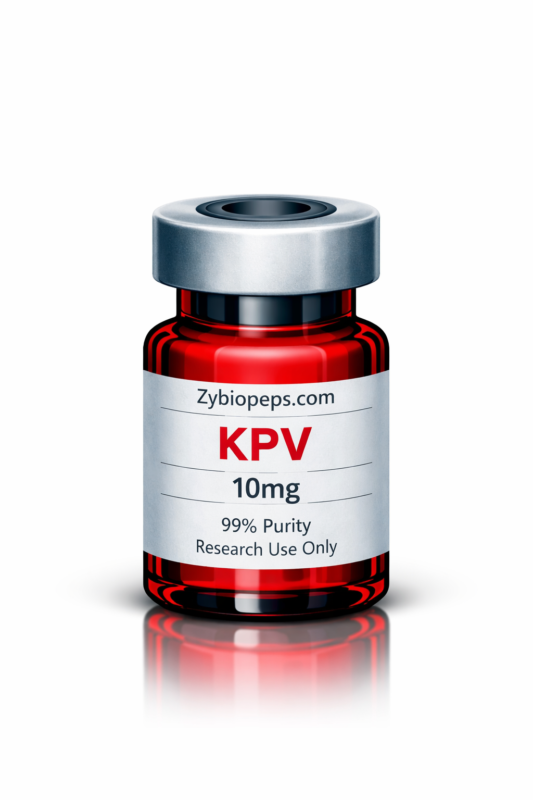
KPV peptide research has gained significant momentum in the scientific community, particularly among researchers studying inflammatory pathways, gut health, and wound healing. This tripeptide — composed of just three amino acids, lysine, proline, and valine — is derived from the C-terminal sequence of alpha-melanocyte stimulating hormone (α-MSH), one of the body’s most potent endogenous anti-inflammatory signals. What makes KPV remarkable is that it retains the anti-inflammatory properties of its parent molecule while being small enough to penetrate cells directly and act on inflammatory pathways from the inside. That combination of potency and cellular accessibility has made it one of the more intensively studied tripeptides in current peptide research.
At Zybiopeps, KPV is available in 5mg and 10mg concentrations for research purposes. We ship same day from our USA warehouse via USPS and FedEx, and every batch is independently HPLC tested to 99%+ purity by a USA-based third-party laboratory. A certificate of analysis is available for every order. We ship to the USA, UK, Australia, Germany, Canada, the Philippines, and worldwide. Minimum order is $100.
Here’s what the research literature shows about this compact but powerful tripeptide.
What Is KPV Peptide?
KPV — shorthand for its three constituent amino acids lysine (K), proline (P), and valine (V) — is a C-terminal fragment of alpha-MSH, a neuropeptide produced in the pituitary gland with well-documented anti-inflammatory and immunomodulatory effects. Full-length α-MSH exerts its effects primarily through melanocortin receptors on cell surfaces. KPV, being a smaller fragment, retains the ability to interact with melanocortin receptor 1 (MC1R) but also has the unique ability to enter cells directly and interact with intracellular inflammatory mediators — a mechanism that distinguishes it from larger peptide anti-inflammatory compounds.
What’s interesting is that KPV’s small size — just three amino acids — gives it properties that larger peptides lack. It can cross cell membranes, reach intracellular targets, and potentially survive conditions that would degrade larger peptides. Researchers have explored oral, topical, and injectable administration routes, with oral delivery showing particular promise in gut inflammation models because the tripeptide can survive passage through the digestive environment in sufficient quantities to reach intestinal tissue.
Anti-Inflammatory Research
The most extensively documented area of KPV research is its anti-inflammatory activity. Studies have shown that KPV inhibits the activation of NF-κB — the master transcription factor that controls the expression of pro-inflammatory cytokines including TNF-α, IL-6, and IL-1β. By blocking NF-κB activation, KPV effectively reduces the production of the inflammatory mediators that drive tissue damage in chronic inflammatory conditions.
Researchers have also documented KPV’s ability to inhibit inflammasome activation — specifically the NLRP3 inflammasome, which is implicated in a wide range of inflammatory conditions. This dual mechanism, targeting both NF-κB and inflammasome pathways, gives KPV a broad anti-inflammatory research profile. Animal studies using KPV in inflammatory models have consistently shown significant reductions in inflammatory markers, tissue damage scores, and immune cell infiltration at sites of inflammation.
Gut Health and Inflammatory Bowel Research
One of the most active areas of KPV research involves its effects on intestinal inflammation. Studies in mouse models of colitis have shown that KPV administration significantly reduces intestinal inflammation, improves mucosal barrier integrity, and reduces disease activity scores. The compound appears to work both by reducing pro-inflammatory cytokine production in intestinal tissue and by directly interacting with intestinal epithelial cells to reduce their inflammatory response.
Here’s the thing — gut inflammation research is one area where KPV’s unique properties as a small, orally deliverable tripeptide become especially relevant. Researchers studying inflammatory bowel conditions have found that orally administered KPV can reach inflamed intestinal tissue in sufficient concentrations to produce measurable anti-inflammatory effects in animal models. This opens research possibilities that injectable peptides with poor oral bioavailability cannot access. Our BPC-157 page covers another extensively studied gut health and repair peptide for researchers building comprehensive intestinal health protocols.
Wound Healing Research
KPV has been studied for its effects on wound healing through both its anti-inflammatory properties and direct effects on skin cells. Research has shown that KPV reduces the inflammatory phase of wound healing — which, when prolonged, can impair rather than assist repair — while supporting the proliferative phase through effects on keratinocyte and fibroblast activity. Animal studies have documented accelerated wound closure and improved tissue quality in KPV-treated wounds compared to controls.
The topical application route has been particularly studied in wound healing research, with KPV showing good skin penetration due to its small size. Researchers studying dermatological applications of anti-inflammatory peptides have found KPV’s combined anti-inflammatory and pro-healing profile makes it a useful research tool for investigating the relationship between inflammation control and tissue repair quality. Our GHK-Cu page covers a copper peptide with complementary wound healing and skin regeneration research applications.
Antimicrobial Research
An emerging area of KPV research examines its antimicrobial properties. Studies have shown that KPV exhibits activity against certain bacterial strains, potentially through mechanisms related to its interaction with melanocortin receptors on immune cells and direct membrane effects. This antimicrobial dimension adds another layer of interest for researchers studying the intersection of infection, inflammation, and tissue repair — areas where controlling both bacterial activity and inflammatory response simultaneously is a research priority.
Researchers interested in the broader melanocortin peptide family will find KPV sits at an interesting intersection of immunomodulation, anti-inflammation, and antimicrobial biology. The compound’s multiple mechanisms operating through a single small tripeptide make it a compact but multifunctional research tool.
KPV and the Melanocortin System
Understanding KPV requires some context about the melanocortin system from which it derives. Alpha-MSH is part of a family of peptides derived from the proopiomelanocortin (POMC) gene, which encodes a precursor protein that is cleaved into multiple bioactive peptides including ACTH, β-endorphin, and the various melanocyte stimulating hormones. These peptides regulate diverse functions from pigmentation and appetite to immune function and inflammation through a family of five melanocortin receptors.
KPV retains binding affinity for MC1R — the melanocortin receptor most associated with anti-inflammatory and immunomodulatory effects — while its small size allows it to access intracellular targets that full-length α-MSH cannot reach. This makes it a useful research tool for dissecting the contribution of MC1R signaling to inflammatory regulation and for studying the intracellular anti-inflammatory mechanisms that operate downstream of melanocortin receptor activation. For researchers building longevity and anti-inflammatory research stacks, our wholesale program offers competitive pricing for multi-compound orders with same-day USA warehouse shipping.
Frequently Asked Questions About KPV Peptide
What does KPV stand for?
KPV stands for the three amino acids that make up this tripeptide — lysine (K), proline (P), and valine (V). It is derived from the C-terminal sequence of alpha-melanocyte stimulating hormone and retains the parent molecule’s anti-inflammatory properties in a much smaller, more cell-permeable form.
How does KPV reduce inflammation?
Research shows KPV inhibits NF-κB activation — the master switch for pro-inflammatory cytokine production — and suppresses NLRP3 inflammasome activity. It can also enter cells directly to target intracellular inflammatory pathways, which is unusual for peptide compounds and contributes to its potent anti-inflammatory research profile.
Why is KPV particularly interesting for gut health research?
KPV is small enough to survive oral administration in quantities sufficient to reach intestinal tissue, where it can reduce mucosal inflammation directly. Animal models of colitis have shown significant reductions in disease activity scores with KPV administration, making it a valuable tool for researchers studying intestinal inflammatory pathways.
What concentrations does Zybiopeps stock?
We stock KPV in 5mg and 10mg concentrations. Every batch is independently HPLC tested to 99%+ purity by a USA-based third-party laboratory. A certificate of analysis is available for every batch upon request.
Where does Zybiopeps ship KPV?
Same-day shipping from our USA warehouse via USPS and FedEx to the USA, UK, Australia, Germany, Canada, the Philippines, and worldwide. Minimum order is $100.
What peptides are commonly studied alongside KPV?
BPC-157 is the most commonly studied companion peptide in gut health and anti-inflammatory research contexts. GHK-Cu is studied alongside KPV in wound healing and skin repair protocols. Researchers building comprehensive anti-inflammatory research libraries can access our wholesale program for multi-compound pricing.
A key peer-reviewed study on KPV and intestinal inflammation is available on PubMed for researchers reviewing the foundational literature on this tripeptide’s anti-inflammatory mechanisms.
Disclaimer: KPV is sold by Zybiopeps strictly for research purposes. It is not intended for human consumption, is not FDA approved, and should not be used as a medical treatment. All information on this page is provided for educational and research purposes only. Researchers should comply with all applicable laws and institutional guidelines when handling research peptides.
