

Research and Education
VIP Peptide Benefits — Vasoactive Intestinal Peptide Guide
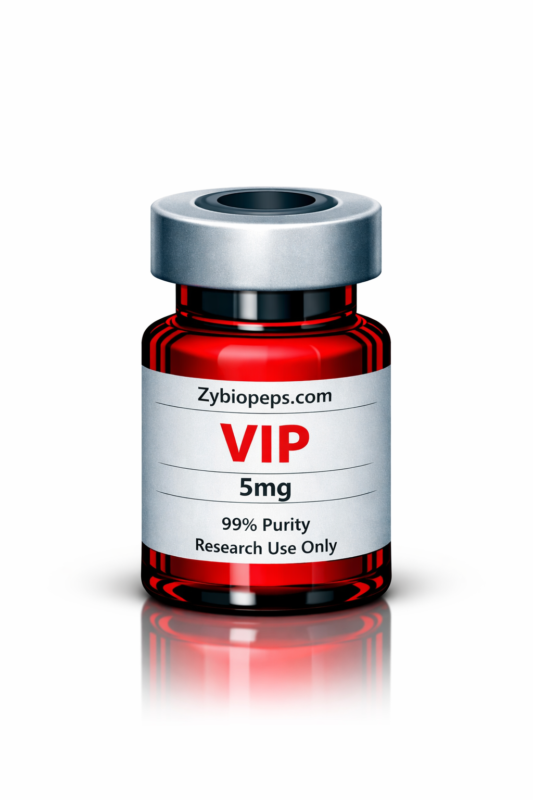
VIP peptide research has revealed one of the most multifunctional neuropeptides in human biology, and what makes vasoactive intestinal peptide remarkable is the sheer breadth of systems it influences. This 28-amino acid peptide — found throughout the central nervous system, peripheral nervous system, gastrointestinal tract, lungs, and immune tissues — doesn’t operate in a single niche. Researchers have documented VIP’s roles in vasodilation, immune regulation, anti-inflammatory signaling, circadian rhythm control, neuroprotection, and gut motility. That remarkable range of biological activity has made it one of the most studied neuropeptides in current peptide research and a compound of growing interest across multiple therapeutic research areas.
At Zybiopeps, VIP peptide is available in 5mg and 10mg concentrations for research purposes. We ship same day from our USA warehouse via USPS and FedEx, and every batch is independently HPLC tested to 99%+ purity by a USA-based third-party laboratory. A certificate of analysis is available for every order. We ship to the USA, UK, Australia, Germany, Canada, the Philippines, and worldwide. Minimum order is $100.
Here’s what the research literature shows about this remarkably versatile neuropeptide.
What Is VIP Peptide?
Vasoactive Intestinal Peptide was first isolated from porcine small intestine in 1970 by Said and Mutt, who named it for its potent vasodilatory effects. Subsequent research revealed that this initial characterization vastly underestimated the peptide’s biological reach. VIP is encoded by the VIP gene and is produced in neurons throughout the brain, spinal cord, and peripheral nervous system, as well as in endocrine cells of the gut, immune cells, and lung tissue. It exerts its effects through two G protein-coupled receptors — VPAC1 and VPAC2 — which are expressed in an extraordinarily wide range of tissues.
What’s interesting is that VIP functions simultaneously as a neurotransmitter, neuromodulator, vasodilator, and immune regulator depending on the tissue context. This context-dependent multifunctionality makes it one of the more complex neuropeptides to study but also one of the most scientifically compelling. Researchers across neuroscience, immunology, gastroenterology, and pulmonology have all found reason to investigate its effects in their respective fields.
Anti-Inflammatory and Immune Research
The most actively researched area of VIP biology in recent years has been its immunomodulatory and anti-inflammatory properties. Studies have shown that VIP suppresses the production of pro-inflammatory cytokines — including TNF-α, IL-6, IL-12, and nitric oxide — while simultaneously promoting anti-inflammatory mediators like IL-10. This bidirectional immunomodulation has attracted significant research interest in the context of autoimmune conditions, chronic inflammatory diseases, and immune dysregulation.
Research has documented VIP’s effects on multiple immune cell populations including macrophages, T cells, dendritic cells, and mast cells. The peptide appears to shift immune responses from pro-inflammatory toward regulatory and tolerogenic profiles, which has made it a research tool for studying immune balance in conditions characterized by excessive inflammation. Animal models of inflammatory conditions including rheumatoid arthritis, inflammatory bowel disease, and sepsis have all shown VIP-mediated improvements in inflammatory markers and tissue damage scores. Our KPV page covers another anti-inflammatory research peptide for researchers building comprehensive inflammation research protocols.
Neuroprotection Research
VIP’s role as a neuropeptide extends beyond neurotransmission to active neuroprotection. Research has shown that VIP promotes the survival of neurons under conditions of oxidative stress, excitotoxicity, and ischemia. The compound stimulates the production of neurotrophic factors including BDNF and ADNP-derived peptide NAP, which support neuronal survival and plasticity. Studies in animal models of neurodegenerative conditions have documented VIP’s ability to reduce neuronal death and preserve cognitive function.
The neuroprotective research angle on VIP connects to broader work on peptides that support brain health and cognitive function. Researchers studying neurodegeneration, traumatic brain injury, and age-related cognitive decline have found VIP useful as a tool for investigating the relationship between neuropeptide signaling and neuronal resilience. Our Semax and Selank pages cover complementary neuroprotective research compounds for researchers building comprehensive neurological protocols.
Circadian Rhythm Research
One of the more surprising research areas for VIP has been circadian biology. Studies have identified VIP as a critical signal in the suprachiasmatic nucleus — the brain’s master circadian clock — where it synchronizes the activity of individual clock neurons into coherent daily rhythms. Research has shown that disruption of VIP signaling in the suprachiasmatic nucleus produces fragmented and arrhythmic circadian behavior in animal models, while VIP administration can resynchronize disrupted circadian rhythms.
This circadian research angle has implications for understanding sleep disorders, shift work physiology, jet lag adaptation, and the relationship between circadian disruption and metabolic health. Researchers studying the molecular basis of biological timekeeping have found VIP essential to understanding how the master clock coordinates daily physiological rhythms throughout the body.
Pulmonary Research
The lungs contain abundant VIP receptors and VIP-producing neurons, and pulmonary research has documented important roles for this neuropeptide in bronchodilation, airway inflammation, and lung tissue protection. Studies have shown VIP relaxes airway smooth muscle, reducing bronchoconstriction, while simultaneously suppressing airway inflammatory responses. Animal models of pulmonary conditions characterized by airway inflammation and constriction have shown improvements with VIP administration.
Here’s the thing — pulmonary VIP research gained renewed attention following observations that VIP levels are altered in certain respiratory conditions and that VIP receptor expression changes in inflamed lung tissue. Researchers studying airway biology, pulmonary inflammation, and the neuroimmune regulation of lung function have found VIP a valuable research tool for investigating the intersection of nervous system and immune system signaling in respiratory tissue.
Gastrointestinal Research
Given that VIP was first discovered in intestinal tissue, its gastrointestinal research profile is extensive. The peptide regulates smooth muscle relaxation in the gut, contributes to the control of intestinal secretion, and modulates gut immune function through its effects on intestinal immune cells. Research has examined VIP’s role in gut motility disorders, intestinal inflammation, and the gut-brain axis — the bidirectional communication system between the enteric nervous system and the central nervous system.
Researchers studying gut health and the neuroimmune aspects of intestinal function have found VIP particularly valuable for investigating how nervous system signals regulate mucosal immunity and intestinal barrier function. For researchers building comprehensive gut health research protocols, our BPC-157 page covers another extensively studied gut repair and protection compound, and our wholesale program offers competitive pricing for multi-compound orders with same-day USA warehouse shipping.
Frequently Asked Questions About VIP Peptide
What does VIP stand for in peptide research?
VIP stands for Vasoactive Intestinal Peptide — named for its original discovery in intestinal tissue and its potent vasodilatory effects. It is a 28-amino acid neuropeptide found throughout the nervous system, gut, lungs, and immune tissues with diverse regulatory functions.
Why is VIP peptide considered anti-inflammatory?
Research shows VIP suppresses pro-inflammatory cytokine production including TNF-α, IL-6, and IL-12, while promoting anti-inflammatory mediators like IL-10. It acts on multiple immune cell types to shift immune responses toward regulatory and tolerogenic profiles, making it a valuable tool for inflammation research.
What concentrations does Zybiopeps stock?
We stock VIP peptide in 5mg and 10mg concentrations. Every batch is independently HPLC tested to 99%+ purity by a USA-based third-party laboratory. A certificate of analysis is available for every batch upon request.
Where does Zybiopeps ship VIP peptide?
Same-day shipping from our USA warehouse via USPS and FedEx to the USA, UK, Australia, Germany, Canada, the Philippines, and worldwide. Minimum order is $100.
What makes VIP peptide unique compared to other anti-inflammatory peptides?
VIP’s anti-inflammatory effects operate through VPAC1 and VPAC2 receptors expressed across an unusually wide range of immune and non-immune tissues. Unlike more targeted anti-inflammatory compounds, VIP modulates inflammation while simultaneously influencing neurotransmission, vasodilation, and organ function — making it a multisystem research tool.
What peptides are commonly studied alongside VIP?
KPV is frequently studied alongside VIP in anti-inflammatory and gut health research contexts. Semax and Selank are studied with VIP in neuroprotective research protocols. BPC-157 is commonly paired with VIP in gastrointestinal research designs.
A key peer-reviewed study on VIP peptide and immune modulation is available on PubMed for researchers reviewing the foundational literature on this neuropeptide’s anti-inflammatory mechanisms.
Disclaimer: VIP peptide is sold by Zybiopeps strictly for research purposes. It is not intended for human consumption, is not FDA approved, and should not be used as a medical treatment. All information on this page is provided for educational and research purposes only. Researchers should comply with all applicable laws and institutional guidelines when handling research peptides.
