

Research and Education
Semaglutide Research Guide — Mechanisms, Dosage and Latest Findings
This semaglutide research guide covers one of the most researched compounds in modern metabolic science. Originally developed as a GLP-1 receptor agonist for diabetes management, its research profile has expanded dramatically — attracting attention from scientists studying obesity, cardiovascular health, neurological function, and beyond. This guide covers everything researchers need to know about semaglutide in 2026.
What Is Semaglutide?
Semaglutide is a synthetic analogue of glucagon-like peptide-1 (GLP-1), a naturally occurring incretin hormone produced in the gut in response to food intake. As a GLP-1 receptor agonist, semaglutide mimics the action of this hormone — stimulating insulin secretion, suppressing glucagon release, slowing gastric emptying, and reducing appetite signaling in the brain.
What distinguishes semaglutide from earlier GLP-1 analogues is its extended half-life. Through structural modifications that allow it to bind to albumin in the bloodstream, semaglutide remains active for approximately one week — a significant improvement over compounds that required daily administration in early research models.
Semaglutide Research — Key Areas of Study
The breadth of semaglutide research is remarkable for a single compound. While metabolic and weight-related research has dominated the literature, scientists have identified several other areas of significant interest.
Metabolic research has consistently shown semaglutide’s ability to reduce body weight, improve insulin sensitivity, and lower cardiovascular risk markers in both diabetic and non-diabetic research subjects. The magnitude of weight reduction observed in clinical trials has been described by researchers as unprecedented for a pharmacological compound.
Cardiovascular research has also been a major focus. Multiple large-scale trials have examined semaglutide’s effects on major adverse cardiovascular events, with findings suggesting significant cardioprotective benefits beyond simple metabolic improvement. Research published on PubMed covers this area extensively.
How Semaglutide Works — The Mechanism
Semaglutide’s primary mechanism involves binding to GLP-1 receptors throughout the body. These receptors are found not just in the pancreas — where they stimulate insulin release — but also in the brain, heart, kidneys, and gastrointestinal tract. This widespread receptor distribution explains why semaglutide’s research profile extends so far beyond simple blood sugar regulation.
In the brain, GLP-1 receptor activation appears to reduce appetite and food-seeking behavior by acting on hypothalamic centers involved in hunger signaling. This central mechanism is believed to account for a significant portion of the weight reduction observed in research subjects — separate from the peripheral metabolic effects.
Semaglutide Dosage in Research Settings
All dosage information below reflects research protocols only. Semaglutide is not approved for self-administration and all research use must comply with applicable regulatory requirements.
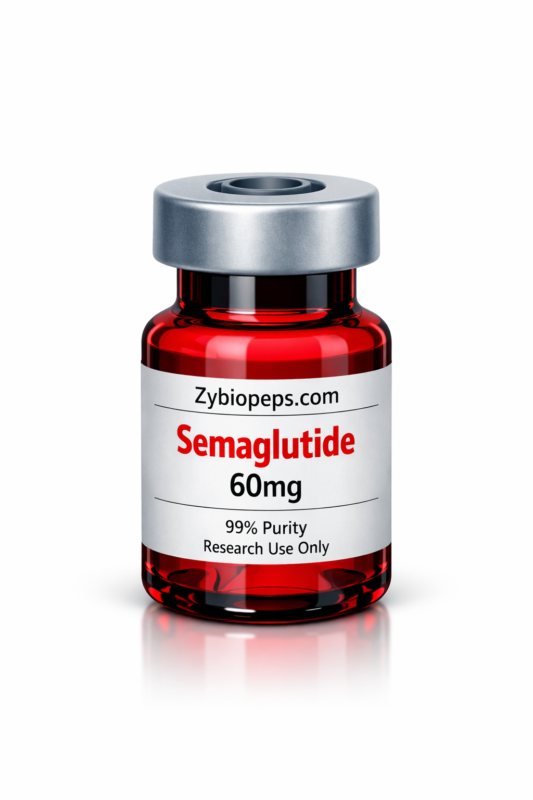
In clinical research, semaglutide has been studied across a range of doses. For metabolic and weight-related research, doses have typically been titrated upward over several weeks to assess dose-dependent effects and tolerability profiles. At Zybiopeps, semaglutide is available in multiple research concentrations:
- Semaglutide 2mg — entry level research concentration
- Semaglutide 5mg — mid range research concentration
- Semaglutide 10mg — advanced research concentration
Semaglutide vs Tirzepatide — What Researchers Are Saying
One of the most active debates in current metabolic research is the comparison between semaglutide and tirzepatide. While semaglutide targets only the GLP-1 receptor, tirzepatide adds GIP receptor activation — giving it a dual mechanism that early research suggests may produce more pronounced metabolic effects.
However, semaglutide’s longer research history and more extensive clinical trial data make it the better-characterized compound. For researchers who need a well-established GLP-1 agonist with predictable pharmacokinetics, semaglutide remains the reference standard against which newer compounds are measured.
Emerging Areas of Semaglutide Research
Beyond metabolic health, researchers are actively studying semaglutide’s potential in several other areas. Neurological research has examined its effects on cognitive function and neurodegenerative disease markers — with GLP-1 receptors present throughout the brain suggesting potential neuroprotective mechanisms worth investigating.
Addiction research has also emerged as a surprising frontier, with preliminary data suggesting GLP-1 receptor activation may influence reward pathways involved in substance use behaviors. This is an early and evolving area, but one that has generated significant scientific interest.
Sourcing Semaglutide for Research
Research-grade semaglutide must meet strict purity standards to produce reliable, reproducible data. At Zybiopeps, our semaglutide is independently tested and verified for purity before every shipment. All products are intended strictly for laboratory and research use only and ship across the USA.
Disclaimer: All products sold by Zybiopeps are intended for research and laboratory use only. They are not intended for human consumption, diagnosis, treatment, or prevention of any disease or condition. This content is purely informational and educational and does not constitute medical advice. Always consult a licensed medical professional before making any health-related decisions.
