
Research and Education
Best Peptides for Muscle Growth — Research Guide 2026
If you’re deep in the world of performance and recovery research, the question of which peptides show the most promise for muscle growth keeps coming up. And for good reason — the science behind peptide interactions with growth hormone pathways, muscle protein synthesis, and recovery mechanisms is genuinely fascinating. This guide breaks down the best peptides for muscle growth research in 2026 and what the current literature actually says.
Why Researchers Study Peptides for Muscle Growth
Muscle growth at a biological level is driven by a complex interplay of hormones, growth factors, and cellular signaling pathways. Peptides are of particular interest to researchers because of their ability to interact with specific receptors along these pathways with remarkable precision — offering a level of targeted study that broader compounds simply can’t match.
The peptides attracting the most attention in muscle growth research generally fall into two categories: growth hormone secretagogues that stimulate natural GH release, and tissue repair peptides that support recovery and protein synthesis at the cellular level.
CJC-1295 — Growth Hormone Releasing Research
CJC-1295 is one of the most studied compounds in growth hormone research. As a modified GHRH analogue, it stimulates the pituitary gland to produce and release growth hormone — one of the primary drivers of muscle protein synthesis and recovery in research models.
What makes CJC-1295 particularly interesting for muscle growth research is its extended half-life compared to native GHRH. Studies have shown it can maintain elevated growth hormone releasing activity for significantly longer periods, making it a practical tool for researchers studying sustained anabolic signaling pathways.
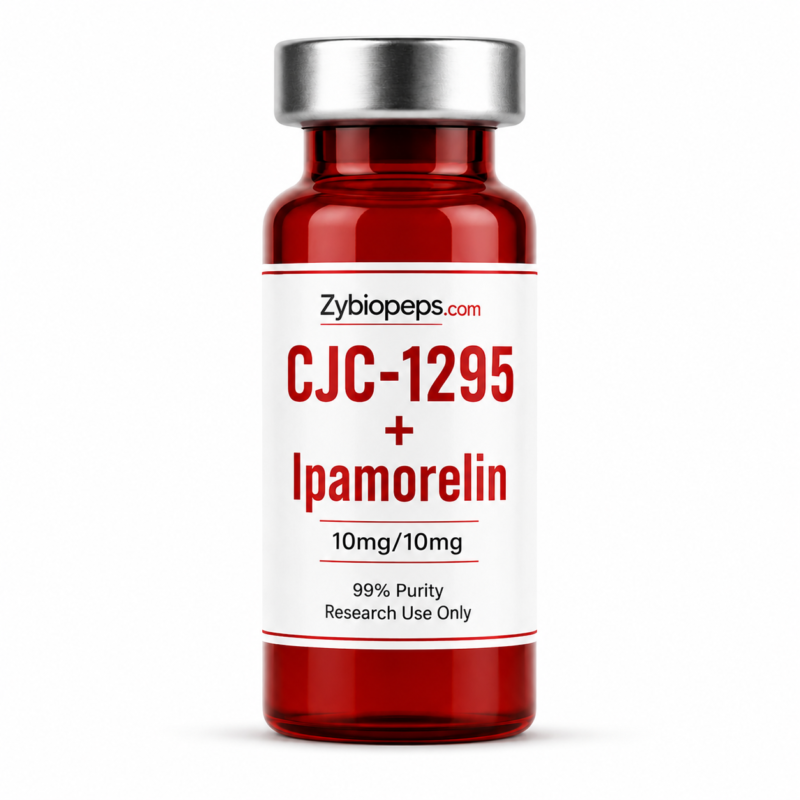
Zybiopeps carries research-grade CJC-1295 verified for purity on every batch.
Ipamorelin — Selective Growth Hormone Secretagogue
Ipamorelin has emerged as one of the most selective growth hormone secretagogues in research. Unlike broader GH releasing compounds, Ipamorelin stimulates GH release through the ghrelin receptor pathway without significantly affecting cortisol or prolactin levels in research models — making it a cleaner tool for studying isolated GH effects on muscle tissue.
Preclinical studies have shown Ipamorelin’s potential to support lean mass development and recovery in animal models. Its selectivity makes it particularly valuable for researchers trying to isolate specific anabolic signaling mechanisms without confounding hormonal variables.
Research-grade Ipamorelin is available at Zybiopeps for laboratory use.
BPC-157 — Tissue Repair and Recovery Research
BPC-157 might not be a traditional “muscle growth” peptide in the hormonal sense, but its role in muscle recovery research is significant. This 15 amino acid compound derived from gastric juice proteins has been studied extensively for its ability to accelerate tendon healing, reduce inflammation, and support tissue repair in animal models.
For researchers focused on muscle growth, recovery is half the equation. BPC-157’s apparent ability to accelerate the repair of muscle tissue, tendons, and connective structures makes it a compelling subject for studies examining the full cycle of muscle development and recovery. Some researchers have even noted its potential interaction with growth hormone receptor pathways.
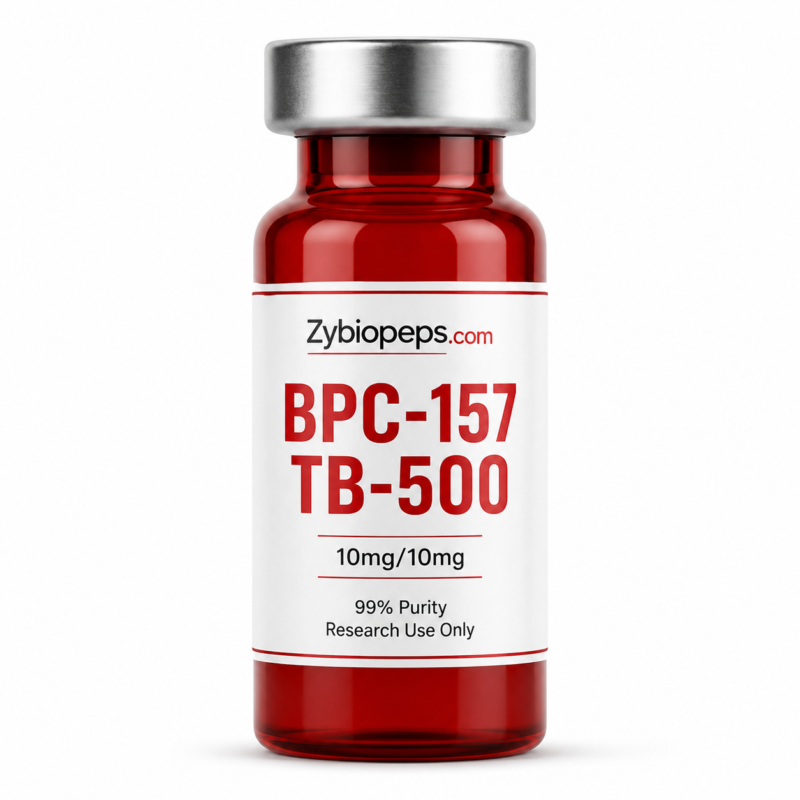
Our BPC-157 is available in research-grade format at Zybiopeps.
TB-500 — Systemic Recovery Mechanisms
TB-500, the synthetic version of Thymosin Beta-4, has attracted research interest for its role in muscle fiber repair and angiogenesis. Its mechanism through actin regulation gives it broad applicability across different tissue types — including skeletal muscle.
Studies have examined TB-500’s potential to support satellite cell activation — the muscle stem cells responsible for repair and growth following training stress. This makes it an interesting subject for researchers studying the cellular mechanisms of muscle hypertrophy and recovery.
Zybiopeps carries research-grade TB-500 for qualified researchers.
GHRP-6 and GHRP-2 — Classic Growth Hormone Research Peptides
GHRP-6 and GHRP-2 are two of the original growth hormone releasing peptides studied in the context of muscle development. Both work through the ghrelin receptor to stimulate GH release, and both have extensive preclinical literature examining their effects on body composition, appetite signaling, and anabolic hormone profiles.
GHRP-6 is particularly noted in research for its appetite-stimulating effects alongside GH release — a combination that has made it a useful tool for researchers studying the relationship between caloric intake, GH signaling, and muscle development. Research published on PubMed covers both compounds extensively.
What the Research Actually Shows
The honest picture is that most of the compelling data on peptides and muscle growth comes from animal models. Human clinical trials on these specific compounds remain limited, and extrapolating from rodent studies to human outcomes requires careful scientific judgment.
What the research does consistently show is that growth hormone secretagogues can reliably stimulate GH release in preclinical models, and that elevated GH is associated with improved muscle protein synthesis and recovery markers. The mechanistic case is solid — the clinical translation is still being worked out.
Sourcing Research Peptides for Muscle Growth Studies
For researchers working in this space, compound purity is non-negotiable. Contaminated or poorly synthesized peptides produce unreliable data and can compromise entire studies. At Zybiopeps, every compound is independently tested and verified for purity before shipping. All products are intended strictly for laboratory and research use only.
Disclaimer: All products sold by Zybiopeps are intended for research and laboratory use only. They are not intended for human consumption, diagnosis, treatment, or prevention of any disease or condition. This content is purely informational and educational and does not constitute medical advice. Always consult a licensed medical professional before making any health-related decisions.
