
Research and Education
Peptides for Inflammation: What the Research Reveals
Peptides for inflammation research have become one of the most active areas of preclinical biology, and it’s not hard to see why. Chronic inflammation sits at the root of an enormous range of conditions studied in modern medicine — from autoimmune disease to metabolic syndrome to neurodegeneration. Researchers looking for compounds that interact directly with inflammatory pathways have found several peptides to be remarkably useful investigative tools, with mechanisms that are both well-characterized and reproducible across multiple study designs.
At Zybiopeps, we ship peptides for inflammation research same day from our USA warehouse via USPS and FedEx to researchers worldwide. Every compound is third-party HPLC tested to 99%+ purity, packaged in sealed laboratory-grade vials, and comes with a certificate of analysis. Minimum order starts at just $100, making it accessible for individual researchers and institutions alike.
Why Inflammation Research Needs Better Tools
Here’s the challenge with studying inflammation — it’s not a single process. It’s a cascade of interconnected signaling events involving cytokines, immune cells, vascular changes, and tissue responses that vary significantly depending on the tissue type, the trigger, and the chronicity of the inflammatory state. Compounds that simply suppress inflammation broadly tend to create as many problems as they solve in research settings, because they interfere with the acute inflammatory response that’s necessary for normal healing.
What makes certain peptides interesting for inflammation research is their apparent ability to modulate specific inflammatory pathways without broadly suppressing immune function. That selectivity makes them cleaner research tools for scientists who want to study inflammation biology without the confounding variables that come with broad immunosuppression.
BPC-157: The Most Studied Peptide for Inflammation
When researchers ask what is the best peptide for inflammation research, BPC-157 comes up consistently in the literature. This 15-amino acid peptide derived from gastric juice has demonstrated significant anti-inflammatory activity across multiple tissue types and injury models in preclinical research. What distinguishes BPC-157 from many anti-inflammatory compounds is that it appears to reduce harmful inflammatory signaling while simultaneously supporting the conditions necessary for tissue repair — a combination that’s genuinely rare among research tools in this space.
Studies have documented BPC-157’s ability to downregulate pro-inflammatory cytokines including TNF-alpha and IL-6 while promoting the growth factor activity associated with healthy tissue regeneration. Research has found these effects in muscle tissue, tendon, gut mucosa, and neurological tissue — suggesting a broad but mechanistically consistent anti-inflammatory profile that researchers studying different organ systems have all found relevant to their work.
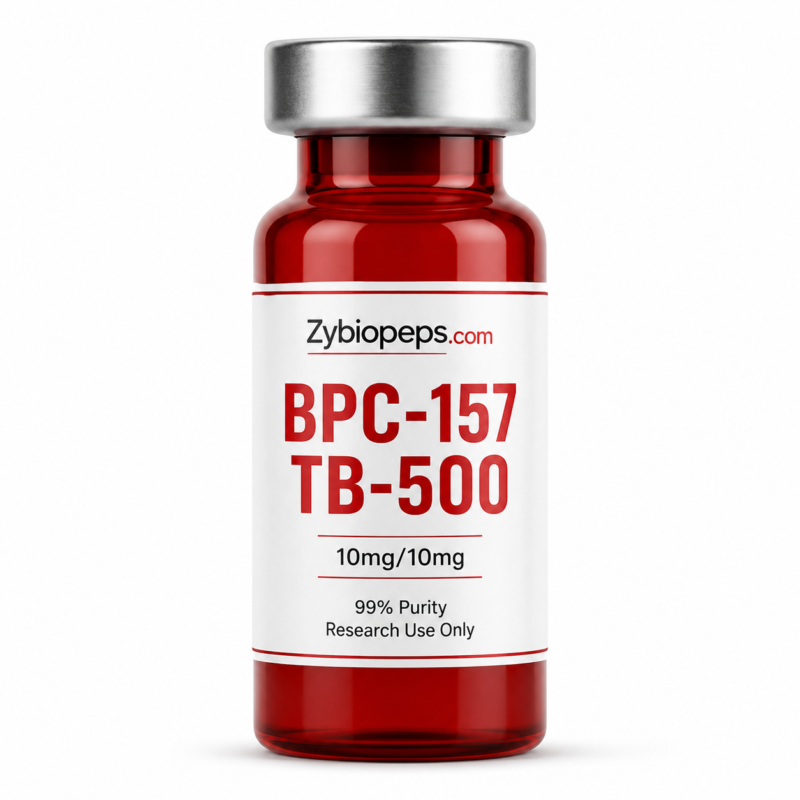
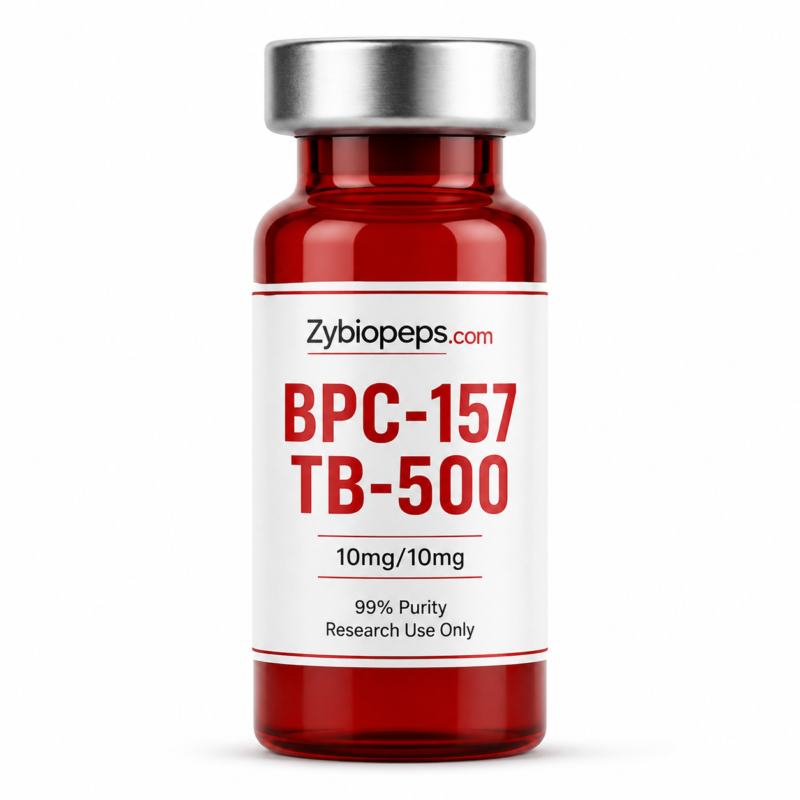
Zybiopeps supplies research-grade BPC-157 at 99%+ purity with full HPLC documentation. Orders ship same day from our USA warehouse — reaching researchers in the UK, Australia, Germany, the Philippines, Canada, and beyond via USPS and FedEx.
TB-500: Targeting Inflammaging and Chronic Inflammation
TB-500 — the synthetic version of Thymosin Beta-4 — addresses inflammation from a different angle. Its primary mechanism involves promoting actin polymerization and cell migration, but research has consistently documented significant anti-inflammatory activity alongside these repair-focused effects. Studies have shown TB-500 can reduce pro-inflammatory cytokine expression and create more favorable conditions for tissue regeneration at sites of chronic inflammation.
What makes TB-500 particularly relevant for inflammation research is its relationship to what researchers sometimes call “inflammaging” — the chronic low-grade inflammatory state that develops with aging and is now recognized as a driver of multiple age-related conditions. TB-500’s ability to modulate this background inflammatory activity makes it interesting for researchers studying the intersection of inflammation and biological aging.
Our TB-500 is available with full certificate of analysis documentation and ships same day from our USA warehouse.
Best Peptides for Inflammation: A Research Overview
Beyond BPC-157 and TB-500, several other peptides have generated research interest for their anti-inflammatory properties. Epithalon has shown antioxidant activity that reduces oxidative stress — a key driver of chronic inflammatory states. AOD 9604 has demonstrated anti-inflammatory effects in the context of metabolic research. And compounds like Sermorelin and Ipamorelin — which support growth hormone signaling — have indirect anti-inflammatory relevance because growth hormone plays a regulatory role in immune function and inflammatory response.
The best peptide for inflammation in a research context depends entirely on which aspect of inflammatory biology you’re studying. BPC-157 offers the most direct and extensively documented anti-inflammatory mechanism. TB-500 adds the anti-fibrotic and cell migration dimensions. Epithalon connects inflammation to oxidative stress and aging biology. Each compound gives researchers a different window into how inflammation works at the cellular level.
Are Collagen Peptides Good for Inflammation Research?
Are collagen peptides good for inflammation? This question comes up frequently in research discussions, particularly in the context of joint and connective tissue inflammation. Research has shown that specific collagen peptide sequences can reduce inflammatory markers in cartilage tissue and support the structural integrity of connective tissue under inflammatory conditions. For researchers studying osteoarthritis biology or inflammatory joint disease, collagen peptides provide a useful complementary tool alongside signaling-focused compounds like BPC-157.
What Peptides Are Good for Inflammation in Research Settings?
What peptides are good for inflammation research? The most consistently studied compounds include BPC-157 for its direct cytokine modulation and multi-tissue anti-inflammatory activity, TB-500 for its chronic inflammation and anti-fibrotic effects, and Epithalon for its antioxidant and inflammaging-related mechanisms. Researchers studying specific inflammatory conditions often find value in investigating multiple compounds with complementary mechanisms rather than relying on a single tool.
Research teams ordering multiple compounds for inflammation studies can access bulk pricing through our Wholesale Research Peptides program — with a $100 minimum order and same day shipping from our USA facility.
How Zybiopeps Supports Inflammation Research
What makes Zybiopeps different for researchers in this space is our commitment to documented quality at every step. Our peptides for inflammation research are manufactured under strict quality control standards, third-party HPLC tested in the USA, and packaged in sealed laboratory-grade vials specifically designed to maintain peptide integrity during storage and international transit.
Every order is inspected before dispatch and shipped same day via USPS or FedEx from our USA warehouse. We serve research teams across the USA, UK, Australia, Germany, the Philippines, Canada, and other international markets. Certificates of analysis are available for every batch — because inflammation research demands compounds you can trust.
The Primary Research on Peptides for Inflammation
The anti-inflammatory peptide literature is well-represented in PubMed. For researchers engaging with the primary data, a key study on BPC-157’s anti-inflammatory mechanisms and cytokine modulation provides an excellent foundation for understanding why this compound leads the field in inflammation peptide research.
Frequently Asked Questions About Peptides for Inflammation
What are the best peptides for inflammation research?
BPC-157 and TB-500 are the most extensively studied peptides for inflammation in preclinical research. BPC-157 directly modulates pro-inflammatory cytokines while supporting tissue repair. TB-500 addresses chronic inflammation and anti-fibrotic activity. Both are available at Zybiopeps with same day USA shipping.
What is the best peptide for inflammation in preclinical studies?
BPC-157 has the most extensive and consistent anti-inflammatory literature of any research peptide. Its ability to reduce TNF-alpha and IL-6 expression while simultaneously promoting repair conditions makes it uniquely valuable for inflammation researchers.
Are collagen peptides good for inflammation research?
Yes — particularly for connective tissue and joint inflammation research. Collagen peptides can reduce inflammatory markers in cartilage tissue and support structural integrity under inflammatory conditions, making them useful complementary tools alongside signaling-focused compounds.
What peptides are good for inflammation related to aging?
TB-500 and Epithalon are both relevant for age-related inflammation research. TB-500 modulates the chronic low-grade inflammatory state associated with biological aging, while Epithalon’s antioxidant activity addresses oxidative stress — a key driver of inflammaging.
Where can researchers source peptides for inflammation studies?
Zybiopeps supplies research-grade BPC-157, TB-500, Epithalon, and other inflammation-relevant peptides from our USA warehouse with same day worldwide shipping. All compounds are third-party HPLC tested to 99%+ purity with COAs available. Minimum order $100, bulk pricing available.
Disclaimer
All content on this page is intended strictly for educational and research purposes. The peptides discussed are research compounds and are not approved by the FDA for human use. The information presented does not constitute medical advice and is not intended to diagnose, treat, cure, or prevent any disease or medical condition. All peptide research must be conducted in accordance with applicable laws and regulations. Zybiopeps supplies research-grade peptides exclusively for laboratory and preclinical research use.
