
Research and Education
Glutathione Benefits — The Master Antioxidant Research Guide.
Glutathione benefits have attracted serious attention in peptide and longevity research over the past decade, and the science behind why is compelling. This tripeptide — composed of just three amino acids, glycine, cysteine, and glutamic acid — is produced naturally in every cell of the human body and functions as the primary intracellular antioxidant. What makes it remarkable is its reach. Glutathione doesn’t operate in isolation. It neutralizes free radicals, regenerates other antioxidants like vitamins C and E, drives liver detoxification, supports immune function, and plays a direct role in DNA repair. Researchers studying oxidative stress, cellular aging, and metabolic health have all found reason to investigate it closely.
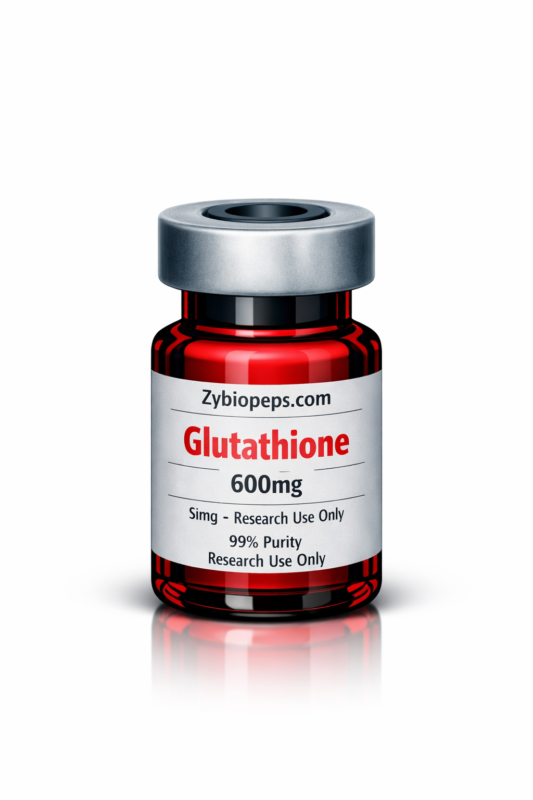
At Zybiopeps, glutathione is one of the compounds we’re most frequently asked about by researchers focused on longevity and antioxidant pathways. We stock it in 600mg and 1500mg concentrations, ship same day from our USA warehouse via USPS and FedEx, and every batch is independently HPLC tested to 99%+ purity. A certificate of analysis is available for every order. We ship to the USA, UK, Australia, Germany, Canada, the Philippines, and worldwide.
Here’s what the research literature actually says about this compound and why it continues to be one of the most studied molecules in cellular biology.
What Is Glutathione?
Glutathione — often abbreviated as GSH — is a small tripeptide synthesized endogenously in virtually every cell. Unlike most antioxidants that come from diet, glutathione is manufactured internally, which makes it unique in the antioxidant landscape. The liver contains the highest concentration in the body, which reflects how central it is to detoxification processes. Production depends on the availability of its precursor amino acids, particularly cysteine, which is often the rate-limiting factor.
What’s interesting is that glutathione levels decline significantly with age, chronic illness, poor nutrition, alcohol use, and oxidative stress. By middle age, most individuals are operating with substantially lower glutathione levels than they had in their twenties. This age-related decline has made it a focal point in longevity research, where maintaining cellular antioxidant capacity is considered a core target for healthy aging protocols.
Oxidative Stress and Cellular Protection
The primary documented benefit of glutathione in the research literature is its role in neutralizing reactive oxygen species — the unstable molecules generated by normal metabolism, environmental toxins, radiation, and inflammation. Every cell faces continuous oxidative assault. Glutathione is the first-line defense against this damage at the intracellular level, which is precisely why it’s present in such high concentrations throughout the body.
Researchers have observed that chronically low glutathione levels correlate with accelerated cellular aging, increased DNA damage, and elevated inflammatory markers. This isn’t a causal claim in isolation — the relationship between oxidative stress and disease is complex — but the consistent association across multiple research contexts has made glutathione depletion a meaningful biomarker in studies on aging, metabolic dysfunction, and neurological health.
Liver Detoxification Research
The liver’s relationship with glutathione is one of the most well-established in the research literature. Glutathione conjugates with toxins — including alcohol metabolites, heavy metals, environmental chemicals, and pharmaceutical compounds — marking them for excretion through what’s known as phase II detoxification. Without adequate glutathione, these conjugation reactions slow and toxic intermediates can accumulate.
Clinical research has investigated glutathione in the context of non-alcoholic fatty liver disease, drug-induced liver injury, and general hepatic support. IV glutathione has been used in clinical settings to support liver function in patients with documented hepatic stress. For researchers studying detoxification pathways and hepatic antioxidant capacity, glutathione remains one of the most biologically relevant compounds available. Our NAD+ product page covers another compound frequently studied alongside glutathione in metabolic and cellular energy research.
Immune System Research
Glutathione plays a less commonly discussed but well-documented role in immune regulation. Lymphocytes — the white blood cells central to adaptive immunity — require adequate glutathione to proliferate and function effectively. Research has shown that glutathione depletion impairs T-cell function and reduces the body’s ability to mount an effective immune response. Conversely, maintaining healthy glutathione levels supports the oxidative burst that immune cells use to neutralize pathogens.
This immune connection has drawn interest from researchers studying chronic fatigue, autoimmune conditions, and age-related immune decline. The overlap between oxidative stress, mitochondrial function, and immune competence makes glutathione a compound that appears across multiple research contexts simultaneously — which is part of what makes it so broadly studied.
Neurological Research
The brain is particularly vulnerable to oxidative damage because of its high metabolic rate and relatively limited antioxidant capacity compared to other tissues. Glutathione is present in neurons and glial cells and plays a protective role against oxidative neurodegeneration. Research has found reduced glutathione levels in the substantia nigra of Parkinson’s disease patients, and several studies have investigated whether glutathione supplementation can slow dopaminergic neuron loss.
More broadly, researchers studying cognitive aging and neuroprotection have included glutathione in protocols examining the relationship between oxidative stress and age-related cognitive decline. This neurological research angle pairs naturally with compounds like Semax and Selank, which also operate in neuroprotective research contexts. Researchers ordering multiple compounds for comparative neurological protocols can access our wholesale program for bulk pricing.
Skin and Melanin Research
One of the most searched areas of glutathione research involves its effect on melanin production. Glutathione inhibits tyrosinase, the enzyme responsible for converting tyrosine into melanin, and shifts melanin synthesis from the darker eumelanin toward lighter pheomelanin. Controlled trials using oral liposomal glutathione have shown measurable effects on skin pigmentation over multi-week protocols, which has driven significant research interest particularly in dermatological contexts.
This is an area where research quality varies considerably. The most rigorous studies have used specific formulations — particularly liposomal or IV delivery — at defined doses over standardized timeframes. Researchers designing skin pigmentation studies should pay close attention to formulation and bioavailability variables when reviewing the literature.
Glutathione and NAD+ in Longevity Research
Researchers studying cellular aging and longevity have increasingly examined glutathione alongside NAD+ as complementary antioxidant and metabolic support compounds. Both address oxidative resilience from different angles — glutathione operates as the primary intracellular free radical scavenger while NAD+ supports mitochondrial energy production and sirtuin activation. The two compounds appear together frequently in research protocols targeting the hallmarks of cellular aging.
At Zybiopeps, researchers can access both compounds with same-day USA warehouse shipping, a minimum order of just $100, and independently verified HPLC purity on every batch. Every vial is sealed in laboratory-grade packaging and inspected before dispatch. A key peer-reviewed study on glutathione and oxidative stress is available on PubMed for researchers reviewing the foundational literature.
Frequently Asked Questions About Glutathione
What makes glutathione different from other antioxidants?
Glutathione is the only major antioxidant produced directly inside cells rather than obtained through diet. It also regenerates other antioxidants like vitamins C and E, making it a master regulator of the body’s entire antioxidant network rather than just a single defensive molecule.
Why do glutathione levels decline with age?
Glutathione synthesis depends on precursor amino acid availability, particularly cysteine, which becomes less efficiently utilized with age. Chronic oxidative stress, illness, poor nutrition, and alcohol use all accelerate glutathione depletion. By middle age, levels can be significantly reduced from youthful baselines.
What concentrations does Zybiopeps stock?
We stock glutathione in 600mg and 1500mg concentrations. Every batch is independently HPLC tested to 99%+ purity by a USA-based third-party laboratory. A certificate of analysis is available for every batch.
Where does Zybiopeps ship glutathione?
Same-day shipping from our USA warehouse via USPS and FedEx to the USA, UK, Australia, Germany, Canada, the Philippines, and worldwide. Minimum order is $100.
What compounds are often studied alongside glutathione?
NAD+ is the most common companion compound in longevity and cellular energy research. Semax and Selank are studied alongside glutathione in neuroprotection contexts. Researchers designing multi-compound protocols can access our wholesale program for bulk research pricing.
Is glutathione a peptide?
Yes — glutathione is a tripeptide, meaning it is composed of three amino acids linked by peptide bonds. It is one of the smallest and most abundant peptides in the human body, produced endogenously in every cell.
Disclaimer: Glutathione is sold by Zybiopeps strictly for research purposes. It is not intended for human consumption, is not FDA approved for supplementation in injectable form, and should not be used as a medical treatment. All information on this page is provided for educational and research purposes only. Researchers should comply with all applicable laws and institutional guidelines when handling research compounds.
