

Research and Education
Cagrilintide — Amylin Analog Research Guide
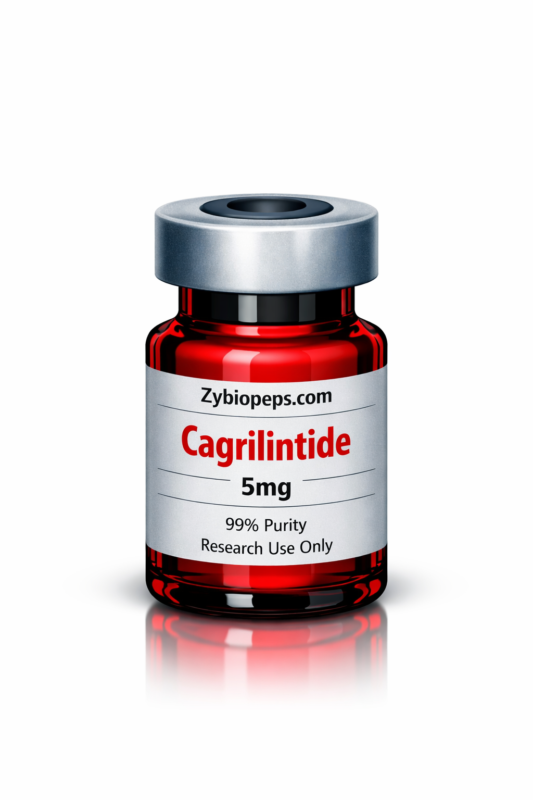
Cagrilintide research has accelerated rapidly over the past two years, driven by clinical trial data showing remarkable results when this long-acting amylin analog is combined with GLP-1 receptor agonists. The compound itself is a modified version of amylin — a peptide hormone co-secreted with insulin from pancreatic beta cells — engineered for an extended half-life that allows once-weekly administration in research protocols. What sets cagrilintide apart from other metabolic peptides is its distinct mechanism: rather than acting on GLP-1 receptors like semaglutide or tirzepatide, it targets amylin and calcitonin receptors in the brain’s hypothalamus, producing complementary effects on appetite, gastric emptying, and glucose regulation.
At Zybiopeps, cagrilintide is available in 5mg and 10mg concentrations for research purposes. We ship same day from our USA warehouse via USPS and FedEx, and every batch is independently HPLC tested to 99%+ purity by a USA-based third-party laboratory. A certificate of analysis is available for every order. We ship to the USA, UK, Australia, Germany, Canada, the Philippines, and worldwide. Minimum order is $100.
Here’s a thorough look at what the research literature shows about this compound and why it has become one of the most watched peptides in metabolic science.
What Is Cagrilintide?
Cagrilintide is a long-acting acylated amylin analog developed to overcome the limitations of native amylin, which has a very short half-life and poor solubility. The compound was engineered with fatty acid acylation — similar to the approach used in semaglutide development — to extend its duration of action to approximately one week. This makes it suitable for research protocols examining sustained amylin receptor activation and its downstream metabolic effects.
Amylin itself is produced in the pancreas alongside insulin and plays important roles in postprandial glucose regulation, gastric emptying, and satiety signaling in the brain. Native amylin is also the precursor to islet amyloid polypeptide (IAPP), which has been studied in the context of type 2 diabetes pathology. Cagrilintide’s structural modifications allow it to activate amylin receptors without the aggregation properties associated with native amylin, making it a cleaner research tool for studying amylin receptor biology.
Appetite Regulation Research
The primary research interest in cagrilintide centers on its effects on appetite and food intake regulation. Amylin receptors are expressed in the area postrema and nucleus tractus solitarius — brain regions that integrate satiety signals from the gut and periphery. When activated, these receptors reduce meal size, slow gastric emptying, and decrease overall caloric intake. Research in animal models has consistently shown significant reductions in food intake and body weight with amylin receptor agonism.
What’s interesting is that amylin and GLP-1 pathways appear to work synergistically on appetite regulation. GLP-1 receptor agonists like semaglutide primarily reduce appetite through hypothalamic pathways, while amylin analogs like cagrilintide act through complementary brainstem circuits. This mechanistic complementarity is precisely why the combination has attracted so much research attention — the two pathways appear to produce additive or even synergistic effects on food intake reduction when activated simultaneously.
The CagriSema Combination
The most significant development in cagrilintide research has been its combination with semaglutide in what researchers call CagriSema. Phase 2 clinical trial data published in The Lancet showed that the cagrilintide plus semaglutide combination produced substantially greater weight reduction than either compound alone. The trial documented mean weight loss of approximately 15% over 32 weeks with the combination, compared to around 8% for semaglutide alone and 9% for cagrilintide alone at the doses studied.
This combination research has generated enormous interest because it suggests that targeting both amylin and GLP-1 receptors simultaneously may represent a more effective approach to metabolic research than single-pathway targeting. Researchers studying dual-mechanism metabolic protocols can access both compounds at Zybiopeps — our Semaglutide product page has full specifications for researchers designing combination studies. For those studying triple mechanisms, our Retatrutide page covers the GIP/GLP-1/glucagon triple agonist approach.
Glucose Metabolism Research
Beyond appetite regulation, cagrilintide has been studied for its effects on postprandial glucose control. Native amylin slows gastric emptying after meals, reducing the rate of glucose absorption and blunting postprandial glucose spikes. Cagrilintide’s long-acting amylin receptor agonism extends this effect across the full weekly dosing interval in research protocols. Clinical data from the CagriSema trials showed improvements in HbA1c alongside weight reduction, suggesting meaningful effects on glucose metabolism beyond what body weight reduction alone would explain.
Researchers studying glucose homeostasis and pancreatic hormone biology have found cagrilintide valuable as a tool for isolating amylin receptor contributions to postprandial metabolic regulation. Its clean receptor profile and extended half-life make it particularly suitable for longer-term metabolic research designs.
Cagrilintide vs Other Metabolic Peptides
Researchers evaluating the metabolic peptide landscape often place cagrilintide alongside GLP-1 receptor agonists and dual agonists. Here’s the key distinction — semaglutide and tirzepatide work primarily through incretin pathways, while cagrilintide targets amylin receptors. These are genuinely different mechanisms operating in different brain regions and peripheral tissues. Tirzepatide adds GIP receptor agonism to GLP-1, while cagrilintide adds amylin receptor activation. The two approaches are mechanistically distinct and potentially additive.
For researchers building comprehensive metabolic research libraries, Zybiopeps stocks the full spectrum of compounds in this space. Our Tirzepatide page covers the GIP/GLP-1 dual agonist, and our wholesale program offers bulk pricing for research teams ordering multiple compounds. Every compound ships same day from our USA warehouse in sealed, laboratory-grade vials inspected before dispatch.
Research Considerations
Cagrilintide research protocols typically involve subcutaneous administration given its peptide structure and once-weekly dosing schedule in clinical studies. The compound requires reconstitution and cold storage to maintain stability. Researchers should note that amylin receptor agonists can produce nausea as a dose-dependent effect in animal models, which is a relevant endpoint to monitor in metabolic research protocols.
The clinical development of cagrilintide is ongoing, with phase 3 trials of the CagriSema combination currently underway. Researchers interested in the foundational pharmacology can access peer-reviewed literature on amylin receptor biology and cagrilintide’s clinical development on PubMed.
Frequently Asked Questions About Cagrilintide
What type of peptide is cagrilintide?
Cagrilintide is a long-acting acylated amylin analog. It targets amylin and calcitonin receptors in the brain and periphery, producing effects on appetite regulation, gastric emptying, and glucose metabolism. It is distinct from GLP-1 receptor agonists like semaglutide, which act through a different receptor system.
What is the CagriSema combination?
CagriSema refers to the combination of cagrilintide and semaglutide studied in clinical trials. Phase 2 data showed the combination produced substantially greater weight reduction than either compound alone, reflecting the complementary mechanisms of amylin and GLP-1 receptor activation.
What concentrations does Zybiopeps stock?
We stock cagrilintide in 5mg and 10mg concentrations. Every batch is independently HPLC tested to 99%+ purity by a USA-based third-party laboratory. A certificate of analysis is available for every batch upon request.
Where does Zybiopeps ship cagrilintide?
Same-day shipping from our USA warehouse via USPS and FedEx to the USA, UK, Australia, Germany, Canada, the Philippines, and worldwide. Minimum order is $100.
How does cagrilintide differ from semaglutide?
Semaglutide is a GLP-1 receptor agonist that primarily acts through incretin pathways in the hypothalamus and gut. Cagrilintide targets amylin and calcitonin receptors through complementary brainstem circuits. The two compounds have additive effects on appetite reduction when combined, which is the basis for the CagriSema combination research program.
Is cagrilintide the same as tirzepatide?
No. Tirzepatide is a dual GIP/GLP-1 receptor agonist. Cagrilintide is an amylin analog. They work through entirely different receptor systems, though both are being researched in the context of metabolic and weight management science.
Disclaimer: Cagrilintide is sold by Zybiopeps strictly for research purposes. It is not intended for human consumption, is not FDA approved, and should not be used as a medical treatment. All information on this page is provided for educational and research purposes only. Researchers should comply with all applicable laws and institutional guidelines when handling research peptides.
