
Research and Education
AOD 9604 Peptide Benefits: What the Research Reveals
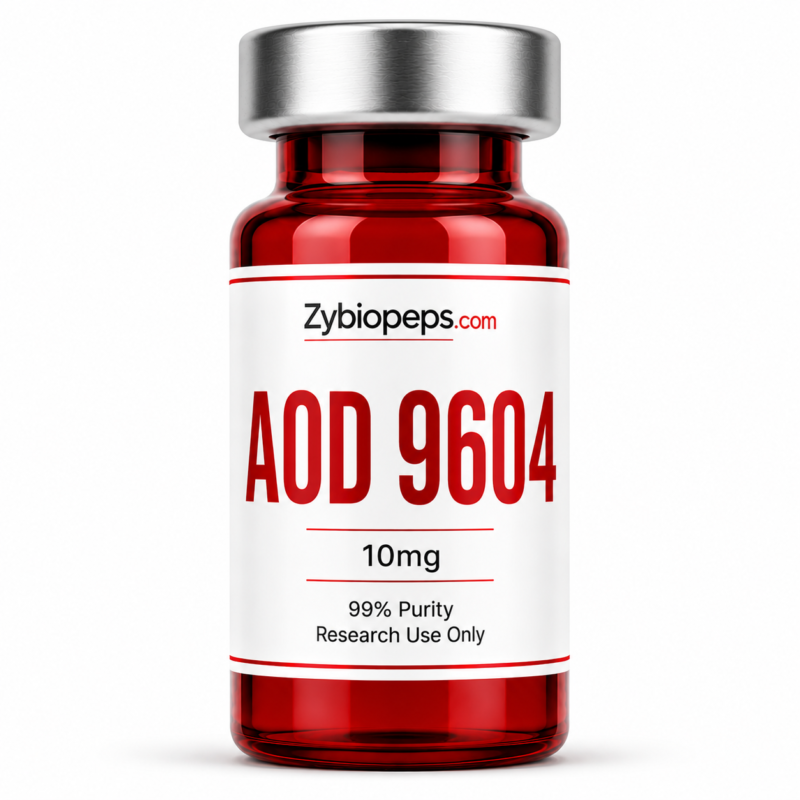
AOD 9604 peptide benefits have generated significant research interest over the past two decades, particularly among scientists studying fat metabolism, weight regulation, and metabolic function. This synthetic peptide fragment — derived from the C-terminus of human growth hormone — was originally developed as a safer alternative for studying the fat-burning properties of growth hormone without the unwanted effects associated with full growth hormone administration. What researchers have found since then makes AOD 9604 one of the more intriguing compounds in the metabolic peptide space.
At Zybiopeps, AOD 9604 is a compound our research customers return to consistently. The specificity of its mechanism and the growing body of preclinical data behind it make it a valuable tool for researchers focused on metabolic biology and adipose tissue research.
What Is AOD 9604?
AOD 9604 is a synthetic peptide consisting of amino acids 177-191 of the human growth hormone sequence. This specific fragment contains the region of growth hormone believed to be responsible for its lipolytic — fat-breaking — activity. By isolating this fragment, researchers can study the fat metabolism effects of growth hormone signaling without activating the insulin-like growth factor pathways associated with full growth hormone, which produce effects on blood glucose and cell proliferation that can complicate metabolic research.
The compound received an FDA Generally Recognized as Safe (GRAS) designation in the United States, which is notable for a research peptide and reflects the substantial safety data accumulated during its clinical development program. This regulatory history gives AOD 9604 a more developed safety profile than many compounds in the peptide research space.
Key AOD 9604 Peptide Benefits in Research
The research literature on AOD 9604 covers several distinct areas of metabolic and regenerative biology. Here is what studies have documented across the most significant domains of investigation.
Fat Metabolism and Lipolysis
The most extensively studied of all AOD 9604 peptide benefits is its effect on lipolysis — the breakdown of stored fat for energy. Research has shown that AOD 9604 stimulates lipolytic activity in adipose tissue through a mechanism that mimics the fat-burning signal of growth hormone but without activating the broader growth hormone receptor pathway. Studies in obese animal models demonstrated significant reductions in body fat in subjects receiving AOD 9604 compared to controls.
What makes this finding particularly interesting from a research perspective is the selectivity of the effect. AOD 9604 appears to target adipose tissue specifically, influencing fat breakdown without the metabolic side effects associated with full growth hormone administration. For researchers studying the biology of fat metabolism and adipose tissue regulation, this selectivity makes AOD 9604 a cleaner investigative tool than many alternatives.
Anti-Obesity Research
Building on its lipolytic activity, AOD 9604 became a subject of clinical investigation for obesity treatment. Phase 2 clinical trials conducted in human subjects demonstrated meaningful reductions in body weight in obese participants receiving AOD 9604 compared to placebo. While the compound did not ultimately progress through the full regulatory pathway for an obesity indication, the clinical data generated provides researchers with detailed human pharmacokinetic and efficacy information that is relatively rare in the peptide research world.
Our research team at Zybiopeps has reviewed the clinical trial literature on AOD 9604 carefully. The human data available for this compound makes it one of the better-characterized peptides from a translational research perspective — the gap between animal model findings and human data is smaller here than for most research peptides.
Cartilage and Bone Research
One of the more surprising AOD 9604 peptide benefits to emerge from research is its activity in cartilage and bone biology. Studies have found that AOD 9604 may stimulate cartilage repair and regeneration through mechanisms that are distinct from its lipolytic activity. Research in animal models of osteoarthritis demonstrated improvements in cartilage integrity and reduced degradation markers in subjects receiving AOD 9604.
This finding opened up an entirely different research direction for the compound. Researchers studying joint health, cartilage repair, and the biology of connective tissue have found AOD 9604 to be a useful investigative tool quite apart from its metabolic applications. The dual activity profile — fat metabolism and cartilage biology — makes AOD 9604 a more versatile research compound than its original development purpose might suggest.
AOD 9604 Benefits and Side Effects Profile
Understanding AOD 9604 peptide benefits and side effects together is essential for researchers designing studies with this compound. The clinical trial data generated during AOD 9604’s development program documented a favorable tolerability profile in human subjects. Unlike full growth hormone, AOD 9604 did not produce significant effects on blood glucose, insulin sensitivity, or IGF-1 levels in clinical studies — which is precisely the advantage its selective mechanism was designed to provide.
Preclinical toxicology studies also showed no significant adverse findings at research-relevant doses. The FDA GRAS designation reflects this accumulated safety data. For researchers building study protocols around AOD 9604, the available safety literature provides a more solid foundation than is available for many peptides at a similar stage of investigation.
AOD 9604 Peptide Benefits Reviews in the Research Community
The research community’s assessment of AOD 9604 has evolved significantly as more data has accumulated. Early interest focused almost exclusively on the anti-obesity application, but the cartilage research findings have expanded the field of investigators studying this compound considerably. Reviews of the AOD 9604 peptide benefits literature consistently highlight the compound’s selective mechanism, its clinical development history, and its dual activity profile as distinguishing features that make it worth ongoing investigation.
Researchers ordering from Zybiopeps can access AOD 9604 in verified high-purity formulations with full certificates of analysis. You can find complete specifications on our AOD 9604 product page.
How AOD 9604 Compares to Other Metabolic Peptides
Within the metabolic peptide research space, AOD 9604 occupies a distinctive position. Compounds like semaglutide and tirzepatide work through GLP-1 and GIP receptor pathways to reduce appetite and improve insulin sensitivity, while AOD 9604 targets adipose tissue directly through a growth hormone-derived mechanism. These are complementary rather than competing approaches to studying metabolic biology, and researchers investigating obesity biology often find value in studying both pathway types.
For researchers interested in the GLP-1 pathway compounds, our posts on Tirzepatide weight loss results and Peptides for weight loss provide useful comparative context.
The Primary Research on AOD 9604
The clinical and preclinical literature on AOD 9604 is well-indexed through PubMed. Researchers looking to engage with the primary data can access peer-reviewed findings on AOD 9604’s lipolytic activity and metabolic effects as a starting point for deeper investigation into this compound’s mechanisms.
Research Quality and Sourcing
AOD 9604’s clinical development history means that researchers have access to reference standards for what properly synthesized compound should look like analytically. Purity and peptide integrity matter significantly for research reproducibility with this compound. Researchers ordering from Zybiopeps can be confident that our AOD 9604 is manufactured to 99%+ purity standards with third-party certificates of analysis available for every batch.
We supply research teams across the USA, Canada, and Australia. Quality documentation is standard with every order — because your research deserves a foundation you can trust.
Frequently Asked Questions About AOD 9604 Peptide Benefits
What are the main AOD 9604 peptide benefits in research?
Research has documented AOD 9604 benefits including stimulation of lipolysis in adipose tissue, reductions in body fat in animal and human studies, potential cartilage repair activity, and a favorable safety profile reflected in its FDA GRAS designation.
What are AOD 9604 peptide benefits and side effects in clinical research?
Clinical studies documented meaningful body weight reductions with a favorable tolerability profile. Unlike full growth hormone, AOD 9604 did not significantly affect blood glucose, IGF-1, or insulin sensitivity in clinical trials — a key advantage of its selective mechanism.
What does AOD 9604 do differently from growth hormone?
AOD 9604 isolates the lipolytic fragment of growth hormone, targeting fat breakdown specifically without activating the broader growth hormone receptor pathway. This selectivity avoids the glucose metabolism and IGF-1 effects associated with full growth hormone administration.
Is there human clinical data on AOD 9604?
Yes — AOD 9604 completed Phase 2 clinical trials for obesity, generating human pharmacokinetic and efficacy data. This makes it one of the better-characterized research peptides from a translational perspective.
What are AOD 9604 peptide benefits reviews showing in research?
Research reviews consistently highlight AOD 9604’s selective lipolytic mechanism, its dual activity in fat metabolism and cartilage biology, its clinical development history, and its FDA GRAS designation as distinguishing features that support continued investigation.
Where can researchers source AOD 9604?
Zybiopeps supplies research-grade AOD 9604 at 99%+ purity with full certificates of analysis, shipping to the USA, Canada, and Australia. Visit our AOD 9604 product page for complete batch documentation and specifications.
Disclaimer
All content on this page is intended strictly for educational and research purposes. AOD 9604 is a research peptide. While it has received FDA GRAS designation, this does not constitute approval for therapeutic use. The information presented does not constitute medical advice and is not intended to diagnose, treat, cure, or prevent any disease or medical condition. All peptide research must be conducted in accordance with applicable laws and regulations. Zybiopeps supplies research-grade peptides exclusively for laboratory and preclinical research use.
