
Research and Education
NAD+ and Longevity Research — What the Science Actually Says
NAD+ and longevity research has become one of the most exciting and fast-moving areas in modern science. What was once a niche topic discussed only in academic circles is now attracting serious attention from researchers worldwide. This guide breaks down what NAD+ is, why it matters for aging, and where the science currently stands.
What Is NAD+?
NAD+ stands for nicotinamide adenine dinucleotide. It’s a coenzyme found in every living cell, playing a central role in energy metabolism — specifically in converting nutrients into cellular energy. Beyond energy production, NAD+ is a critical regulator of proteins called sirtuins, which are directly involved in DNA repair, gene expression, and cellular stress responses.
Here’s what makes it so relevant to aging research: NAD+ levels decline significantly with age. By the time most people reach middle age, their cellular NAD+ levels may be half of what they were in youth. This decline has been linked to a range of age-associated changes at the cellular level — which is exactly why NAD+ and longevity research continues to grow as a field.
NAD+ and the Aging Process
The connection between NAD+ and aging isn’t speculative — it’s one of the better-supported relationships in cellular biology. As NAD+ levels fall, sirtuin activity decreases, mitochondrial function declines, and the cell’s ability to repair DNA damage becomes compromised. These are not minor effects. They represent some of the core biological mechanisms that drive aging at a cellular level.
Research published on PubMed has documented NAD+ decline across multiple species and tissue types. Animal studies have shown that restoring NAD+ levels can reverse certain markers of cellular aging — findings that have energized the entire longevity research community.
NAD+ Precursors in Research
Because NAD+ itself is difficult to deliver directly to cells, researchers have focused on precursor molecules that the body can convert into NAD+. The two most studied are NMN and NR.
NMN has attracted particular attention following research from institutions including Harvard, where animal studies demonstrated significant restoration of NAD+ levels and associated improvements in metabolic markers. NR has a similarly strong research profile, with multiple human trials now underway examining its effects across various tissues.
Sirtuins — The Longevity Proteins
You can’t explore this field without talking about sirtuins. These are a family of proteins — seven in humans — that depend on NAD+ to function. Sirtuins regulate DNA repair, inflammation, metabolism, and cellular stress responses.
When NAD+ levels are high, sirtuins are active. When NAD+ declines, sirtuin activity falls with it. This relationship is one of the central reasons why NAD+ and longevity research has attracted so much cross-disciplinary attention from geneticists, metabolic researchers, and neurologists alike.
Mitochondrial Health and Aging
Mitochondria are the energy-producing organelles in cells, and their function declines significantly with age. This mitochondrial dysfunction is now recognized as one of the hallmarks of aging — and NAD+ sits right at the center of mitochondrial energy metabolism.
Research in animal models has shown that restoring NAD+ levels can improve mitochondrial function, increase energy production, and reverse some aspects of age-related metabolic decline. These findings have made this one of the most active areas in mitochondrial medicine today.
Where the Research Is Headed
The animal data is impressive and the mechanistic rationale is solid. Human clinical trials are still catching up, but several are now underway examining NAD+ precursors in the context of aging, metabolic health, and neurological function. The trajectory of this science is genuinely exciting and shows no signs of slowing down.
Research Grade Compounds at Zybiopeps
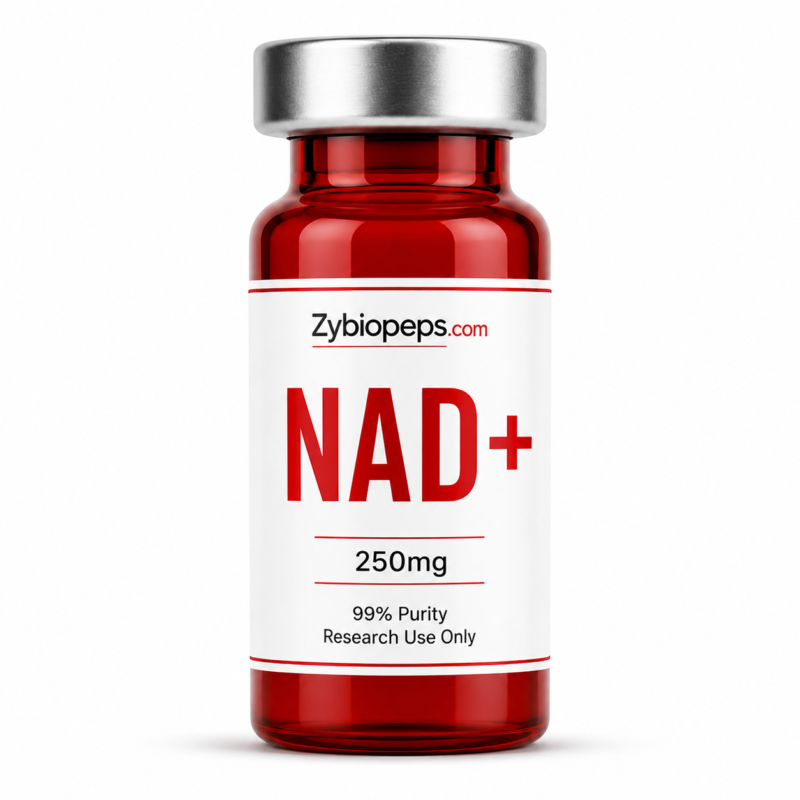
For researchers studying longevity mechanisms and metabolic pathways, compound quality is non-negotiable. At Zybiopeps, every compound is independently tested and verified for purity before shipping. Explore our full research peptide catalog to find compounds relevant to your work. All products are intended strictly for laboratory use only.
Disclaimer: All products sold by Zybiopeps are intended for research and laboratory use only. They are not intended for human consumption, diagnosis, treatment, or prevention of any disease or condition. This content is purely informational and educational and does not constitute medical advice. Always consult a licensed medical professional before making any health-related decisions.
