

Research and Education
PT-141 Benefits: What the Research Reveals About This Melanocortin Peptide
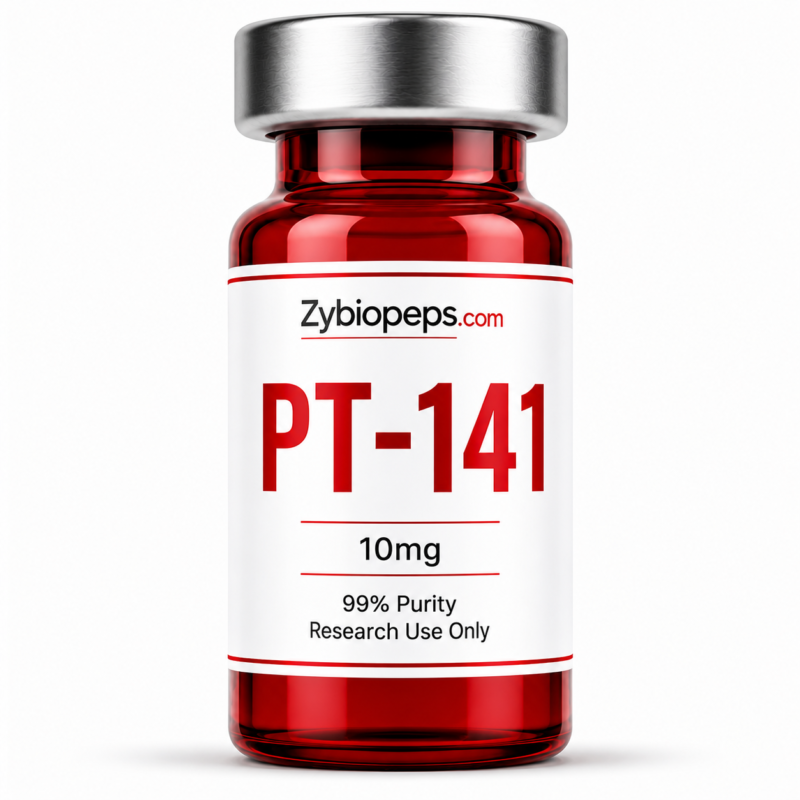
PT-141 benefits have attracted growing interest in peptide research circles, particularly among scientists studying sexual health, neurological function, and melanocortin receptor activity. Unlike most compounds in the peptide research space, PT-141 — also known as bremelanotide — works through a central nervous system pathway rather than a purely vascular one. That distinction makes it a genuinely unique research subject with a mechanism that sets it apart from anything else in its class.
At Zybiopeps, PT-141 is one of our more specialized research compounds. The science behind its mechanism is fascinating, and the clinical literature that has developed around it over the past two decades gives researchers a solid foundation to work from.
What Is PT-141?
PT-141 is a synthetic peptide analogue of alpha-melanocyte stimulating hormone (alpha-MSH). It was originally developed from Melanotan II — another melanocortin peptide — when researchers noticed that subjects in early tanning studies reported unexpected effects on sexual arousal. That observation led to a dedicated research program that eventually produced PT-141 as a more targeted compound for studying melanocortin receptor activity and its relationship to sexual function.
The compound works primarily through the melanocortin 3 and melanocortin 4 receptors in the central nervous system. This is what makes PT-141 research so distinct — rather than acting on vascular mechanisms the way many compounds in this area do, it influences arousal pathways at the neurological level. That central mechanism is both what makes it interesting to researchers and what distinguishes it from earlier compounds studied for similar purposes.
Key PT-141 Benefits Observed in Research
The research literature on PT-141 covers several key areas. Here is what studies have documented across the most significant domains of investigation.
Melanocortin Receptor Activation
The foundation of all PT-141 research is its activity at melanocortin receptors — specifically MC3R and MC4R. These receptors are distributed throughout the brain and play roles in energy homeostasis, inflammation regulation, and sexual function among other processes. PT-141’s selective binding at these receptors makes it a valuable tool for researchers studying how melanocortin signaling influences behavior and physiology at the neurological level.
What’s particularly interesting from a research perspective is that melanocortin receptor activity touches a surprisingly broad range of biological functions. Researchers studying PT-141 are often simultaneously generating insights into appetite regulation, inflammatory pathways, and autonomic nervous system function — not just the sexual function applications that the compound is most commonly associated with.
Sexual Function Research
The most extensively studied PT-141 benefits in the clinical literature relate to sexual dysfunction. Clinical trials of bremelanotide — the pharmaceutical name for PT-141 — have demonstrated significant improvements in sexual desire and arousal in both male and female research subjects. The compound received FDA approval in 2019 under the brand name Vyleesi for the treatment of hypoactive sexual desire disorder in premenopausal women, making it one of the few peptides to have completed the full clinical trial pathway.
That regulatory history gives PT-141 a more substantial clinical evidence base than most research peptides. The published trial data provides researchers with detailed pharmacokinetic and pharmacodynamic information that can inform preclinical study design.
PT-141 Benefits for Women
Research specifically examining PT-141 benefits for women has been particularly well-developed, largely because the FDA approval pathway focused on female sexual dysfunction. Clinical studies documented significant improvements in the number of satisfying sexual events and reductions in distress associated with low sexual desire in female research subjects receiving bremelanotide.
The mechanism driving these effects — melanocortin receptor activation in the central nervous system — is physiologically relevant across sexes, but the clinical research in women provides a particularly detailed picture of how PT-141’s neurological pathway translates into measurable outcomes. For researchers studying female sexual health biology, this body of literature is unusually robust by peptide research standards.
PT-141 Peptide Benefits in Male Research
Research into PT-141 peptide benefits in male subjects has also shown promising results. Early clinical studies demonstrated that PT-141 could produce erectile responses in male subjects through its central nervous system mechanism — a different pathway than the phosphodiesterase inhibitors that dominate the pharmaceutical landscape in this area. The fact that PT-141 works centrally rather than through vascular dilation makes it interesting for researchers studying cases where vascular pathway compounds have limited effect.
Our research team at Zybiopeps has followed the male sexual function literature on PT-141 closely. The central mechanism angle represents a genuinely different approach to understanding arousal biology, and the research continues to develop.
Neurological and Behavioral Research Applications
Beyond sexual function, PT-141’s activity at melanocortin receptors has opened up research questions in broader neurological and behavioral domains. MC4R in particular has been studied for its role in energy balance and food intake regulation, and PT-141’s activity at this receptor has made it a subject of interest for researchers investigating the intersection of melanocortin signaling, appetite, and metabolic function.
This is an area of PT-141 research that remains in earlier stages but represents a potentially significant expansion of the compound’s research applications beyond its primary clinical use case.
How PT-141 Compares to Other Melanocortin Peptides
Researchers often encounter PT-141 in the context of the broader melanocortin peptide family. Melanotan II — the compound from which PT-141 was derived — has a broader receptor profile that includes MC1R activity, which drives the skin tanning effects associated with that compound. PT-141 was specifically developed to retain the sexual function effects while reducing the tanning and other off-target activities associated with Melanotan II’s broader receptor binding.
This makes PT-141 a more targeted research tool for studying MC3R and MC4R activity specifically. Researchers interested in melanocortin biology who want to isolate the effects of these receptors without confounding MC1R activity will generally find PT-141 a cleaner research instrument than Melanotan II for that purpose.
Research Quality and Sourcing
PT-141 is a compound where purity matters significantly. Its central nervous system mechanism means that impurities or degradation products could produce confounding effects that are difficult to distinguish from the compound’s intended activity in research settings. Researchers ordering from Zybiopeps can be confident that our PT-141 is manufactured to 99%+ purity standards, with third-party certificates of analysis available for every batch.
We supply research teams across the USA, Canada, and Australia. You can find full specifications on our PT-141 product page.
The Primary Research on PT-141
For researchers looking to ground their work in the primary literature, the clinical trial data on bremelanotide is the most rigorous starting point. The foundational research is indexed through PubMed, and you can access peer-reviewed data on PT-141’s clinical efficacy and melanocortin receptor mechanism as a starting point for deeper investigation.
Frequently Asked Questions About PT-141 Benefits
What are the main PT-141 benefits in research?
Research has documented PT-141 benefits including melanocortin receptor activation, improvements in sexual desire and arousal in both male and female subjects, and potential applications in neurological and metabolic research through MC3R and MC4R activity.
What are PT-141 benefits for women specifically?
Clinical trials supporting FDA approval of bremelanotide documented significant improvements in sexual desire and reductions in associated distress in premenopausal women. The central nervous system mechanism driving these effects makes PT-141 a unique research tool in female sexual health biology.
What are PT-141 peptide benefits compared to other compounds?
PT-141’s central nervous system mechanism through melanocortin receptors distinguishes it from vascular pathway compounds studied for similar purposes. This makes it particularly useful for researchers studying neurological pathways in arousal biology.
How does PT-141 work at the receptor level?
PT-141 binds primarily to melanocortin 3 and melanocortin 4 receptors in the central nervous system. These receptors influence sexual function, energy balance, and inflammatory regulation, making PT-141 a versatile tool for researchers studying melanocortin biology.
What is the difference between PT-141 and Melanotan II?
PT-141 was derived from Melanotan II but has a narrower receptor profile. It was developed to retain MC3R and MC4R activity while reducing the MC1R activity that produces skin tanning effects in Melanotan II, making it a more targeted research tool for studying specific melanocortin pathways.
Where can researchers source PT-141?
Zybiopeps supplies research-grade PT-141 at 99%+ purity with full certificates of analysis, shipping to the USA, Canada, and Australia. Visit our PT-141 product page for complete batch documentation and specifications.
Disclaimer
All content on this page is intended strictly for educational and research purposes. PT-141 is a research peptide. While bremelanotide has received FDA approval for a specific clinical indication, the information presented here relates to research applications and does not constitute medical advice. This content is not intended to diagnose, treat, cure, or prevent any disease or medical condition. All peptide research must be conducted in accordance with applicable laws and regulations. Zybiopeps supplies research-grade peptides exclusively for laboratory and preclinical research use.
