

Research and Education
Epithalon Benefits: What Decades of Research Reveal About This Longevity Peptide
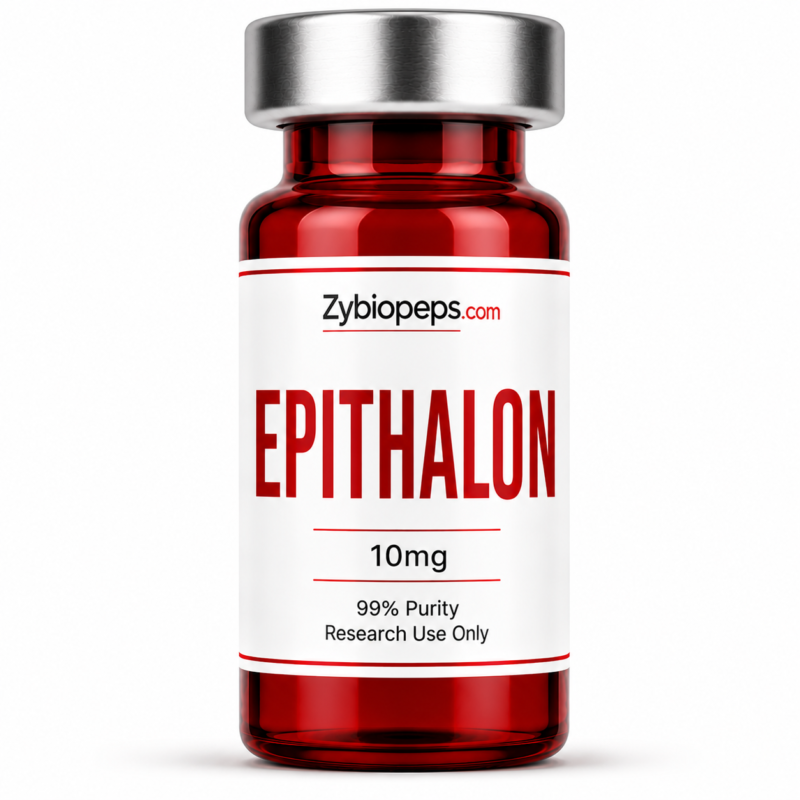
Epithalon benefits have become one of the most compelling topics in longevity and anti-aging research, and the science behind this small but fascinating peptide is genuinely worth understanding. As a synthetic tetrapeptide derived from the natural compound epithalamin — produced by the pineal gland — epithalon has attracted serious scientific attention for its apparent ability to influence some of the most fundamental mechanisms of cellular aging. Few peptides in the research space can claim as long or as consistent a body of preclinical literature.
At Zybiopeps, epithalon is one of our standout anti-aging research compounds. The depth of scientific investigation behind it sets it apart from many newer peptides, and we’re proud to supply it to researchers who are serious about longevity biology.
What Is Epithalon?
Epithalon — also spelled Epitalon — is a synthetic tetrapeptide consisting of four amino acids: alanine, glutamic acid, aspartic acid, and glycine. It was developed by Professor Vladimir Khavinson and his team at the St. Petersburg Institute of Bioregulation and Gerontology in Russia, where it has been studied extensively since the 1980s. The compound is based on epithalamin, a natural peptide bioregulator extracted from the pineal gland of calves, which was observed to have life-extending properties in early animal studies.
What makes epithalon particularly interesting is that its research history spans decades and multiple study designs — from cell culture experiments to animal lifespan studies to small human clinical investigations. That breadth of investigation gives researchers a richer picture of its potential mechanisms than most peptides in the anti-aging space can offer.
Key Epithalon Benefits Observed in Research
The research literature on epithalon peptide benefits covers several distinct biological mechanisms. Here is what the studies have documented across the most significant areas of investigation.
Telomerase Activation and Telomere Biology
The most widely discussed of all epithalon benefits in research circles is its apparent ability to activate telomerase — the enzyme responsible for maintaining the length of telomeres. Telomeres are the protective sequences at the ends of chromosomes that shorten with each cell division. Progressive telomere shortening is considered one of the primary biological markers of cellular aging, and the loss of telomerase activity as organisms age is thought to be a key driver of cellular senescence.
Research published in peer-reviewed journals has shown that epithalon can stimulate telomerase activity in human fetal fibroblast cells, resulting in telomere elongation and extended cellular lifespan in vitro. This finding placed epithalon at the forefront of telomere biology research and remains the most cited mechanism in the epithalon literature. For researchers studying the cellular biology of aging, this mechanism alone makes epithalon a uniquely valuable investigative tool.
Lifespan Extension in Animal Models
Some of the most striking epithalon peptide benefits documented in research come from animal lifespan studies. Long-term studies conducted in fruit flies, mice, and rats have shown statistically significant increases in average and maximum lifespan in subjects receiving epithalon compared to controls. In some studies, the lifespan extension observed was substantial — representing a meaningful shift in survival curves rather than marginal improvements.
What’s particularly noteworthy is that these lifespan effects were observed alongside improvements in health markers — not just survival time. Animals in epithalon groups showed reduced incidence of age-related tumors, better preservation of immune function, and maintained hormonal profiles more characteristic of younger subjects. Our research team at Zybiopeps has reviewed this body of animal literature carefully, and the consistency of results across different species and study designs is genuinely compelling.
Pineal Gland and Melatonin Regulation
Epithalon’s origins in pineal gland biology give it a unique relationship with melatonin regulation. Research has shown that epithalon can normalize pineal gland function and support more youthful patterns of melatonin secretion in aging subjects. This is significant because melatonin production declines substantially with age, and that decline has been linked to disrupted circadian rhythms, impaired immune function, reduced antioxidant activity, and accelerated aging processes.
By supporting pineal function, epithalon may influence aging through a broader hormonal pathway than its telomerase activity alone suggests. Research in aged animals has documented improvements in melatonin levels and associated circadian markers following epithalon administration — an area of investigation that connects the compound to sleep biology, immune aging, and oxidative stress research simultaneously.
Antioxidant and Anti-Tumor Research
Research into benefits of epithalon peptide has also documented significant antioxidant activity. Studies have shown that epithalon can reduce markers of oxidative stress in aging subjects — a finding that is consistent with its broader anti-aging profile. Oxidative damage accumulates progressively with age and is considered a major driver of cellular dysfunction and disease development in older organisms.
The anti-tumor findings in epithalon research are also noteworthy. Multiple animal studies have documented reduced spontaneous tumor incidence and delayed tumor development in subjects receiving long-term epithalon administration. While this research is preclinical and requires significant further investigation before any conclusions can be drawn, it adds another dimension to the compound’s biological profile that researchers in oncology-adjacent fields have found worth examining.
Immune Function and Aging
Age-related immune decline — sometimes called immunosenescence — is one of the most significant drivers of vulnerability to disease in older organisms. Research on epithalon benefits has included investigation of its effects on immune function, with studies documenting improvements in T-cell activity and immune responsiveness in aging subjects following epithalon administration.
This immune-supporting activity is consistent with epithalon’s effects on the pineal gland and melatonin regulation, since melatonin is known to play an important modulatory role in immune function. The convergence of multiple mechanisms — telomere biology, pineal regulation, antioxidant activity, and immune support — makes epithalon one of the more multifaceted research tools in the anti-aging peptide space.
Epithalon 10mg in Research Settings
Researchers investigating epithalon 10mg benefits typically encounter this dosage format in the context of longer research protocols. The 10mg format represents a common research quantity used in studies examining sustained epithalon administration over extended timeframes. The compound’s relatively short half-life means that research protocols often involve repeated administration, and the 10mg quantity is frequently referenced in study designs examining cumulative effects on telomere biology and aging biomarkers.
Researchers ordering from Zybiopeps can access epithalon in verified research-grade formulations with full purity documentation. You can find complete specifications on our Epithalon product page.
How Epithalon Compares to Other Anti-Aging Peptides
Within the anti-aging peptide research landscape, epithalon occupies a distinctive position. While compounds like Sermorelin and CJC-1295 target the growth hormone axis, and BPC-157 and TB-500 focus on tissue repair and inflammation, epithalon works at a more fundamental level — directly influencing the cellular machinery of aging through telomerase activation and pineal regulation.
This makes epithalon a complementary rather than competing research tool to other anti-aging peptides. Researchers studying longevity biology often investigate epithalon alongside growth hormone secretagogues and regenerative peptides to build a more complete picture of how multiple aging mechanisms interact. Both Sermorelin and BPC-157 are available at Zybiopeps for researchers studying these combined pathways.
The Primary Research on Epithalon
The foundational research on epithalon comes primarily from Professor Khavinson’s group in Russia, with a substantial body of work indexed through PubMed. For researchers who want to engage with the primary literature, a key study on epithalon’s effect on telomerase activity and telomere elongation in human cells provides an excellent starting point for understanding the core mechanism that has driven interest in this compound.
Research Quality and Sourcing
Epithalon’s biological activity is highly dependent on peptide integrity. Degraded or impure epithalon will not accurately reflect the compound’s true mechanisms in research settings. Researchers ordering from Zybiopeps can be confident that our epithalon is manufactured to 99%+ purity standards, with third-party certificates of analysis available for every batch.
We supply research teams across the USA, Canada, and Australia. If you’re building a serious longevity research program, compound quality is the foundation everything else rests on.
Frequently Asked Questions About Epithalon Benefits
What are the main epithalon benefits in research?
Research has documented epithalon benefits including telomerase activation and telomere elongation, lifespan extension in animal models, pineal gland regulation and melatonin support, antioxidant activity, reduced tumor incidence in animal studies, and improvements in immune function markers in aging subjects.
What are epithalon peptide benefits compared to other anti-aging compounds?
Epithalon works at the cellular level through telomerase activation and pineal regulation — mechanisms that are distinct from growth hormone pathway peptides or tissue repair compounds. This makes it a complementary tool for researchers studying multiple dimensions of biological aging simultaneously.
What are the benefits of epithalon peptide for telomere research?
Research has shown that epithalon can stimulate telomerase activity in human cell cultures, resulting in telomere elongation and extended cellular lifespan in vitro. This makes it one of the most directly relevant research tools available for studying telomere biology and cellular senescence.
What is epithalon 10mg used for in research?
The 10mg format is commonly referenced in research protocols examining sustained epithalon administration. Studies using this quantity typically investigate cumulative effects on aging biomarkers, telomere biology, and longevity-related outcomes over extended research timeframes.
How does epithalon affect the pineal gland?
Research has shown that epithalon can normalize pineal gland function and support more youthful melatonin secretion patterns in aging subjects. Since melatonin production declines with age, this regulatory effect connects epithalon to circadian biology, immune aging, and oxidative stress research.
Where can researchers source epithalon?
Zybiopeps supplies research-grade epithalon at 99%+ purity with full certificates of analysis, shipping to the USA, Canada, and Australia. Visit our Epithalon product page for complete batch documentation and specifications.
Disclaimer
All content on this page is intended strictly for educational and research purposes. Epithalon is a research peptide and is not approved by the FDA for human use. The information presented does not constitute medical advice and is not intended to diagnose, treat, cure, or prevent any disease or medical condition. All peptide research must be conducted in accordance with applicable laws and regulations. Zybiopeps supplies research-grade peptides exclusively for laboratory and preclinical research use.
