
Research and Education
Semaglutide Cyanocobalamin vs Ozempic — Research Formulation Comparison.
Semaglutide cyanocobalamin vs Ozempic is a comparison that comes up frequently in metabolic research circles — and it’s worth understanding exactly what these two formulations represent, how they differ, and why researchers are paying close attention to both. The short answer is that they’re not the same thing, even though both involve semaglutide as the active compound.
Ozempic is a brand-name pharmaceutical product containing semaglutide as its sole active ingredient, manufactured by Novo Nordisk and approved by the FDA for specific clinical indications. Compounded semaglutide with cyanocobalamin, on the other hand, is a formulation that combines semaglutide with cyanocobalamin — a form of Vitamin B12 — and is typically produced by compounding pharmacies. In research contexts, these represent two distinct formulation approaches to the same base peptide.
Our research team at Zybiopeps has reviewed the available literature on semaglutide extensively. It remains one of our most requested research compounds, with growing interest from metabolic research teams worldwide.
What Is Semaglutide?
Semaglutide is a GLP-1 receptor agonist — a synthetic analogue of the naturally occurring incretin hormone glucagon-like peptide-1. In preclinical and clinical research, it has demonstrated significant effects on glucose regulation, appetite signalling, gastric emptying, and body weight. Its long half-life of approximately one week makes it particularly useful for research designs requiring sustained GLP-1 receptor activation without daily dosing.
The compound gained widespread attention following clinical trials showing substantial weight reduction in obese subjects, with some studies reporting average losses exceeding 15% of body weight over 68 weeks. That level of efficacy in metabolic research has made semaglutide one of the most studied peptides in recent years — and demand from research teams has grown accordingly.
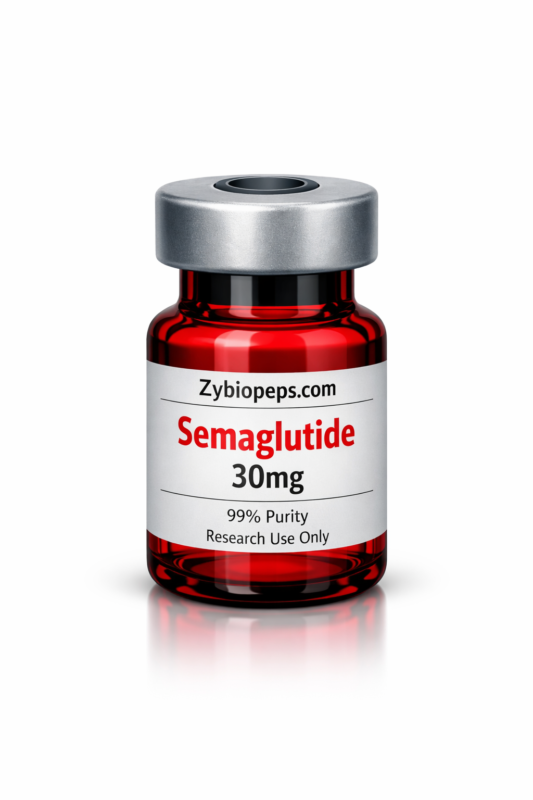
At Zybiopeps, our research-grade Semaglutide is third-party HPLC tested to 99%+ purity with COA available on every batch. We ship same day from our USA warehouse via USPS and FedEx.
What Is Cyanocobalamin and Why Is It Combined With Semaglutide?
Cyanocobalamin is a synthetic form of Vitamin B12 — one of the most stable and commonly used forms of this essential vitamin in pharmaceutical formulations. When combined with semaglutide in compounded preparations, the cyanocobalamin serves a supportive role. Some researchers and clinicians have noted that GLP-1 receptor agonists can affect appetite and dietary intake in ways that potentially reduce B12 absorption over time — adding cyanocobalamin to the formulation addresses this concern proactively.
What’s interesting is that the cyanocobalamin doesn’t alter the mechanism of action of semaglutide itself. It doesn’t change how semaglutide interacts with GLP-1 receptors, and it doesn’t appear to affect the pharmacokinetics of semaglutide in any meaningful way based on current data. It’s essentially an adjunct ingredient rather than an active modifier of the primary compound’s effects.
Semaglutide Cyanocobalamin vs Ozempic — Key Differences
The most fundamental difference is formulation. Ozempic contains only semaglutide (0.5mg, 1mg, or 2mg per dose) in a pre-filled injectable pen, manufactured under strict pharmaceutical GMP standards. Compounded semaglutide with cyanocobalamin is produced by compounding pharmacies and contains semaglutide plus cyanocobalamin in a combined preparation, typically in vial form for subcutaneous injection.
From a research perspective, this matters because formulation variables can influence experimental outcomes. The presence of cyanocobalamin, the vehicle used, the concentration, and the storage conditions all represent variables that researchers need to account for when designing protocols and interpreting results. Pure semaglutide — without additional ingredients — gives researchers cleaner control over what’s being studied.
Regulatory status is another key distinction. Ozempic is FDA-approved for specific indications. Compounded semaglutide preparations exist in a more complex regulatory space — the FDA has raised concerns about compounded semaglutide products at various points, making the regulatory landscape something researchers and institutions need to stay current on.
What the Research Says About Compounded Semaglutide
The core pharmacology of semaglutide is well-established regardless of formulation. A landmark 2021 study published on PubMed — the STEP 1 trial — demonstrated that once-weekly semaglutide at 2.4mg produced an average weight reduction of 14.9% in adults with obesity over 68 weeks, establishing semaglutide as one of the most effective compounds in metabolic research history.
What researchers are increasingly interested in is how formulation differences — including additives like cyanocobalamin — might affect tolerability, bioavailability, or patient outcomes in applied settings. This is an area where more formal comparative research is needed, and it’s part of why the compounded vs branded semaglutide question continues to generate interest in research communities.
Research-Grade Semaglutide at Zybiopeps
For researchers studying semaglutide, formulation purity matters. At Zybiopeps, we supply research-grade semaglutide without additional compounding ingredients — giving researchers a clean, documented compound to work with. Every batch is independently HPLC tested to 99%+ purity, and a Certificate of Analysis is available for every order.
Researchers ordering from Zybiopeps can be confident in what they’re working with — documented purity, sealed laboratory-grade vials inspected before dispatch, and same-day shipping from our USA warehouse via USPS and FedEx. Minimum order is just $100, and we ship to the USA, UK, Australia, Germany, Philippines, Canada, and worldwide.
For research teams placing regular or bulk orders, our wholesale program is available at zybiopeps.com/wholesale-peptides/. If you’re also researching related GLP-1 compounds, our Tirzepatide is another highly requested compound in the metabolic research space.
Frequently Asked Questions — Semaglutide Cyanocobalamin vs Ozempic
What is the difference between semaglutide cyanocobalamin and Ozempic?
Ozempic is a brand-name pharmaceutical containing only semaglutide. Compounded semaglutide with cyanocobalamin is a pharmacy-compounded preparation that combines semaglutide with Vitamin B12 (cyanocobalamin). They contain the same active peptide but are different formulations with different regulatory statuses.
Does cyanocobalamin change how semaglutide works?
Based on current data, cyanocobalamin does not appear to alter the mechanism of action or pharmacokinetics of semaglutide. It functions as an adjunct ingredient rather than an active modifier of semaglutide’s GLP-1 receptor activity.
Why do researchers prefer pure semaglutide for research protocols?
Pure semaglutide without additional compounding ingredients gives researchers cleaner experimental control. When studying the effects of semaglutide specifically, minimising formulation variables — including adjunct ingredients — produces more interpretable results.
Is compounded semaglutide FDA approved?
No. Ozempic (brand-name semaglutide) is FDA approved for specific indications. Compounded semaglutide preparations are not FDA approved and exist in a complex regulatory space. Researchers should stay current on FDA guidance regarding compounded semaglutide products.
Where can researchers source pure semaglutide for research?
Zybiopeps supplies research-grade semaglutide third-party HPLC tested to 99%+ purity with COA on every batch. Minimum order $100, same-day shipping from our USA warehouse. Visit our Semaglutide product page for full details.
Disclaimer: All products sold by Zybiopeps are intended for research purposes only. They are not approved for human consumption, medical use, or veterinary use. Information provided in this article is for educational purposes and does not constitute medical advice. Researchers are responsible for complying with all applicable local laws and regulations regarding the purchase and use of research compounds.
